










Hey there, tech enthusiasts and business folks! I'm a supplier of Dump Bins, and today I'm gonna dig into an interesting question: Can Dump Bin be used to analyze the file access patterns of a program?
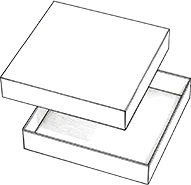
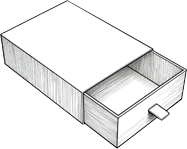
First off, let's quickly break down what we're talking about. A Dump Bin, in the context of what I supply, comes in various forms like Carton Dump Bin, Pegboard Display Bins, and POP Cardboard Dump Bin. These are mainly used for physical storage and display purposes. But how about using them in a program - related file - access analysis scenario?
Now, when we talk about analyzing file access patterns of a program, we're looking at how a program interacts with files. This includes things like which files it accesses, how often, in what order, and the type of access (read, write, modify). Understanding these patterns can offer a ton of benefits, such as optimizing program performance, improving security, and enhancing resource management.
So, can our seemingly ordinary Dump Bins play a role here? Well, on the surface, it doesn't seem likely. Dump Bins are physical containers, made of materials like cardboard or plastic, designed to hold products for storage or display in a real - world environment. However, when we get a little creative, there might just be some connections.
Let's think about the concept of organization. In a physical storage context, a well - organized Dump Bin allows for easy access to items. Similarly, in a program's file system, having an organized file access pattern is crucial. We can draw an analogy between the way we arrange products in a Dump Bin and how a program arranges its file access. For example, if we group related products in a single Carton Dump Bin, it becomes easier to find and access them. In a program, if related files are accessed in a coherent pattern, it can speed up operations.
We can also consider the concept of data flow. When products are placed in a Pegboard Display Bin, there's a certain flow in terms of how they're stocked and retrieved. In a program, file access patterns have a flow too. If we can use the physical arrangement and movement principles from Dump Bins, we might be able to optimize the data flow in file access.
But how can we actually implement this in a practical way? Well, one approach could be to use the design of the Dump Bins as a metaphor for structuring file storage and access algorithms. For instance, if we know that a POP Cardboard Dump Bin is designed for easy visual search, we could design a program's file access system to prioritize files that are frequently accessed visually.
Another way is to think about the capacity and usage limits of Dump Bins. Just like a Dump Bin has a limited capacity, a program's file system has storage and access limits. By observing how products are managed within the capacity of a Dump Bin, we can develop strategies to manage file access within the limits of a program's resources.
However, there are also some limitations to this idea. The most obvious one is that Dump Bins are physical entities, while file access in a program is a digital process. There are clear differences in terms of the nature of the operations and the underlying technologies. For example, physical movement in a Dump Bin is subject to gravity and physical constraints, while digital file access is more about data transfer and processing.
Also, the security aspects are quite different. When we're dealing with files in a program, we need to consider encryption, authentication, and other security measures. In a physical Dump Bin, the security mainly involves physical locks and surveillance.


Despite these limitations, I still think there's potential in exploring the relationship between Dump Bins and file access pattern analysis. It could open up new ways of thinking about file management and optimization.
If you're running a business and are interested in the physical side of storage and display like our Carton Dump Bin, Pegboard Display Bins, or POP Cardboard Dump Bin, or maybe you're a programmer looking for new perspectives on file access optimization, I'd love to chat. Whether it's about the practical use of our Dump Bins or brainstorming on the connection between physical storage and digital file access, I'm here to help. Reach out to me for a friendly chat and let's see how we can work together.
References:
- General knowledge of physical product storage and digital file management.
- Industry experience in supplying Dump Bins.