









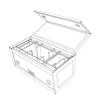



Hey there! As a pallet display supplier, I've seen firsthand how a well - crafted pallet display can be a game - changer in telling a brand story. In this blog, I'll share some tips on how you can use a pallet display to effectively communicate your brand's narrative.
Understand Your Brand Story
Before you start designing a pallet display, you've got to know your brand story inside out. What's the mission of your brand? What values does it stand for? What's the unique selling point? For instance, if you're a sustainable brand, your story might revolve around eco - friendly materials and practices.
Let's take a look at some well - known brands. Nike's brand story is about empowerment, athleticism, and the "Just Do It" attitude. Their displays often feature high - energy images of athletes in action, which perfectly aligns with their brand narrative. When you understand your brand story, you can translate it into visual elements that will be used in the pallet display.
Choose the Right Pallet Display Type
There are different types of pallet displays out there, and choosing the right one is crucial.
If you're in the stationery business, a Stationery Display Stand can be a great option. It allows you to showcase your pens, notebooks, and other stationery items in an organized and eye - catching way. You can arrange the products on the stand in a way that tells a story, like grouping items by color or function.
For clothing brands, a POP Corrugated Pallet Clothing Display can work wonders. These displays are lightweight, customizable, and can be designed to fit the style of your brand. You can use them to create a mini - runway effect, with mannequins wearing your latest collection, or simply stack folded clothes in an appealing manner.
If you have a wide range of products, Cardboard Pallet Display Racks are a versatile choice. They can hold multiple products at once and can be arranged in different configurations to create a dynamic display.
Design for Visual Impact
The visual aspect of your pallet display is what will first grab the attention of your customers. Use colors that are consistent with your brand identity. If your brand has a bright and energetic personality, go for bold and vibrant colors. On the other hand, if your brand is more sophisticated and elegant, choose muted tones.
Images and graphics also play a big role. You can use high - quality product photos, brand logos, and even illustrations to tell your story. For example, if you're a food brand, you can include mouth - watering images of your products on the display. Make sure the images are clear and relevant to the story you're trying to tell.
Another important factor is the layout of the display. Keep it uncluttered and easy to navigate. Customers should be able to quickly understand what products are being offered and what the brand is all about. You can use signage to guide the customer's eye and highlight key messages.
Incorporate Interactive Elements
In today's digital age, customers love interactive experiences. You can add interactive elements to your pallet display to make it more engaging. For example, you can include a QR code on the display that leads to a video about your brand's history or a behind - the - scenes look at your production process.
You could also set up a touch - screen display where customers can browse through different product options or learn more about your brand's values. Interactive elements not only make the display more memorable but also allow customers to connect with your brand on a deeper level.
Consider the Location
The location of your pallet display can greatly impact its effectiveness. If it's in a store, place it in a high - traffic area where it will be easily seen. For example, near the entrance or at the end of an aisle.


If you're using the display at a trade show or event, make sure it stands out among the other booths. You might want to position it in a way that creates a focal point and draws people in. Also, consider the surrounding environment. The display should fit in with the overall aesthetic of the location while still being distinctive.
Train Your Staff
Your staff is an important part of the brand story - telling process. They should be well - informed about the brand and the story behind the pallet display. Train them to be able to explain the products and the brand's values to customers.
They can also help create a positive customer experience by being friendly and approachable. For example, they can guide customers around the display, answer questions, and even share interesting facts about the brand. A knowledgeable and enthusiastic staff can really enhance the impact of the pallet display.
Measure and Evaluate
Once your pallet display is up and running, it's important to measure its effectiveness. You can do this by tracking sales data, customer feedback, and foot traffic around the display.
If you notice that sales of the products on the display have increased, it's a good sign that the display is working. On the other hand, if customers are not showing much interest, you might need to make some adjustments. Analyze what's working and what's not, and use this information to improve future displays.
Conclusion
Using a pallet display to tell a brand story is a powerful marketing strategy. By understanding your brand story, choosing the right display type, designing for visual impact, incorporating interactive elements, considering the location, training your staff, and measuring the results, you can create a display that not only showcases your products but also connects with your customers on an emotional level.
If you're interested in using our pallet displays to tell your brand story, I'd love to have a chat with you. Whether you're a small business just starting out or a large corporation looking for a fresh approach, we can work together to create a display that meets your needs. Reach out to us to start the conversation about how we can bring your brand story to life with our pallet displays.
References
- Kotler, P., & Armstrong, G. (2018). Principles of Marketing. Pearson.
- Solomon, M. R. (2017). Consumer Behavior: Buying, Having, and Being. Pearson.