











In the world of retail marketing, Point-of-Purchase (POP) displays play a pivotal role in attracting customers and driving sales. Two common types of POP displays are floor-standing and countertop displays. As a seasoned POP display supplier, I've witnessed firsthand the unique characteristics and impacts of each type. In this blog post, I'll delve into the differences between floor-standing and countertop pop displays, helping you make an informed decision for your retail needs.
Physical Attributes
Size and Visibility
Floor-standing pop displays are inherently larger in size compared to their countertop counterparts. They can stand as tall as several feet, making them highly visible from a distance. This large size allows them to capture the attention of customers as soon as they enter a store or pass by an aisle. For example, a Greeting Card Display Stand in a floor-standing format can dominate an area, drawing shoppers towards it.
On the other hand, countertop displays are much smaller and are designed to sit on counters, shelves, or other flat surfaces. While they may not have the same grandeur as floor-standing displays, they are strategically placed at eye-level or within easy reach of customers at the point of purchase. This makes them ideal for promoting impulse buys or products that don't require a large display area.
Placement
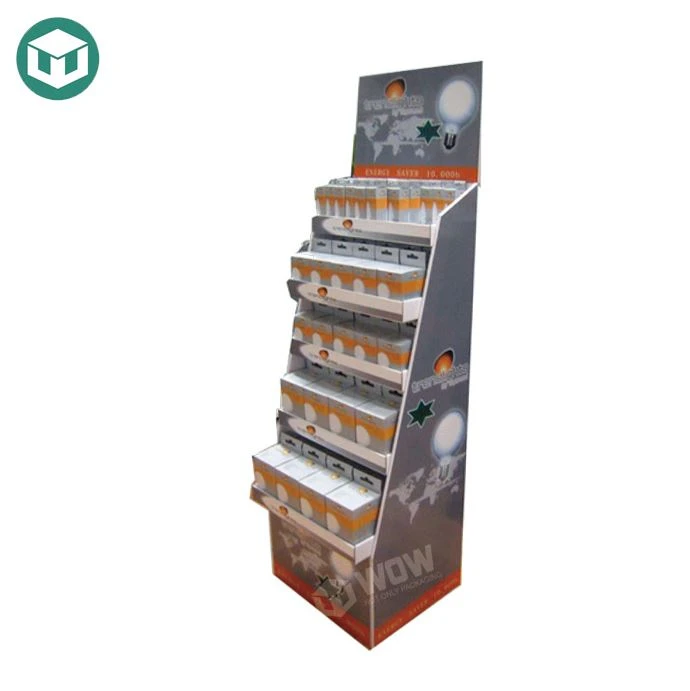
Floor-standing displays are flexible in terms of placement. They can be placed in high-traffic areas such as the center of a store, near the entrance, or at the end of aisles. These prime locations ensure maximum exposure to a large number of customers. For instance, a Point of Sale Cardboard Display for LED Bulbs can be placed at the end of an aisle to attract customers who are walking through the store.

Countertop displays, however, are limited to specific surfaces. They are commonly found at cash registers, checkout counters, or on small side tables. Their placement is often associated with the immediate purchase decision-making process, nudging customers to add an extra item to their cart before paying.
Weight and Durability
Due to their larger size, floor-standing displays are generally heavier and more durable. They are built to withstand the wear and tear of a busy retail environment, including being bumped into by shoppers or having products constantly removed and restocked. Many floor-standing displays are made from sturdy materials such as cardboard, plastic, or metal. The Bespoke Greeting Card Floor Cardboard Display Rack is a good example of a well-built and durable floor display that can hold and showcase a large number of greeting cards.
Countertop displays, while still durable, are typically lighter. They are designed to be easily moved and repositioned as needed. The materials used for countertop displays are often more lightweight but still strong enough to hold the products being showcased.
Marketing and Product Presentation
Branding and Messaging
Floor-standing displays provide a large canvas for branding and messaging. Their size allows for bold graphics, large product images, and extensive text to convey a brand's message effectively. Retailers can use floor displays to tell a story, promote a new product line, or highlight a special offer. The large surface area also means that multiple messages can be displayed simultaneously, catering to different customer segments.
Countertop displays have limited space for branding and messaging. However, this constraint forces retailers to be more concise and strategic with their communication. A well-designed countertop display can use eye-catching colors, catchy slogans, and small product samples to make an impact. It often focuses on a single product or a small range of related items, presenting a clear and simple message to the customer.
Product Capacity
Floor-standing displays can hold a significant amount of product. They are suitable for showcasing a large inventory of a single product or a variety of related products. For example, a floor-standing display for a clothing brand might feature a range of different styles, sizes, and colors of shirts. This allows customers to browse through a selection and make a more informed purchasing decision.
Countertop displays have a smaller product capacity. They are best used for highlighting a limited number of products, such as a new flavor of a snack or a special edition item. The limited space encourages customers to focus on the featured products and can create a sense of exclusivity or urgency.
Customer Interaction
Floor-standing displays encourage customers to interact more with the products. Shoppers can walk around the display, pick up items, and examine them closely. This hands-on experience can lead to increased interest and a higher likelihood of purchase. Retailers can also use interactive elements such as touchscreens or sample stations on floor displays to enhance the customer experience.
Countertop displays also allow for some customer interaction, but it is typically more limited. Customers may pick up a small product from a countertop display or take a closer look at the packaging. However, the smaller size and more confined space mean that the interaction is usually quicker and more focused.
Cost and Logistics
Production Cost
The production cost of floor-standing displays is generally higher than that of countertop displays. This is due to the larger amount of materials required, as well as the more complex manufacturing processes needed to build a sturdy and visually appealing large display. The design and printing costs for floor displays can also be more expensive, as they involve larger graphics and more detailed artwork.
Countertop displays are more cost-effective to produce. They use less material and are often simpler in design, resulting in lower production costs. This makes them a more budget-friendly option for retailers, especially those with limited marketing budgets or who are testing a new product.
Shipping and Installation
Shipping floor-standing displays can be more challenging and costly. Their large size and weight mean that they require more space in a shipping container and may incur higher shipping fees. Additionally, installing a floor display can be more time-consuming and may require additional manpower. Retailers need to ensure that the display is properly assembled and placed in the right location to maximize its impact.
Countertop displays are easier and cheaper to ship. They can be packed more efficiently and fit into smaller shipping boxes, reducing shipping costs. Installation is also relatively straightforward, often requiring only a few minutes to set up on a countertop.
Choosing the Right Display for Your Business
When deciding between a floor-standing and a countertop pop display, several factors need to be considered. If you have a new product launch, a large inventory to showcase, or want to make a big impact in a high-traffic area, a floor-standing display may be the best choice. It offers maximum visibility, branding opportunities, and product capacity.
On the other hand, if you are promoting impulse buys, have a limited budget, or want to target customers at the point of purchase, a countertop display is a more suitable option. It can be strategically placed to capture the attention of customers who are already in the process of making a purchase.
As a POP display supplier, I understand the importance of finding the right display solution for your business. We offer a wide range of floor-standing and countertop displays, including the Greeting Card Display Stand, Point of Sale Cardboard Display for LED Bulbs, and Bespoke Greeting Card Floor Cardboard Display Rack. Our team of experts can work with you to design and produce a customized display that meets your specific needs and goals.
If you're interested in learning more about our POP display solutions or want to discuss a potential project, please don't hesitate to reach out. We're here to help you take your retail marketing to the next level.
References
- Kotler, P., & Armstrong, G. (2019). Principles of Marketing. Pearson.
- Schmitt, B. H. (2018). Customer Experience Management: A Revolutionary Approach to Engaging Your Customers. Wiley.
- Retail Marketing Association. (2020). State of the Retail Display Industry Report.