










Hey there! I'm a supplier of Dump Bins, and today I'm gonna talk about what kind of compression - related information can Dump Bin extract.
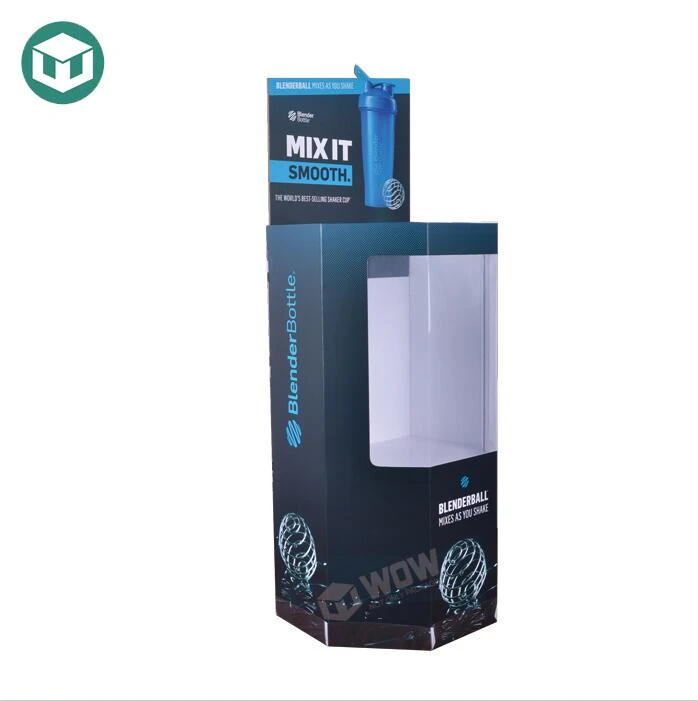
First off, let's understand what Dump Bins are. Dump Bins are those large, open - top containers that you often see in supermarkets, retail stores, or other commercial places. They're used to display all sorts of products, from fruits and vegetables to canned goods and promotional items.
When it comes to compression - related information, one of the key things Dump Bins can tell us is about the load - bearing capacity. You see, different products have different weights, and a Dump Bin needs to be able to hold them without collapsing. By analyzing how the bin compresses under the weight of the products, we can figure out its maximum load capacity. For example, if we're using a Fruit and Vegetable Display Stands with Retail Dump Bins, we need to know how much weight it can handle before the sides start to cave in or the bottom gives way. This is super important for safety reasons, as well as for ensuring that the products are displayed properly.
Another piece of compression - related information is the durability of the materials used in the Dump Bin. When products are placed in the bin, they exert pressure on the walls and the bottom. Over time, this pressure can cause wear and tear. By looking at how the bin compresses and how the materials respond to that compression, we can assess their durability. For instance, a Cardboard Dumpbin For Coca Cola might be subjected to the weight of multiple cans of Coke. If the cardboard starts to compress too much or shows signs of damage quickly, it means that the material might not be durable enough for long - term use.
Compression can also tell us about the stability of the Dump Bin. A stable bin is one that doesn't tip over easily when products are added or removed. When we load a bin, the weight distribution changes, and this can affect its stability. By studying the compression patterns, we can determine if the bin is well - balanced. For example, a Coke Coka Cardboard Dump Bins that compresses unevenly might be at risk of tipping over, which could lead to product damage and potential safety hazards.
Now, let's talk about how we actually extract this compression - related information. One way is through physical testing. We can load the Dump Bin with different weights and measure the amount of compression at various points. This can be done using sensors that are placed on the walls and the bottom of the bin. These sensors can record the pressure and the amount of deformation caused by the weight.
Another method is through computer simulations. We can create a digital model of the Dump Bin and simulate different loading scenarios. This allows us to predict how the bin will compress under different conditions without having to conduct multiple physical tests. Computer simulations are also useful because they can provide detailed information about the internal stresses and strains within the bin.
In addition to these technical aspects, compression - related information can also have an impact on the design of the Dump Bin. For example, if we know that a certain type of product is heavy and likely to cause a lot of compression, we can design the bin with stronger materials or a more robust structure. This can improve the overall performance of the bin and make it more suitable for the intended use.
Moreover, understanding compression can help us with inventory management. If we know how much compression a bin can handle, we can better estimate how many products can be safely stored in it. This can prevent overloading, which not only affects the bin's performance but also the quality of the products.
When it comes to the environmental aspect, compression - related information can also play a role. For example, if we can design a Dump Bin that uses less material while still maintaining its load - bearing capacity, it can reduce waste and lower the environmental impact. This is an important consideration in today's world, where sustainability is a big deal.

So, as you can see, there's a whole lot of valuable compression - related information that Dump Bins can provide. Whether it's about load - bearing capacity, durability, stability, or design, this information is crucial for making the most out of these bins.
If you're in the market for Dump Bins and want to learn more about how they can meet your specific needs, don't hesitate to reach out. We're here to help you find the perfect Dump Bin solution for your business. Whether you need bins for displaying fruits and vegetables, promoting Coca - Cola products, or any other purpose, we've got you covered. Contact us today to start a conversation about your requirements and let's work together to find the best Dump Bin for you.
References
- General knowledge of Dump Bin design and functionality
- Industry standards for load - bearing and durability testing of commercial display bins