









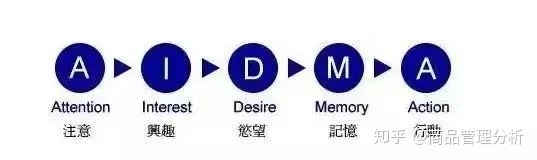
1. The 5 steps of a transaction: attention→interest→desire→memory→action.
This is the "AIDMA" rule. It can explain the consumer psychology of customers very well. When launching a product, we must first attract the attention of consumers and then stimulate their interest. , And generate a demand, further stimulate consumers' desire to buy, strengthen their memory, and finally promote consumers' buying behavior.
2. When promoting new products
During the promotion of new products, ensure that new products occupy 1/3 of the display space and place them next to the best-selling products of their kind.
3. The window lighting is higher than 20% of the shop lighting
The window area is the key functional area that attracts customers into the store. The window area should be brighter than the lights in the store to attract customers (people have a strong phototaxis.) Therefore, the lighting design of the window area should be different from the basic brightness in the store, which is generally 20% higher than the overall brightness of the store. Due to the natural light of the street shops during the day, the external brightness of the window will be higher, so the reflective characteristics of the glass must be considered, and the display in the window must be clearly visible.
4. The window must be replaced in all seasons
There are four seasons a year, each season is different, and each season has its own distinctive characteristics, and each season has its main products. If the store can show the characteristics of the season on the window and store layout when the season is changing, it can give people a bright and refreshed feeling, and it can effectively promote the new product listing information, so that customers can see at a glance.
5. The "Seven Seconds Marketing Law" of the window
The customer can only stay focused for seven seconds when observing a store or product when shopping. During these seven seconds, he may decide whether he is interested in the store or product; this is the famous "seven-second marketing law";
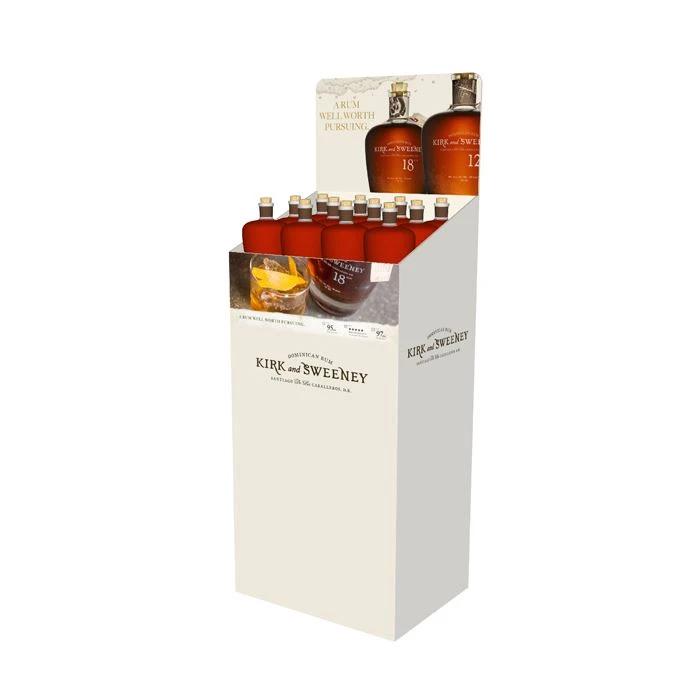
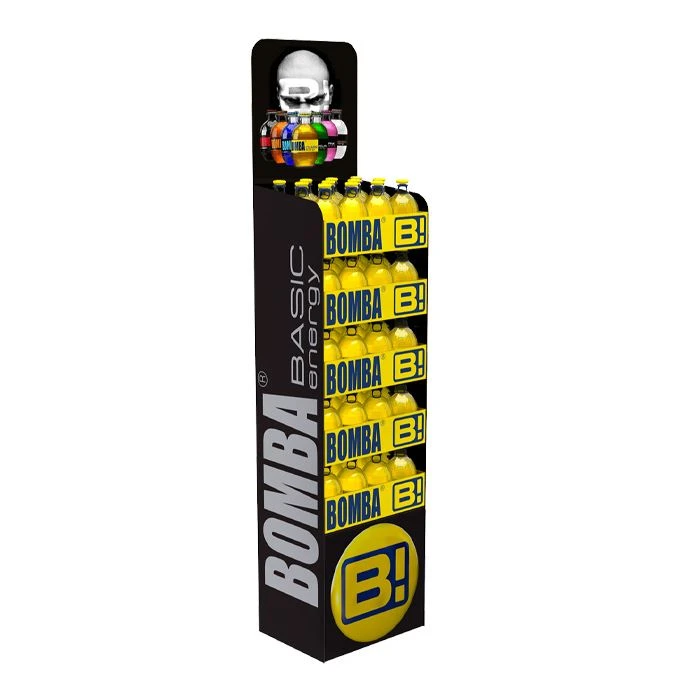
It is very important for the clothing brand to capture the customer’s attention in these short seven seconds. It determines the store’s entry rate and purchase rate. How can this be achieved? Undoubtedly, window display is the best weapon to realize "seven-second marketing"!
6. The main and guest flow channels at the entrance of the store are: 2.4 to 3.6 meters
When designing the aisle of a store, it should be noted that the aisle must have a certain width. Generally speaking, for a store with a business area of more than 600 square meters, the width of the main passenger flow channel at the entrance of the store must be between 2.4 and 3.6 meters, allowing 3 customers to enter side by side. The opening of the store must be large. The general mentality of customers is Don't want to go shopping in too narrow and crowded places.
Spatial data:
a. 60 cm: the space for a person to pass through.
b. 90 cm: A space where a person passes frontally, and a person who passes in a staggered way passes sideways.
c. 120 cm: The space where two people can cross frontally.
7. The two-way passenger flow channel in the store: 1.1~1.6 meters
The two-way passenger flow channel in the store should be 1.1 to 1.6 meters, so that the width can allow one customer to pass frontally and another customer to pass sideways.
8. The two-way passenger flow channel in the store: 1.8~2.1 meters
The two-way passenger flow channel in the store is 1.8~2.1 meters, which is wide enough to allow two customers to cross/pass side by side.
9. The one-way passenger flow channel in the store is: 0.9~1.2 meters
The one-way passenger flow channel in the store is 0.9 to 1.2 meters, which allows one customer to pass through.
10. Repeated display should be 3 or more
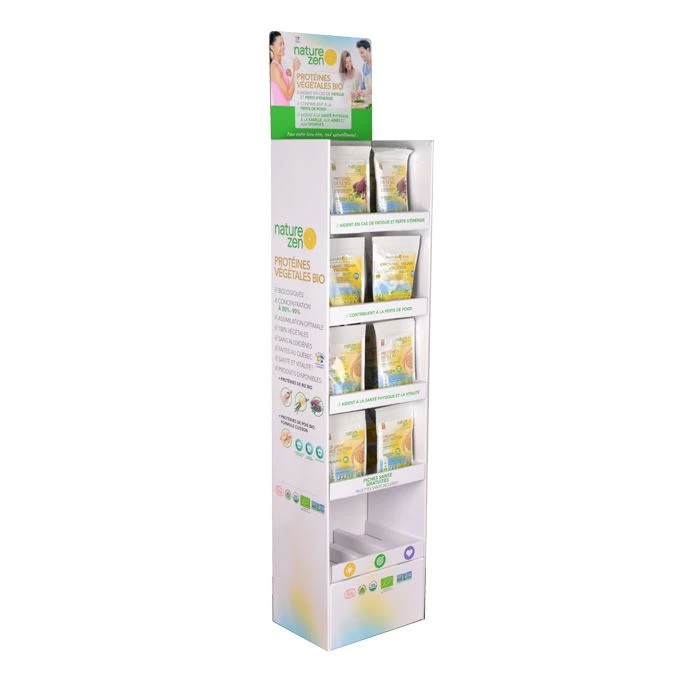
Refers to the repeated appearance of at least 3 or more objects/commodities within a certain range or on different display surfaces of the same product, decoration, POP and other display subjects or logos, advertisements, etc., strengthened by repeated emphasis and suggestive means Customers' visual perception of apparel products or brands.
11. Vertical display, at least three rows of each type
Commodities with the same attributes and shapes are displayed in a top-to-bottom manner, which makes it clear to customers to purchase goods and enhances the three-dimensional and impression of the merchandise display.
12. The gold display space sold is between 70 and 135 cm
For customers, the easiest to see and the easiest to reach the height of the product is often called the "golden display space". And the easily accessible range of this hand is between 70 and 135 cm.
13. The height of the highest floor: 1.8 meters
The highest floor is 1.8 meters, which is difficult to reach with the hands of customers, and is basically used as a PP point to attract the eyes of distant customers.
14. The lowest layer height: 30 cm or less
Floors below 30 cm are invalid display areas, and few customers will be willing to squat down to get the goods.
15. Three stacks per layer and four pieces per stack are more suitable stacking methods
This kind of placement allows the goods to have a certain amount of space for goods, not to appear too crowded, and more beautiful.
16. The three-color principle of models
If you do not match the color of the product, follow the three-color principle (no more than three colors on a model).
17. A group model is a group of models formed by 3 or more models
"Group model" refers to the display of model groups inside the store. This approach is very attractive to consumers and is very helpful for you to display and expose the store owner's products. Usually there are 3 or more models. Can be called a group model.
18. The number of stacks
When stacking and placing, you must unpack it. It is best to place 4~6 pieces for thin models and 3~4 pieces for thick models, but you still have to place them according to your actual situation, and avoid too many stacks. If you get up, or stack up and fall down again, it affects customers' buying mood.
The space occupied by the stacked display should not exceed 32cm×36cm. The spacing of each stack should be kept at about 10cm~15cm. This size/spacing is not too big, too small, or too close or too far away. Convenient for customers to buy.
19, the number of hanging
The front hanging is generally 4~5 different sizes of the same product, and the size of the former is smaller and then the larger is arranged.
20, the number of side hanging
Each piece of clothing should be hung on more than 2 pieces in a row at the same time, usually no more than 4 pieces, and arranged in different sizes. Hanging should be kept tidy and free of creases.
21. The best height of the cash register is 1.2 meters
This height is the height at which customers feel the most comfortable when paying. It will not be too high to appear depressing, nor will it be too low to be uncomfortable.
In addition, remember these 7 principles and 3 methods, which are the basic skills:
1. The profitable principleThe display must really help increase store sales.
2. Strive to use the best display location of the store for the sales of the main products.
3. Pay attention to recording specific display methods and exhibits that can increase sales.
4. Keep reminding the store of merchandise display to help profitability.
Second, the principle of magnet point
1. Display point at the entrance:
The position of the shelves facing the direction of the flow of the owner’s wall and the line of sight (and the display surface covered by 65 degrees on both sides of the radiation centered on this viewpoint), the booth in the main aisle, and the booth next to the cashier are all relatively high. Good display point.
2. Periodic discount display point:
The front door booth, the rear area of the long wall display, the booth between the two main aisles, etc.
3. Blind spot display point:
Warehouse (or workshop) entrances and exits, corners with poor lighting, blind corners at the bottom of deep shops, small deep compartments with too many shops, etc.
Three, the principle of attraction
1. Fully place the existing products in a centralized manner to highlight the momentum. 2. Fully display the style and benefits of the brand's products when displaying. 3. Cooperate with space display and make full use of advertising materials to attract customers' attention. 4. Irregular display methods can be used for special promotion items, which can strengthen the meaning of special offers.
Fourth, the principle of effective display
1. When the customer is standing naturally, the range within reach is about 1500px to 4500px from the floor. This space is the effective display range. Therefore, displaying key products in this space is the secret to increasing sales. Conversely, the spaces below 1500px and above 4500px are hard-to-reach spaces for customers, and most of them are displayed for non-key products.
2. Among the above effective display ranges, the most accessible range is the space from 2000px to 3000px, which is called the golden belt. This part is used to display best-selling commodities or key commodities and seasonal commodities, aiming at the goal of increasing sales. Above and below the golden belt, it is generally used to display semi-key commodities or general commodities.
3. The easiest to see, the width of the left and right field of view is about 60 degrees, therefore, the relationship between the display width of the field of view is shown in the figure below. The standing location (eye position) is 500px away from the showcase. Therefore, a distance of 1500px, that is, 2000px from the eye position, will have a 2250px width of sight range, and a distance of 2250px will make it easy to see a 3250px width range.
The most visible field of view
Five, the principle of commodity matching
1. Merchandise display is to help sales, so you must fully consider the combination of merchandise when displaying.
2. Make full use of related sales when making collocations, and pay attention to the optimization of the combination of products. For example, a chain store may consider a combination display of shirts and ties, and a combination display of trousers and shoes when displaying merchandise.
3. In order to match the customer's habit of pursuing new ideas, the matching design should create a new effect that customers often see. That is to say, appropriate adjustments should be made to the combination display on a regular basis to reflect the new ideas.
Sixth, the principle of catering to customer habits
1. The product display location is in line with the customer's buying habits, and the product display in the sales area and special price area should be prominent and eye-catching, so that customers can understand the meaning of the product.
2. The displayed products should be easy for customers to see, and follow the principle of low front and high back.
3. The product should face the customer frontally or slightly obliquely, so that the customer can see clearly.
4. Display appliances, decorations and POP products should not affect the sight of shoppers in the store, nor should it affect the lighting in the store.
Seven, the principle of cleanliness
Hygiene is also very important to the image and attractiveness of products. Clean products make customers feel pleasing to the eye, while unclean products make customers feel obsolete, poor quality, and low-grade. Therefore, chain stores must do a good job in the cleaning and cleaning of goods, containers, and shelves, and promptly replace goods with poor hygiene.
Three methods:
1. Color display:
Effectively use the permutation and combination of colors to stimulate customers' desire to buy. The disorderly arrangement of colors will only give customers a sense of disorder and unwillingness to get close. The point is to make frequent changes to stimulate the visual sense of consumers. Each color combination is regular, and we can make colors according to the color circle. Categorize, and then classify and arrange in detail based on the commonality of each color.
At the same time, be careful not to divide the colors too rigidly, and the warm and cold colors should have a sense of rhythm. (In the hue circle, the order of the twelve basic colors is: yellow, yellow-orange, orange, orange-red, red, magenta, purple, blue-violet, blue, cyan, green, yellow-green.) In the hue circle Among them, the shorter the distance between the two colors, the greater the commonality, the smaller the relative conflict, the weaker the contrast, and the more harmonious the effect.
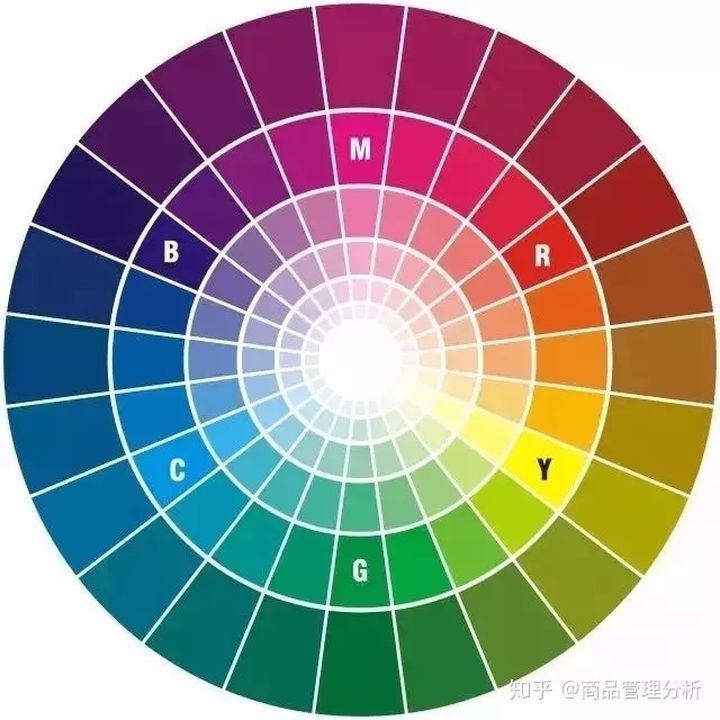
On the contrary, in the hue circle, the greater the distance between the two colors, there is no commonality between them. The greater the conflict and the stronger the contrast, the more lively and strong the effect will be.
2. Reasonable use of zone a:
The so-called area a is the area that is the easiest to see first facing the direction of passenger flow. We must put our main push and attractive styles in area a, which will help the sales of the main push.
But you need to pay attention: the price of the display in area A should not be the highest, and the medium price should be the main (but it can also be based on the actual situation, for example, most of our counters are those with higher spending power).
3. Time must be in place:
Our specialty stores must understand who is the person who comes to our store every day to buy clothes? Then choose the main promotion according to different customer groups. For example: most of us who come from Monday to Thursday are full-time wives, so we can put some fashionable, high-priced, and unique style clothes as the main recommendation in zone a or wear them on models. From Friday afternoon to Sunday, most of the shoppers are working women. You can put moderately priced clothes in area a or wear models.
Of course, this is not absolute. It is mainly to find out who our customers come from to change our main display based on the situation of various places.