












In the modern commercial display industry, display stands serve as crucial carriers for product presentation, and their design philosophy directly impacts display effectiveness and user experience. With growing environmental awareness and cost control demands, paper-based display stands have become mainstream due to their unique advantages. This article explores four core design philosophies for display stands, revealing how to achieve balance between economic benefits and environmental goals while ensuring functionality.
One-Sheet Molding with Interlocking Partition Structure
One-sheet molding technology represents a significant breakthrough in modern display stand design, transforming traditional multi-piece assembly into clever folding of a single cardboard sheet. Through precise cutting lines and fold design, a complete cardboard sheet transforms into a three-dimensional display stand structure, greatly simplifying production.
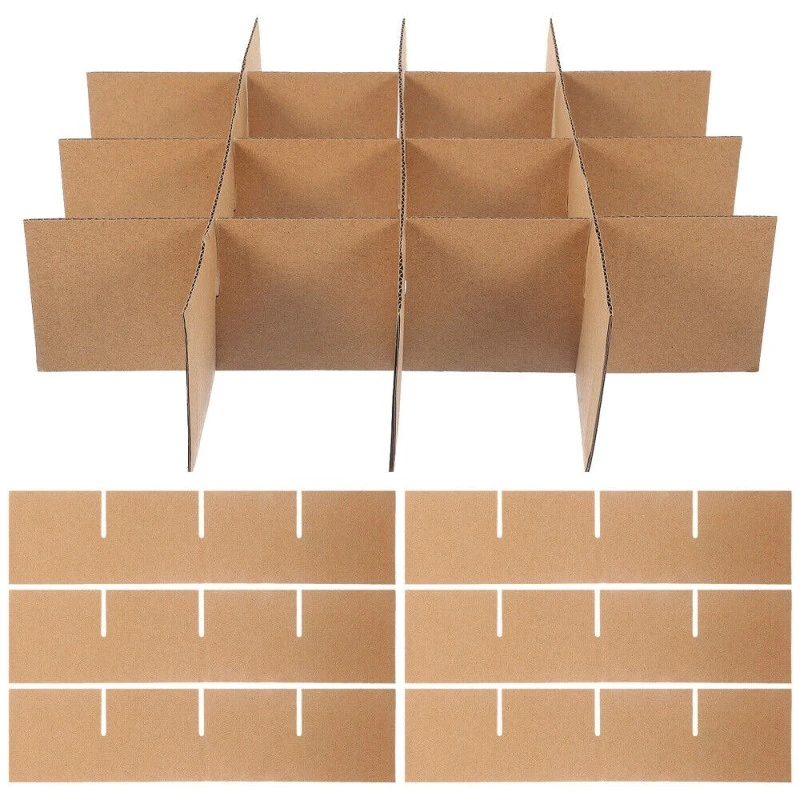
The interlocking partition technique forms the core support of one-sheet molding. Designers create specific slots and catches on cardboard, forming stable support structures through reverse insertion methods. This design eliminates dependence on additional adhesives while ensuring cardboard display stands maintain stability under load. Slot depth and angles are precisely calculated to ensure smooth insertion and tight connection.
Another significant advantage is the removable nature of interlocking partitions. When display activities conclude, users can easily disassemble the stand, returning it to flat state for convenient storage and transportation. This reversible design saves storage space and creates reuse possibilities, enhancing economic value.
Complementary Layout Design for Material Conservation
Complementary layout design maximizes material utilization efficiency through rational layout planning. During design, designers optimize cutting paths of different components, enabling a single original sheet to accommodate more effective components while significantly reducing waste generation.
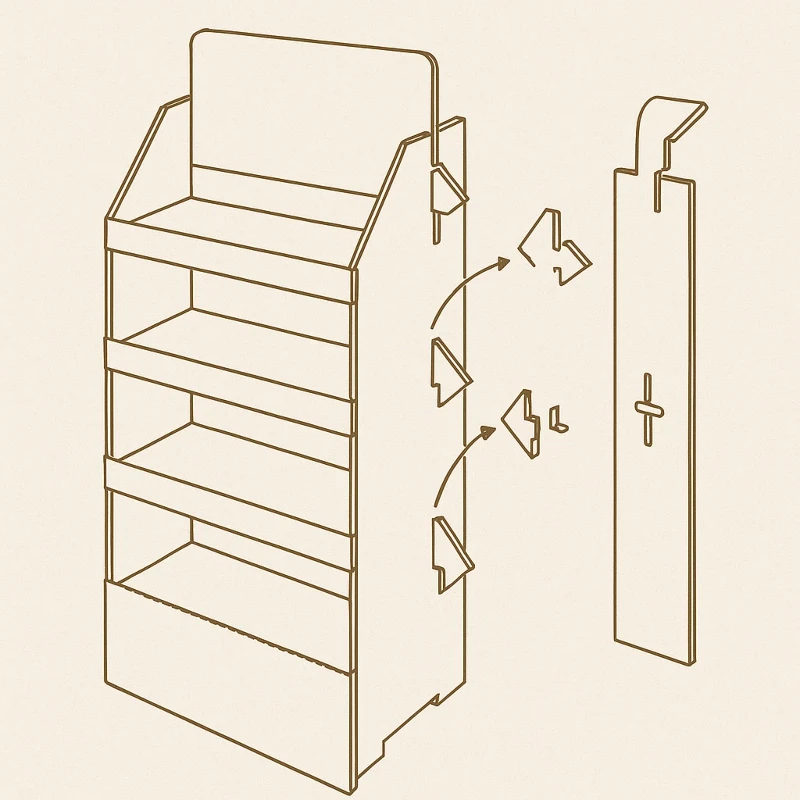
The essence lies in complementary design. Concave portions of negative layout perfectly correspond to convex portions of positive layout, creating mutual nesting for optimal space utilization. For example, one display stand's base groove can accommodate another stand's support strip. Through this clever spatial displacement, materials previously requiring two cardboard sheets now need only one and a half sheets.
Complementary layout extends beyond single product design to batch production optimization. In large-scale production, different specifications of cardboard display stands can share the same original sheet. Through scientific layout algorithms, material utilization rates improve to over 95%. This philosophy reduces production costs and decreases forest resource consumption, embodying sustainable development principles.
Simple Structure with Convenient Assembly
Simple structural design ensures excellent user experience. Outstanding display stand design pursues "fool-proof" assembly experience, allowing even first-time users to complete assembly within short timeframes. This philosophy requires each connection point to be intuitive and clear, avoiding complex folding steps and difficult assembly logic.
Assembly convenience depends on standardized connection methods. Through unified slot specifications and connection angles, combinations between different components become standardized and modular. Users need only follow preset insertion sequences to easily complete entire display stand construction. This standardized design also facilitates later maintenance and component replacement.
Modern display stand design incorporates ergonomic principles to enhance assembly efficiency. Component grip positions, insertion force requirements, and folding angles undergo repeated testing and optimization to ensure natural and comfortable hand movements during assembly. Key assembly steps use different color coding or shape indicators to help users quickly identify and operate components.
Safety and Environmental Protection with Built-in Safeguards
Safety represents a fundamental requirement in display stand design, particularly in high-traffic commercial environments. Modern cardboard display stands design fully considers safety hazards during use, eliminating potential risks through structural optimization and material selection. Round corner treatment represents the most common safety measure, with all edges that might contact the human body receiving smooth treatment to prevent accidental cuts.
Built-in protection functions manifest across multiple levels. First is structural protection, ensuring display stands won't tip over under normal use conditions through reasonable center-of-gravity design and widened bases. Second is material protection, selecting specially treated environmentally friendly cardboard with moisture-proof and fire-resistant properties, providing basic safety assurance under abnormal conditions.
Environmental philosophy permeates the entire design lifecycle. From raw material selection to production process optimization, and from use to post-use recycling, every stage reflects environmental responsibility. Using recyclable cardboard materials, employing water-based environmentally friendly inks for printing, and avoiding harmful chemical substances ensures product biodegradability with no long-term environmental pollution.
Innovative Applications and Future Development
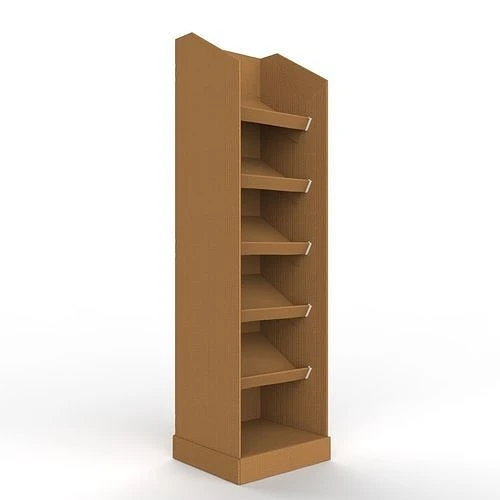
The comprehensive application of these four design philosophies has spawned numerous innovative cardboard display stands solutions. In retail industry, personalized display stand designs perfectly align with brand images, enhancing product display effectiveness. In exhibition industry, modular design philosophies enable display stands to adapt to different spatial requirements, achieving multiple purposes with one product set.
With digital technology development, future display stand design will become increasingly intelligent. Through 3D modeling and virtual reality technology, designers can test different design solutions in virtual environments, optimizing structural parameters and material configurations. User customization demands drive further innovation in design philosophy, with small-batch, diversified production models becoming new development trends.
Conclusion
The evolution of display stand design philosophy reflects modern commerce's comprehensive pursuit of efficiency, environmental protection, and user experience. Process innovation in one-sheet molding, material optimization through complementary layout, user-friendly design with simple structures, and responsibility philosophy emphasizing safety and environmental protection together constitute the core framework of modern display stand design. These philosophies not only drive product functionality improvement but also reflect designers' commitment to social responsibility and sustainable development.
In future development, these design philosophies will continue guiding innovation directions in the display stand industry, bringing more possibilities and value to commercial display fields. Through continuous technological innovation and philosophical upgrades, display stands will carry more commercial value and social significance while maintaining their basic functions.