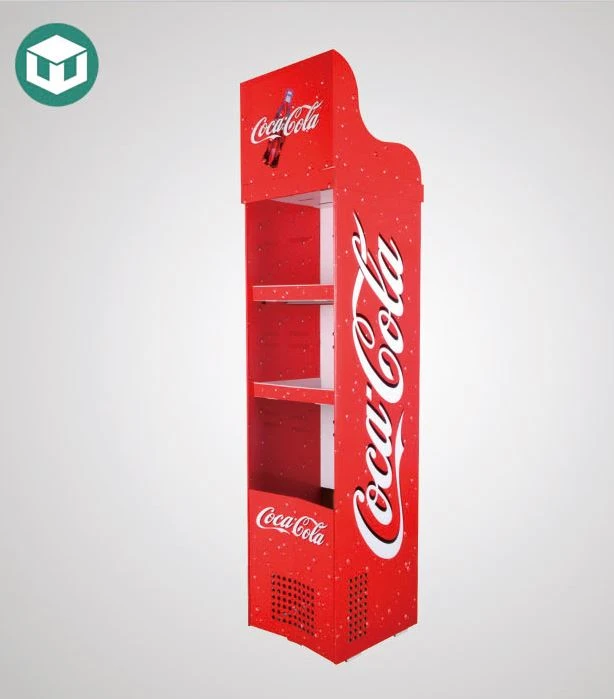









The use of corrugated display racks prevailed in Europe and the United States in the early days, and was widely used in food, daily chemical, household appliances, wine and other industries. The International POP Association has a history of more than 30 years. It has branches and branches in many parts of the world, but in Asia, it currently has branches in India. Many packaging companies in Europe and the United States believe that the production of corrugated display racks can improve the technical level of the company and the sales ability of the company, so there are many users and manufacturers. In Japan, Europe and the United States and other countries, with the rapid economic development, especially the increasing calls for environmental protection, corrugated cardboard display stands are gradually replacing other types of POP display stands, and they are very popular in the terminal sales market. This is because: European and American countries Of consumers have low trust in TV advertising. In the United States, TV viewers can filter out TV advertisements and actively choose not to watch advertisements. Therefore, many foreign businesses do not use TV advertisements as the main means of marketing. In terms of terminal sales, they attach great importance to the role of POP display racks, and use various display racks for promotion in supermarket hypermarkets.
The cost of human resources in foreign countries is very high. They rarely hire promoters to carry out product promotion activities in supermarkets. They are more willing to let display racks, such as display stands, have advertising campaigns to act as silent salespersons, allowing consumers to judge by themselves rather than The indoctrination of outsiders chooses their merchandise.
Developed countries in Europe and the United States have strong environmental awareness, and the corrugated display stands are environmentally friendly products. The use of corrugated display stands is conducive to resource regeneration and recycling, so it is deeply favored by consumers. At the same time, the government will give certain policy preferences to the use of environmentally friendly and energy-saving products, such as financial subsidies, tax reductions and so on.