









Paper display stands are easy to underestimate.
They look simple. Lightweight. Temporary. Sometimes people even treat them like a secondary detail - something added at the end of a promotion once the "real" work is done. But in retail, that way of thinking usually misses the point. A display is not just there to hold products. It changes how products are seen, how quickly they are understood, and whether shoppers notice them at all.
That is why paper display stands still matter.
A good paper display stand gives a product its own space in a crowded store. It helps separate one item from the noise around it. It can guide the eye, support a campaign theme, and make a promotion feel intentional instead of random. For many brands, especially in fast-moving retail categories, that difference is not small. It affects trial, sell-through, and how clearly a product line is presented in-store.
Many buyers also use related terms like cardboard display stands, custom cardboard displays, POP displays, or POS displays. The wording changes a little depending on the market and the application, but the role is similar. These displays are used to improve visibility, support promotions, and make products easier to shop in physical retail spaces.
So what are paper display stands actually used for?
More than people think.
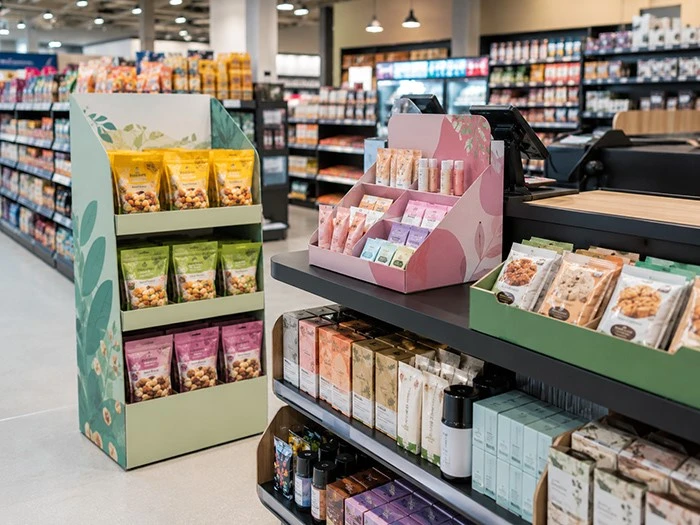
They help new products get noticed faster
This is probably one of the most practical uses.
When a new product launches, it usually has one problem right away: it has to compete with products shoppers already recognize. Standard shelving does not always help much. If the new item is placed into a crowded category with no extra visual support, it can disappear before people even register that something new has arrived.
A paper display stand changes that.
Instead of asking the shopper to "discover" the product by accident, the display creates a clear signal. It says this product matters. It gives it a little more visual authority. That can be especially useful for seasonal launches, flavor extensions, limited editions, or any new product line that needs a stronger first impression.
This is where custom cardboard displays tend to work especially well. They can be built around the exact product size, campaign graphics, and retail position, rather than forcing the product into a generic fixture.
They support promotional selling without needing a permanent fixture
Not every promotion needs metal. Not every campaign justifies a permanent display solution.
Sometimes the goal is simple: create a temporary selling zone, make it look branded, and roll it out quickly across one store or many. That is exactly where paper display stands still do a lot of useful work.
A retailer might need a two-week snack promotion. A cosmetics brand may want a short-term checkout feature. A beverage launch may need a branded floor display for a seasonal push. In these situations, cardboard display stands make sense because they are easier to ship, faster to assemble, and more flexible to customize than many permanent materials.
That flexibility matters. Promotions move quickly. Retail calendars change. Stores reset. A display format that can support that pace - without becoming too expensive or too slow to execute - stays relevant.
They improve product visibility at the point of purchase
A lot of in-store buying decisions are not deeply planned. They happen because something is seen at the right moment.
That is one reason POP displays and POS displays still matter so much. The display does not just hold products. It changes placement. It puts products where shoppers pause, turn, wait, or compare.
Paper display stands are often used in:
checkout zones
aisle transitions
aisle ends
promotional islands
entry areas
secondary placement near related categories
That placement logic is important. A good display does not only make a product look better. It puts the product in a better position to be chosen.
And in retail, position often does half the work.
They make impulse products easier to sell
Some products need time and explanation. Others sell because they are visible, accessible, and easy to understand in a second or two.
Paper display stands are especially effective for the second type.
Small snacks, trial-size beauty items, accessories, batteries, travel products, novelty items, and low-commitment add-ons all benefit from compact display formats that support impulse pickup. A counter display or small POS display made from cardboard can do that very well because it creates just enough structure to organize the product while keeping it easy to grab.
That is where paper display stands often outperform plain shelf placement. On a shelf, a small item can feel lost. In a dedicated branded display, the same item feels selected and visible.
It is a small shift, but it changes buying behavior.
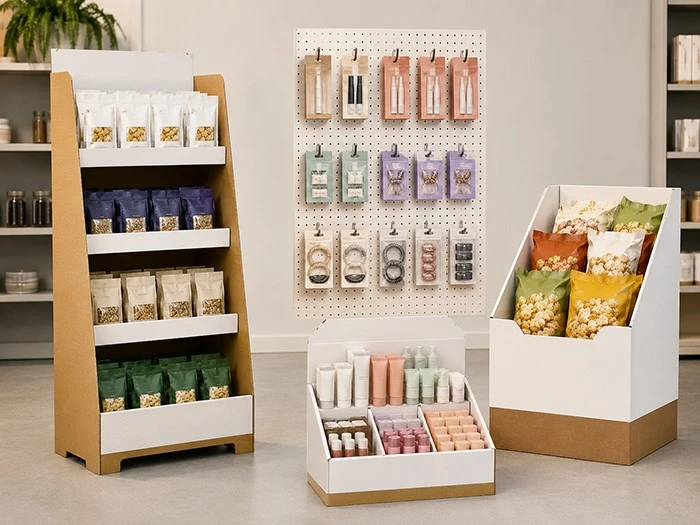
They help organize multiple SKUs more clearly
Not every display job is about drama. Sometimes it is about clarity.
A brand with several flavors, colors, variants, or pack sizes needs shoppers to understand the range quickly. If everything is crowded onto one shelf with no clear grouping, the assortment can feel messy. That makes comparison harder and slows down decision-making.
A paper display stand helps solve that by creating a controlled structure around the range. Different shelves can carry different variants. Graphics can separate segments. The top of the display can introduce the product family, while the body of the display helps shoppers scan options more naturally.
This is one reason floor displays and cardboard display stands are often used for multi-SKU promotions. They do not just create visibility. They create order.
And in many retail categories, order sells better than clutter.
They strengthen brand presentation in physical stores
Packaging matters, but packaging does not always get enough space to do everything by itself.
That is where display comes in.
A paper display stand gives the brand more room to speak. It can carry color, logo, campaign messaging, category language, product claims, and seasonal tone all at once. It can build a small branded zone around the product rather than leaving everything to the pack front.
This is especially useful for brands that want to look more intentional in-store without moving into expensive permanent fixtures.
A plain shelf says, "here is the product."
A good display says, "here is the product, and here is why you should notice it."
That difference can be subtle. But it is real.
They work well for seasonal and themed retail campaigns
Seasonal campaigns are one of the best fits for paper display stands.
Retailers and brands often need displays for Christmas, Halloween, Valentine's Day, back-to-school, summer promotions, gift programs, and one-off event themes. These campaigns need to look fresh and relevant, but they also need to move quickly and disappear cleanly once the season ends.
That is exactly the sort of environment where paper-based retail displays perform well.
They are easier to redesign from one campaign to the next. They are more practical to ship and roll out in volume. And they allow brands to create campaign-specific structures without treating every seasonal promotion like a long-term fixture investment.
For seasonal merchandising, speed and flexibility are not side benefits. They are the point.
They are useful beyond supermarkets
A lot of people associate paper display stands only with supermarkets or discount retail. That is too narrow.
Yes, they are heavily used in grocery, convenience, pharmacy, and mass retail. But they also show up in trade shows, temporary brand activations, shopping malls, pop-up shops, exhibitions, and event-based selling environments.
Why? Because the same advantages still apply:
lightweight structure
printable surfaces
fast assembly
easier transport
flexible branding
short-term campaign suitability
In those environments, a paper display stand can help a booth look more complete, a product line look more professional, or a temporary setup feel more deliberate. It is not always about holding a large amount of stock. Sometimes it is about creating a cleaner branded presence without overbuilding the space.
Different paper display formats serve different jobs
This part matters because not all paper display stands should be treated the same way.
A floor display is useful when the product needs stronger in-store presence and more stock capacity. These are often used in open retail areas, promotional zones, and aisle-end campaigns.
A counter display works better when the product is smaller, quicker to understand, and positioned near checkout or service points.
A pegboard display or hanging format makes sense for lightweight products in hanging packs, such as accessories or small tools.
A dump bin is more appropriate when the promotion is bulk-led and the products are meant to feel easy to browse and grab.
And custom cardboard displays come into their own when the product or the campaign needs something more tailored than a standard tray or shelf.
That is why structure matters. The right format depends on the product, the placement, and the selling behavior the brand is trying to encourage.
Why paper display stands are still relevant
Because they still solve real retail problems.
They help brands launch products more visibly. They support temporary promotions without forcing permanent fixture investment. They improve presentation at checkout and on shelf. They organize assortments better. They strengthen brand communication in stores. And they do all of that in a format that is relatively light, customizable, and practical for rollout.
That combination is hard to ignore.
Paper display stands are not the right answer for every project. If the environment is wet, extremely high-impact, or built for long-term permanent use, another material may make more sense. But for many retail campaigns, especially short- to medium-term ones, they remain one of the most useful merchandising tools available.
Not because they are flashy.
Because they are effective.
Final thoughts
The main application of a paper display stand is not just "displaying products."
That description is too narrow.
A paper display stand is used to improve visibility, create order, support promotions, strengthen branding, encourage impulse buying, and make products easier to notice in real retail environments.
That is why these displays continue to show up across so many categories and campaigns.
They are not just there to hold stock.
They help the product sell.