










What Is Shelf-Ready Packaging?
Shelf-Ready Packaging (often shortened to SRP) has quietly become one of the most influential pieces of retail strategy for brands that fight for visibility in crowded stores. When designed well, shelf-ready packaging boxes act as both protective shipping cartons and retail display boxes.
Retailers like Walmart, Target, Tesco and Coles increasingly require SRP because it reduces stocking time, improves product presentation, and lowers labor cost.
For manufacturers, adopting SRP early gives an advantage: better shelf presence without paying for separate display units. For retailers, it replaces complicated stocking steps with a simple "open and place" routine.
SRP is most often built from corrugated board and engineered with features like tear-strips or perforated box packaging, allowing staff to remove the top in seconds and turn the remaining tray into a clean, stable display.

How Shelf-Ready Packaging Helps Your Product
Brands often underestimate just how much SRP influences sales. Packaging data from several global retailers shows that reducing shelf-restock time by even five seconds per SKU significantly increases compliance and reduces out-of-stock losses. The faster staff can place your product, the more consistently it stays visible.
Below are the areas buyers care about most:
Better Retail Presentation
A well-designed shelf-ready box keeps products upright, aligned, and brand-forward. Customers don't see shipping damage or messy packaging. Instead, they see an organized product block that communicates value at a glance.
Faster Stocking & Lower Labor Cost
Retailers want packaging that eliminates cutters, tape, and repacking. Tear lines or perforations allow the outer lid to be removed in one motion.
For brands selling across multiple chains, meeting SRP requirements reduces chargebacks and out-of-shelf penalties.
More Product Protection During Transit
Because SRP functions as both transport packaging and display packaging, the structural requirements differ from simple mailer boxes. Reinforced edges, thicker walls, and superior crush resistance help the product survive the logistics chain while still looking presentable.
Consistency Across Stores
Large retailers want uniform shelf presentation. SRP ensures every store displays your item in the same orientation and layout. A scattered presentation can hurt perceived value; SRP prevents that.
Custom Branding for Greater Impact
Working with experienced Custom Box Makers allows brands to integrate printing directly on the outer surfaces-colors, product messaging, usage instructions, and QR codes. This gives you a brand block effect on the shelf without paying for additional display materials.

Shelf-Ready Packaging vs. Retail-Ready Packaging
Many buyers assume SRP and RRP are identical. They overlap, but not completely.
Shelf-Ready Packaging (SRP) focuses on the moment the shipping box reaches the retail floor. The goal is maximum efficiency. Requirements include:
- Easy to open
- Easy to stock
- Easy for consumers to shop
- Easy to dispose
Think of SRP as a logistics-and-merchandising hybrid.
Retail-Ready Packaging (RRP) covers a broader category. It includes display boxes, branded trays, clip strips, and packaging designed exclusively for presentation. RRP doesn't always double as a shipping container.
In other words:
SRP = ships product + becomes display
RRP = display-first concept, may or may not ship product
For buyers comparing packaging options, the distinction matters because SRP typically requires stronger materials and stricter functional testing.

What SRP Style Is Best for My Product?
There is no single SRP style that works for every SKU. Product dimensions, weight, and category influence the structure. Below are the most common formats used by brands and recommended by Custom Box Makers:
Perforated Front-Panel SRP
Ideal for lightweight cosmetics, snacks, confectionery, supplements, and sample-size goods. Staff removes the front wall, turning the remaining tray into a minimalist display box.
Best for: products that need visibility more than stacking strength.
Top-Lift Tear-Strip SRP
The most common SRP style in supermarkets. The entire top lifts off cleanly.
This maintains strong side walls, making it suitable for heavier food jars, bottles, or boxed products.
Best for: medium-weight products and multi-packs.
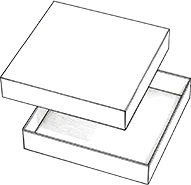
Display Tray + Lid
The upper lid protects during transit; the lower tray serves as the permanent shelf display.
Best for: brands wanting superior print quality on the tray.
Wrap-Around SRP
Used when items require stronger compression resistance during transport. Wrap-around boxes create a tight fit around the product.
Best for: beverages, cans, heavier personal-care items.
Custom SRP with Internal Dividers
Good for fragile or premium goods that need product separation.
Best for: glass bottles, cosmetics, aromatherapy, electronics accessories.
When evaluating your options, focus on:
- How quickly staff can open it
- Whether the structure keeps products standing
- Whether the design reduces freight and packaging waste
- How the printing aligns with your brand message
A qualified supplier will normally prepare a prototype so your team can test handling, stacking, and shelf impact.

Conclusion
SRP is more than a shipping box. It is a merchandising tool that influences how customers perceive your product the moment it hits the shelf. When designed correctly, shelf-ready packaging boxes reduce labor cost, prevent damage, improve display consistency, and strengthen brand visibility. Working with capable Custom Box Makers ensures structural accuracy, efficient opening features, and printing that reflects your brand's identity across every retail location.
FAQs:
1. What is shelf-ready packaging?
Shelf-Ready Packaging is a form of transport packaging engineered to convert instantly into a retail display. Unlike standard shipping cartons, shelf-ready boxes feature tear-strips or perforated box packaging that allow store staff to open them quickly and place the tray directly onto the shelf. It reduces stocking time, improves presentation, and keeps products upright.
2. What SRP style is best for my product?
Choose an SRP style based on product weight, category, and shelf behavior. Lightweight skincare or snacks often work best with perforated styles, while heavier bottles or jars benefit from reinforced top-lift styles. A reliable supplier will test a prototype to check stacking strength, ease of opening, and brand visibility before mass production.
3. What is the difference between shelf-ready packaging and retail-ready packaging?
SRP is packaging that acts as both a protective shipper and a display box when opened. RRP is a broader term that includes any packaging meant to be placed directly on shelves-even if it is not used for shipping. SRP usually demands stronger board grades and strict performance requirements.
Where can I get shelf-ready packaging?
You can source SRP from experienced Custom Box Makers who specialize in corrugated engineering, die-cutting, and printed display boxes. When choosing a partner, look for suppliers who offer structural design, prototypes, short lead times, and the ability to integrate your brand artwork directly onto the packaging.
5. Are shelf-ready packaging boxes customizable?
Yes. SRP can be fully customized-board thickness, print colors, tear-strip placement, tray height, and internal dividers. Customization ensures the box fits your product dimensions, protects during transit, and presents well at retail.