







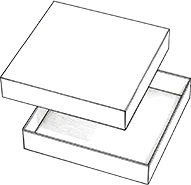




When buyers start a custom packaging project, the word "cardstock" comes up often. It may appear in a quote, a material option, a box sample, or a packaging supplier's product page. The confusing part is that cardstock sounds simple, but it is often used alongside other terms: paperboard, cardboard, folding cartons, corrugated boxes, rigid boxes.
They are not all the same.
Cardstock is a thick, printable paper stock used for lightweight packaging and branded paper products. In packaging, it is commonly used for product boxes, folding cartons, sleeves, backing cards, tags, inserts, and small retail packaging components. It is popular because it prints well, folds cleanly, and gives small products a more polished shelf presentation.
But cardstock is not a heavy shipping material. It is usually better for retail packaging than transport protection.
For brands ordering custom boxes, the real question is not only "What is cardstock?" It is: Is cardstock strong enough for my product, my packaging style, and my delivery method?
This guide explains how cardstock is used in packaging, what products it suits, how thickness affects performance, and when buyers should choose cardstock instead of corrugated or rigid box materials.
What Is Cardstock?
Cardstock is a thicker and stiffer paper material than regular printing paper. It has enough body to hold shape, but it is still flexible enough to cut, crease, fold, print, and finish. That is why it is used in packaging, greeting cards, tags, folders, invitations, product sleeves, and printed retail materials.
In packaging, the word "cardstock" often refers to lightweight paperboard used for product boxes and folding cartons. Some packaging suppliers describe product boxes as cardstock boxes, while packaging engineers may use more technical terms such as paperboard, folding carton stock, SBS paperboard, or coated paperboard.
That difference matters, but not enough to confuse the project.
For a packaging buyer, the practical meaning is this: cardstock is used when the box needs clean printing, light structure, and good retail appearance, but does not need the strength of a corrugated shipping box.
A cosmetic box on a shelf, a soap sleeve, a candle carton, a small supplement box, a backing card for a blister pack - these are typical cardstock packaging applications.

Why Is Cardstock Used in Packaging?
Cardstock is used in packaging because it gives brands a clean printed surface without making the box too heavy or expensive. For many small products, the package needs to do three jobs: present the brand, organize the product, and offer basic protection before the item goes into a shipping carton or retail display.
That is where cardstock works well.
Clean Printing for Branded Packaging
Cardstock usually has a smooth surface, especially when coated. That makes it suitable for full-color printing, product information, logo placement, barcodes, ingredient panels, and retail graphics. For custom printed cardstock boxes, this matters more than many buyers expect. A small box has limited space. If the surface looks dull or rough, the whole product can feel cheaper.
Cardstock also works with finishes such as matte coating, gloss coating, soft-touch lamination, foil stamping, embossing, debossing, and spot UV. Not every finish is necessary. A skincare box may only need a clean matte surface. A gift product may benefit from foil or embossing. The right finish depends on brand positioning, not decoration for decoration's sake.
Lightweight Structure for Retail Product Boxes
Cardstock boxes are usually lighter than corrugated boxes and easier to fold than rigid boxes. That makes them practical for retail product packaging, especially when products are small, lightweight, and displayed on shelves.
Common examples include cosmetics, skincare products, soap, candles, tea, chocolates, supplements, stationery, small accessories, and gift items. Cardstock gives these products a finished appearance without overbuilding the package.
A common mistake is to expect cardstock to handle shipping by itself. It can hold and present the product, but if the item is shipped directly to customers or packed in bulk, an outer corrugated box may still be needed.
Common Uses of Cardstock in Custom Packaging
Cardstock is useful because it is not limited to one box style. It can be converted into folding cartons, sleeves, wrap bands, inserts, tags, backing cards, header cards, and lightweight display packaging. For custom packaging, that flexibility is often more important than raw strength.
Product Boxes and Folding Cartons
Product boxes and folding cartons are the most common use of cardstock in packaging. These boxes are shipped flat, folded into shape, and used to package lightweight retail items. They are common in beauty, food, gift, stationery, health, and small consumer product categories.
A cardstock product box is usually chosen when the buyer needs shelf appeal, clear printing, and a cost-efficient branded package. It is not meant to replace all shipping protection. Some packaging suppliers list product boxes in 14pt, 18pt, or 24pt paperboard/cardstock options, which shows how common these thicknesses are in lightweight retail packaging.
Good use cases include:
|
Product Type |
Why Cardstock Works |
|
Cosmetics |
Strong print quality and compact shelf presentation |
|
Skincare |
Clean branding and ingredient information |
|
Soap |
Lightweight product, easy sleeve or carton design |
|
Candles |
Good for small jars when paired with proper structure |
|
Tea and chocolate |
Works well for sleeves and printed cartons |
|
Supplements |
Suitable for lightweight bottle cartons |
|
Stationery |
Easy to print, fold, and brand |
Packaging Sleeves and Product Wraps
Cardstock is also useful for packaging sleeves and product wraps. A sleeve can cover part of a product, slide over a tray, wrap around a set, or act as a branding band.
This format works well when the product already has some structure and only needs branding or grouping. Soap bars, chocolate bars, notebooks, gift sets, tea boxes, cosmetic kits, and stationery bundles often use sleeves because they reduce material while keeping the product branded.
Sleeve packaging can look simple, but the dimensions must be accurate. If the sleeve is too tight, it may tear during assembly. If it is too loose, the product feels unfinished. For custom packaging, small tolerance issues can become very visible
Inserts, Backing Cards, and Tags
Cardstock is not only used for outer boxes. It is also used inside or around the package.
Backing cards are common for blister packaging, hanging products, small accessories, and retail peg displays. Inserts can hold product information, brand messages, instructions, or promotional cards. Hang tags and header cards are often made from thicker cardstock because they need to carry print clearly and feel durable when handled.
These smaller packaging components can affect the whole product experience. A flimsy instruction card or weak backing card can make the product feel less reliable, even when the outer box is well designed.

Cardstock Thickness: What Should Buyers Know?
Cardstock thickness can be described in different ways, including points, GSM, or pounds. In custom packaging, buyers often see thicknesses like 14pt cardstock, 18pt cardstock, and 24pt cardstock. The "pt" number refers to thickness in points, and a higher number generally means thicker stock.
Some custom product box suppliers commonly offer 14pt, 18pt, and 24pt options for cardstock or paperboard packaging.
A simple way to think about it:
|
Cardstock Thickness |
Common Packaging Use |
|
14pt cardstock |
Small lightweight products, soap boxes, cosmetic cartons |
|
18pt cardstock |
Skincare boxes, supplements, small candles, stronger retail cartons |
|
24pt cardstock |
Bulkier small products, stronger folding cartons, premium-feel boxes |
Thickness helps, but it does not solve everything.
A 24pt cardstock box is thicker than a 14pt box, but it still does not behave like corrugated board. The box style, crease design, product weight, coating, insert structure, and shipping method all affect performance. A thin but well-designed carton can sometimes perform better than a thicker box with weak folds or poor fit.
For buyers, the safest approach is to share product size, product weight, box style, shipping method, and retail use before choosing material thickness.
Cardstock vs Paperboard vs Cardboard: What Is the Difference?
Packaging terms are messy. Buyers may ask for cardstock, suppliers may quote paperboard, and someone else may call the same thing cardboard. The important thing is to understand how these words are used in real packaging conversations.
Cardstock vs Paperboard
Cardstock is a common market term. Paperboard is usually the more technical packaging term. Paperboard is widely used for folding cartons and printed product boxes; it is a solid paper-based material, unlike corrugated fiberboard, which has a fluted inner layer. ([The Box Co-op][2])
For many custom boxes, cardstock and paperboard may describe similar lightweight retail box materials. The exact material should still be confirmed by thickness, grade, coating, and box structure.
Cardstock vs Cardboard
Cardboard is a broad everyday word. It can mean many things: cardstock, paperboard, chipboard, corrugated board, or general paper-based packaging material. That is why "cardboard" is not always precise enough for custom packaging production.
When a buyer says "cardboard box," the supplier still needs to ask: Do you mean a printed paperboard carton, a corrugated shipping box, or a rigid gift box?
This is not wordplay. It affects cost, protection, printing, and production method.
Cardstock vs Corrugated Boxes
Cardstock boxes are usually better for retail presentation. Corrugated boxes are better for shipping, stacking, heavier products, and transport protection. Corrugated material has a fluted layer that gives it more cushioning and stacking strength, while cardstock is thinner and smoother for print-focused product packaging. UPrinting makes a similar distinction: cardstock is strong in retail presentation, while corrugated is better for heavier or delicate items that need shipping strength.
|
Material |
Better For |
|
Cardstock |
Lightweight retail boxes, sleeves, tags, inserts |
|
Paperboard |
Folding cartons, printed product packaging |
|
Corrugated board |
Shipping boxes, heavier or fragile product protection |
|
Rigid board |
Premium gift boxes, luxury packaging, high-end presentation |
A clean retail package often uses cardstock or paperboard. A delivery package often needs corrugated protection. Many products use both.

What Products Are Best for Cardstock Packaging?
Cardstock packaging is best for products that need strong shelf presentation, clear printing, and moderate protection without heavy-duty shipping strength.
It works especially well for small or medium-light products.
Beauty and Personal Care Products
Cosmetics, skincare, soap, perfume samples, haircare products, and beauty accessories often use cardstock boxes because print quality matters. These products need brand color, ingredient information, finish options, and shelf impact.
For cardstock boxes for cosmetics and cardstock boxes for skincare products, buyers usually care about surface finish as much as structure. Matte coating, foil stamping, embossing, and soft-touch finish can help the package feel more premium.
Food, Gift, and Lifestyle Products
Tea, chocolate, snacks, candles, stationery, small gifts, and lifestyle products are also common cardstock packaging categories. A sleeve, folding carton, or custom printed box can give these products enough retail structure while keeping the package light.
Cardstock is especially useful when the product itself already has a bottle, jar, wrapper, pouch, or inner container. The cardstock box then becomes the branded outer layer.
When Cardstock Is Not Enough
Cardstock may not be enough for very heavy, fragile, wet, oily, sharp, or high-impact products. It may also be risky for direct-to-customer shipping if there is no outer carton or protective insert.
If the product is fragile, the buyer may need an insert, tray, partition, sleeve, or corrugated mailer. If the product is heavy, corrugated packaging or rigid box structures may be more appropriate.
The package should match how the product will be handled. A box sitting on a retail shelf has a different job from a box traveling across a courier network.

Advantages and Limitations of Cardstock Packaging
Cardstock packaging is popular because it balances appearance, print quality, and light structure. But it has limits. A good packaging decision should include both sides.
Advantages of Cardstock Packaging
Cardstock gives brands a smooth printing surface, clean folds, lightweight construction, and strong visual control. It is easy to customize for different box styles and works well with many finishes.
It is also practical for retail packaging because it can ship flat before assembly, store efficiently, and be produced in different sizes. For small custom boxes, this can help control both cost and storage space.
Strong advantages include:
Clean print quality
Good for folding cartons
Lightweight structure
Suitable for retail shelves
Works with premium finishes
Good for small and medium-light products
Useful for custom printed packaging
Flexible for sleeves, tags, inserts, and product boxes
Limitations Buyers Should Consider
Cardstock is not the strongest packaging material. It is not ideal for heavy products, rough shipping, high moisture exposure, or products that need strong cushioning. It can bend, crush, or scuff if the material is too thin or the structure is not designed properly.
Moisture resistance also depends on coating or lamination. A plain cardstock box should not be treated as water-resistant packaging.
For shipping, cardstock packaging may need an outer corrugated box. This is common. The retail box presents the product; the shipping carton protects it during transport.
How to Choose Cardstock for Custom Packaging and Custom Boxes
Choosing cardstock for custom packaging should start with the product, not the material chart.
The first questions are simple. What is the product? How heavy is it? Will it sit on a retail shelf or ship directly to customers? Does it need full-color printing? Will the box be opened often? Does the product need an insert? Is the packaging meant to look premium, natural, colorful, or minimal?
For custom boxes, buyers should confirm:
|
What to Confirm |
Why It Matters |
|
Product size |
Controls box dimensions and fit |
|
Product weight |
Affects material thickness and structure |
|
Retail or shipping use |
Decides whether cardstock alone is enough |
|
Box style |
Tuck box, sleeve, folding carton, insert, tray |
|
Printing artwork |
Determines surface and finish requirements |
|
Surface finish |
Matte, gloss, foil, embossing, lamination |
|
Quantity |
Affects production method and unit cost |
|
Shipping method |
May require corrugated outer carton |
|
Sustainability needs |
Influences coating, material, and recyclability |
|
Insert requirement |
Helps protect or organize the product |
Cardstock is often a smart choice when the packaging needs to look clean, print well, and support lightweight retail presentation. It becomes less suitable when the box must carry heavy loads or protect fragile products alone.
A practical supplier should not recommend cardstock just because it is common. The material should match the product and the way the box will be used.
Final Thoughts: Is Cardstock Right for Your Packaging?
Cardstock is a useful material for lightweight retail packaging, folding cartons, product sleeves, backing cards, tags, inserts, and many small custom boxes. It prints well, folds cleanly, and gives brands a strong surface for visual identity.
Planning custom packaging or custom boxes for a new product? WOW Packaging can help review your product size, weight, packaging purpose, artwork style, material options, and shipping method before recommending cardstock, paperboard, corrugated board, or rigid box structures.
FAQ
1.What is cardstock in packaging?
Cardstock is a thicker, stiffer, printable paper material used for lightweight product boxes, folding cartons, sleeves, backing cards, tags, inserts, and branded retail packaging.
2.Is cardstock good for custom boxes?
Yes, cardstock is good for custom boxes when the product is lightweight or medium-light and needs clean printing, shelf appeal, and branded presentation. It is not ideal as the only packaging for heavy or fragile shipping.
3.What products are best for cardstock packaging?
Cardstock packaging works well for cosmetics, skincare, soap, candles, tea, chocolate, supplements, stationery, small gifts, accessories, and lightweight retail products.
4.What thickness of cardstock is best for packaging?
The best thickness depends on product size, weight, and box style. Common options include 14pt, 18pt, and 24pt. Lightweight products may use thinner cardstock, while bulkier small products may need thicker stock or extra structure.
5.Is cardstock the same as cardboard?
Not exactly. Cardboard is a broad term that may refer to cardstock, paperboard, corrugated board, or other paper-based packaging materials. For production, it is better to confirm the exact material type and thickness.
6.What is the difference between cardstock and corrugated boxes?
Cardstock is smoother and thinner, making it better for printed retail packaging. Corrugated boxes have a fluted inner layer and are better for shipping, stacking, heavier products, and transport protection.
7.Can cardstock packaging be printed?
Yes. Cardstock is widely used for custom printed packaging. It can support full-color printing, matte or gloss coating, foil stamping, embossing, debossing, and other surface finishes.
8.Do cardstock boxes need a shipping box?
For e-commerce shipping, long-distance delivery, fragile products, or heavier items, cardstock boxes usually need a corrugated outer shipping box or protective insert.