












1 Common Materials and Advantages of Corrugated Display Stands
1.1 Primary Materials
Single wall corrugated cardboard (3-4mm thickness) offers basic strength for lightweight products. It provides excellent printability and cost-effectiveness for short-term promotions.
Double wall corrugated cardboard (6-7mm thickness) delivers enhanced durability and load capacity. This material supports heavier products while maintaining affordable pricing.
Triple wall corrugated cardboard (15mm thickness) provides maximum strength comparable to wood. It offers superior crush resistance for long-term installations.
1.2 Key Advantages
Cost efficiency remains the primary benefit, with material costs 60-80% lower than plastic or metal alternatives. This enables frequent display updates and campaign changes.
Lightweight construction facilitates easy transportation and setup. Average weight reduction of 70% compared to traditional display materials.
Environmental sustainability through recyclability and biodegradability. Made from renewable wood fiber sources with minimal environmental impact.
Excellent printability allows high-quality graphics and brand messaging. Surface treatments enable various finishing options including matte and gloss.
2 Classification of Corrugated Display Stands
2.1 Floor-Standing Display Stands
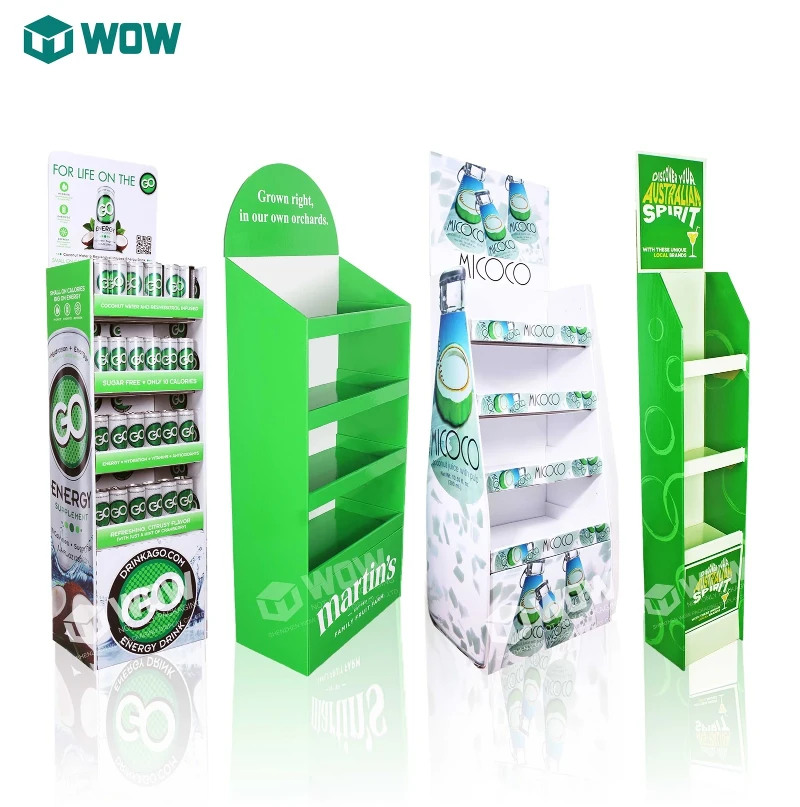
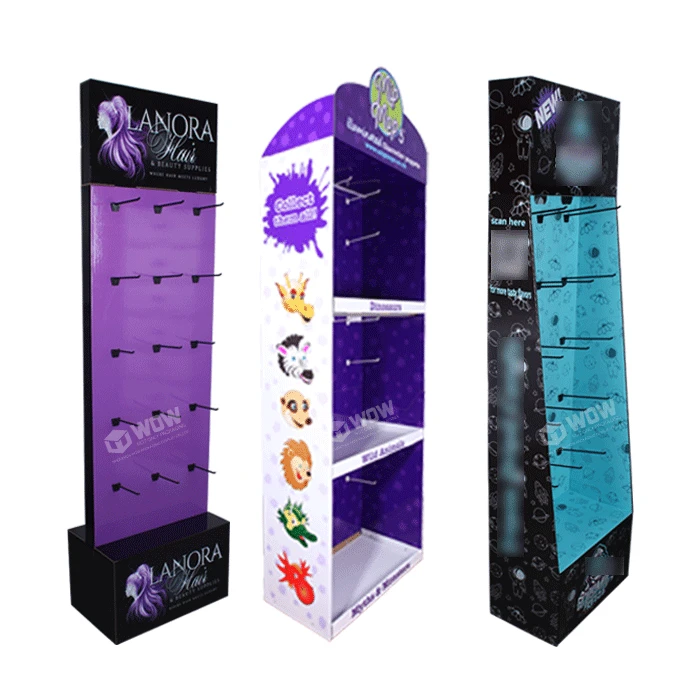
Floor-standing display stands offer maximum product capacity and visual impact. Height ranges from 1200-2000mm with stable base dimensions.
Key features include multi-tier configurations accommodating 20-100 products. Self-supporting structure requires no additional mounting hardware.
Advantages include high visibility from distance and maximum storage capacity. Knock-down design reduces shipping costs by 70% significantly.
Applications include supermarket promotions, retail end-caps, and trade show displays. Ideal for heavy product categories and seasonal campaigns.
2.2 Tabletop Display Stands
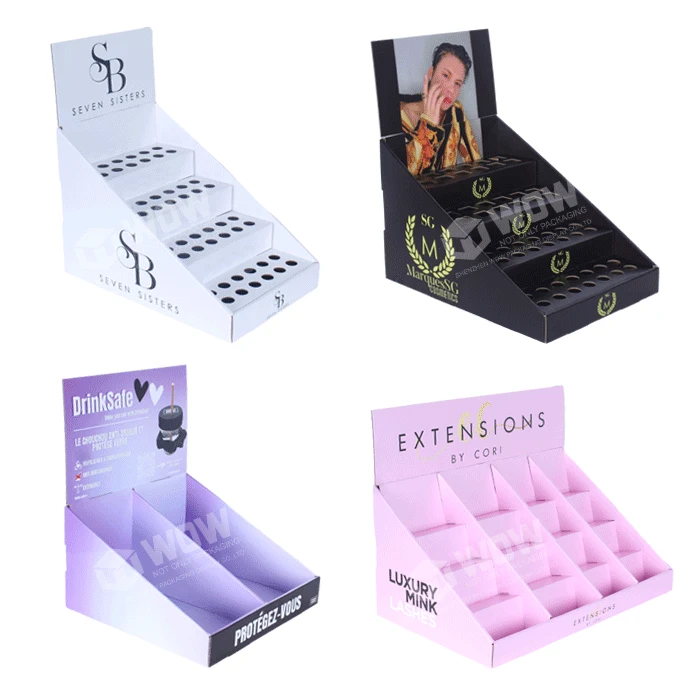
Tabletop cardboard display stands maximize counter space efficiency. Compact dimensions measure 200-400mm height with 150-600mm width options.
Key features include tiered presentation and front-loading access design. Maximum load capacity ranges 5-10kg for various product types.
Advantages include impulse purchase stimulation and space optimization. Easy restocking maintains product availability during peak hours.
Applications include checkout counters, reception areas, and point-of-sale locations. Perfect for small items and promotional merchandise.
2.3 Template-Based Display Stands
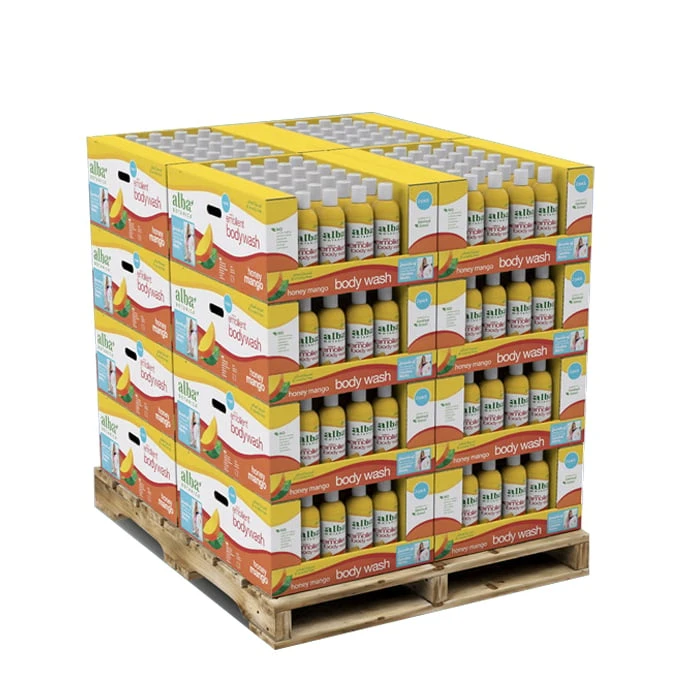
Template-based displays provide standardized frameworks with customization flexibility. Modular components enable rapid reconfiguration for different campaigns.
Key features include interchangeable parts and scalable capacity options. Standard connection systems ensure universal component compatibility.
Advantages include cost reduction and design flexibility benefits. Variable graphics support brand-specific messaging requirements effectively.
Applications include retail chains, franchise operations, and multi-product promotions. Suitable for businesses requiring frequent display updates.
2.4 Hook-Mounted Display Stands
Hook-mounted displays maximize vertical space without floor footprint requirements. Standard configurations fit 4-inch and 6-inch spacing patterns.
Key features include adjustable positioning and multi-product configurations. Weight capacity supports 2-5kg loads safely and securely.
Advantages include space efficiency and existing fixture integration. Vertical merchandising increases product density without expansion.
Applications include pegboard systems, slat-wall fixtures, and gondola end-caps. Ideal for accessories, small items, and impulse purchases.
3 Material Requirements for Corrugated Display Stands
3.1 Strength Standards
3.1.1 Structural Performance
Edge crush strength requirements: 4-6 kN/m (single wall), 8-10 kN/m (double wall), 12-15 kN/m (triple wall).
Burst strength specifications: 300-500 kPa (lightweight), 800-1200 kPa (heavy-duty applications).
Compression strength ensures load-bearing capacity under specified conditions. Testing evaluates both short-term and long-term performance.
3.1.2 Durability Factors
Impact resistance prevents damage during transportation and handling. Material specifications address repeated loading cycles.
Fatigue resistance maintains structural integrity throughout display lifecycle. Quality testing simulates real-world usage conditions.
3.2 Surface Quality
3.2.1 Print Requirements
Surface smoothness below 2.5 micrometers ensures optimal print quality. Consistent texture enables uniform ink absorption and color reproduction.
Moisture content maintained at 8-9% prevents warping and dimensional instability. Controlled environment storage preserves material properties.
3.2.2 Contamination Control
Heavy metal limits ensure food-safe applications and environmental compliance. Volatile compound restrictions protect indoor air quality.
Microbiological contamination standards prevent product safety issues. Testing protocols verify material cleanliness and safety.
3.3 Environmental Standards
3.3.1 Sustainability Requirements
Recyclable content minimum 35-50% supports circular economy principles. Post-consumer fiber usage reduces virgin material demand.
Biodegradability testing confirms environmental compatibility. Decomposition rates evaluated under various environmental conditions.
3.3.2 Chemical Resistance
Cleaning agent resistance prevents material degradation during maintenance. Humidity tolerance maintains structural integrity in retail environments.
Temperature stability ensures performance across seasonal variations. UV resistance protects graphics from lighting-induced fading.
3.4 Quality Control
3.4.1 Testing Protocols
Incoming material inspection verifies specification compliance. Physical property testing confirms strength and dimensional accuracy.
Statistical process control monitors production consistency. Real-time quality metrics prevent defective product release.
3.4.2 Validation Procedures
Finished product testing evaluates structural integrity and aesthetic quality. Performance validation confirms load capacity and durability.
Field testing simulates actual retail environment conditions. Customer feedback integration drives continuous improvement initiatives.