










A cardboard display with hooks is one of the most practical display formats for small packaged accessories.
That is especially true in the mobile accessories category. Products like phone cases, charging cables, earphones, adapters, holders, and screen accessories are usually lightweight, hang-packed, and sold in spaces where product visibility matters more than large display volume. In that kind of retail setting, a display needs to do more than hold products. It needs to organize them clearly, use vertical space efficiently, and make browsing easier for shoppers who are making quick decisions.
This is where a mobile accessories cardboard display can work very well.
Why Mobile Accessories Work Well on a Hook Display
Mobile accessories are a natural fit for hook-based merchandising because of how the products are packaged and how shoppers browse them.
Most accessories in this category are sold in blister packs, hanging pouches, or small retail cards with euro holes. That packaging format makes them ideal for peg or hook presentation. Each SKU can be displayed face-forward, the assortment stays visible, and customers can compare items quickly without digging through stacked inventory.
That is one of the main strengths of a peg hook cardboard display. It supports organized product visibility in a category where clutter can become a real problem. If charging cables, adapters, earbuds, and phone stands are mixed into one shelf section without clear structure, the display can quickly look messy. A hook layout helps prevent that.
This is also why a mobile phone accessories display stand should not be treated like a general snack tray or a dump bin. Mobile accessories need clearer segmentation. The display works best when the shopper can immediately understand where one product group ends and another begins.
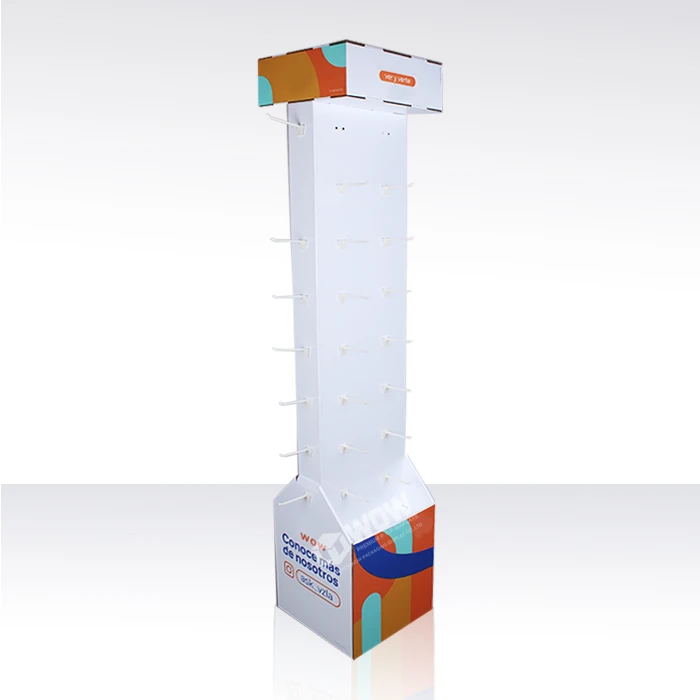
What Makes a Cardboard Display with Hooks Useful in Retail
A cardboard display with hooks is not only about hanging products. It is about using retail space more efficiently.
In many stores, especially convenience retail, checkout-adjacent areas, and smaller electronics sections, horizontal space is limited. A hook display solves part of that problem by turning unused vertical space into selling space. Instead of placing products flat on a shelf, the display presents them in a way that increases visible SKU count without taking up a larger footprint.
There is also a practical sales benefit. Hook displays make it easier for shoppers to scan multiple options quickly. That matters in accessories, where decisions are often comparison-based rather than purely impulse-based. A shopper may want to compare connector type, color, cable length, or compatibility. A structured hook layout makes that process easier.
For brands, a retail cardboard display for accessories also provides more room for messaging than ordinary shelf placement. A header card, branded side panels, and shelf strips or hanging rails can all work together to create a small but clear branded zone in-store.
Where Should a Mobile Accessories Cardboard Display be Placed?
Placement matters a lot for this category.
A mobile accessories cardboard display usually performs best in places where shoppers either pause naturally or are already in a tech-related purchase mindset. That can include checkout-adjacent zones, accessory aisles, front-of-store promotional areas, or store sections near phones, chargers, power banks, and travel electronics.
In small-format retail, the display may work near the register because many accessories function as add-on products. In electronics or telecom retail, it may work better beside a main device wall or near service counters where customers ask compatibility questions.
The key is not just traffic. It is relevance. A shopper looking at phone-related products is much more likely to respond to an accessories display than a shopper passing by an unrelated category. So the best placement usually combines visibility with category context.
That is one reason this kind of cardboard display with hooks is often more effective than general-purpose floor displays for the same category. It fits the browsing logic of the product.
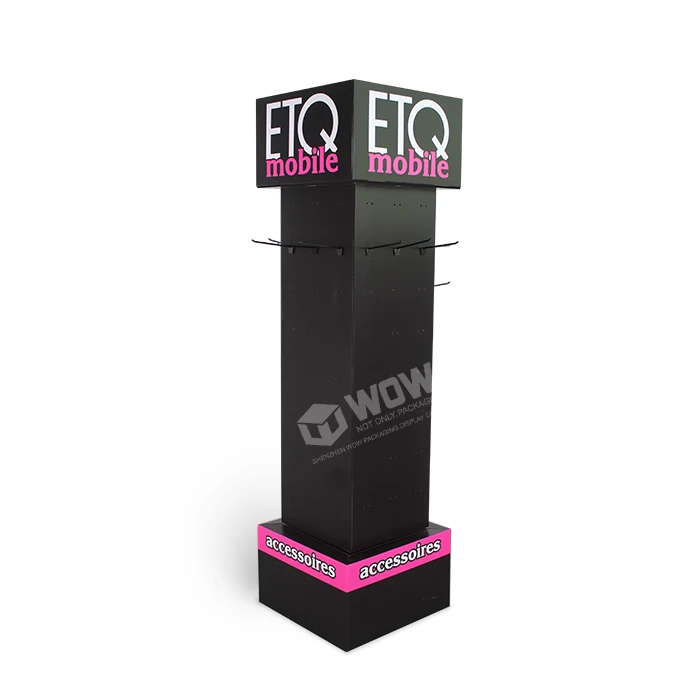
What Should a Good Peg Hook Cardboard Display Include?
A useful peg hook cardboard display should be simple, stable, and easy to shop.
First, the hook spacing has to match the packaging size. If the products overlap too much, the display becomes hard to read. If the spacing is too wide, the unit wastes room and looks understocked too quickly.
Second, the display should have a clear visual hierarchy. The header should identify the category or brand from a short distance. The middle area should support the main selling SKUs. If multiple accessory types are included, the layout should separate them clearly by row or section.
Third, the structure needs to hold its shape under repeated product removal. This is where engineering matters. A mobile phone accessories display stand may look simple, but the hook area still needs to remain rigid enough to prevent sagging or tearing during store use.
And finally, the unit should be easy to assemble and easy to refill. A display that looks nice in a rendering but is awkward for store staff will usually underperform in real retail conditions.
When is a custom mobile phone accessories display stand the better choice?
Standard displays work for standard assortments.
But many brands do not want their display to look generic. They may need specific hook counts, stronger branding, a more compact footprint, or a display layout built around one product family rather than many mixed SKUs. That is where a custom mobile phone accessories display stand becomes more useful.
A custom approach makes sense when:
the product line has unique pack sizes
the brand wants stronger category blocking
the store footprint is limited
the display needs to fit a specific campaign or retailer requirement
the assortment includes several accessory types that need better grouping
In those cases, the display is not just there to hold stock. It is there to help the brand look more organized, more intentional, and easier to shop.
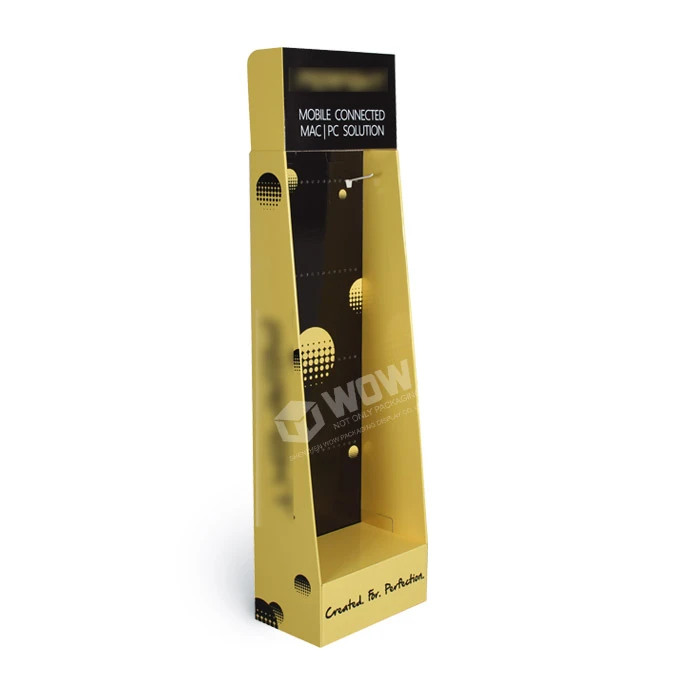
Common mistakes in mobile accessories hook display design
One common mistake is treating all accessory categories the same.
Phone cases, cables, chargers, earbuds, and holders do not all behave the same way in-store. Some need more visual comparison. Some need stronger anti-clutter organization. Some need fewer hooks but stronger front-facing. A display that ignores those differences will feel disorganized quickly.
Another issue is overcrowding. This happens a lot in accessory displays. Because the items are small, people assume more hooks always means a better display. Not necessarily. If shoppers cannot quickly distinguish product types, the display starts to work against itself.
A third problem is weak category signage. A retail cardboard display for accessories needs to tell the shopper what kind of products they are looking at. Without that, the display becomes just a wall of small packs.
Final thoughts
A good cardboard display with hooks makes mobile accessories easier to see, easier to browse, and easier to buy.
That is why this format continues to work so well for cables, chargers, earphones, adaptors, and other small packaged electronics. It uses vertical space efficiently, supports better SKU visibility, and helps brands create a cleaner in-store presence without relying on heavier permanent fixtures.
For stores and brands looking for a mobile accessories cardboard display, a peg hook cardboard display, or a more customized mobile phone accessories display stand, the real goal should not be to add more display material. It should be to create a structure that fits the way shoppers actually browse the category.
That is where this kind of display does its best work.