












Quick answer: FSDU stands for Free Standing Display Unit. It is an independent retail display positioned on the sales floor to present products without relying on permanent store shelving.
FSDU has become a hot topic in the retail industry recently. So, what are FSDUs? What role does it have for the retail industry?
What Does FSDU Stand For?
First of all, FSDU stands for Free Standing Display Unit. In simple terms, FSDU is a shelf for displaying goods, usually placed in an important position in a retail store, such as a conspicuous place when entering the store, a special promotion area, and so on.
The term describes a display that can stand independently on the shop floor. It may be positioned near an aisle entrance, beside a category shelf, at the end of an aisle or within a seasonal promotion zone. Unlike permanent store fixtures, a retail FSDU is normally developed for a particular product range, campaign or rollout period.
In the cardboard display industry, the terms FSDU display stand, floor standing display unit and freestanding retail display are often used for similar structures. The exact design can vary, but the defining feature is that the display does not need a wall or existing shelf to remain upright.
Why Are FSDUs Used in Retail?
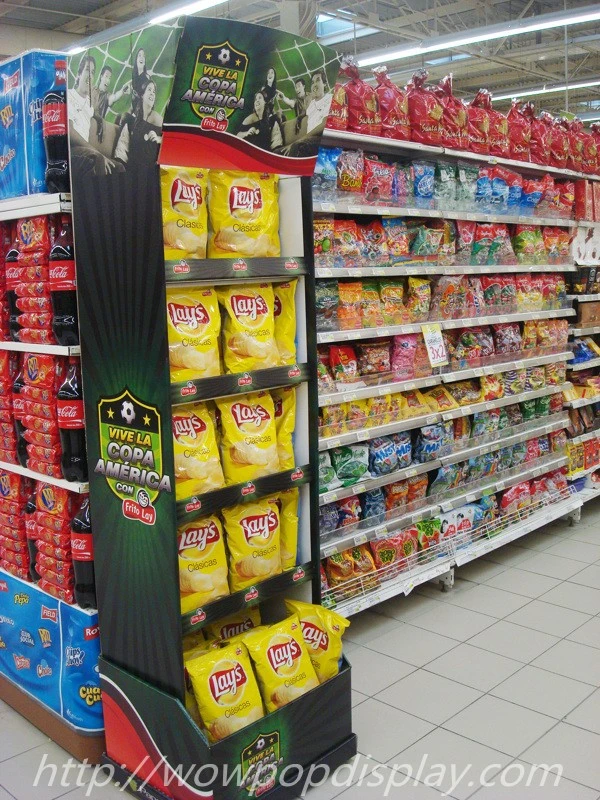
FSDUs usually have good visibility and design, so they can catch the consumer's eye and draw their attention to a brand or product. Compared with other display methods, FSDU has the following advantages:
1.The product stands out. Because the FSDU is usually placed in a prominent position, it can make the product stand out from the crowd of competitors.
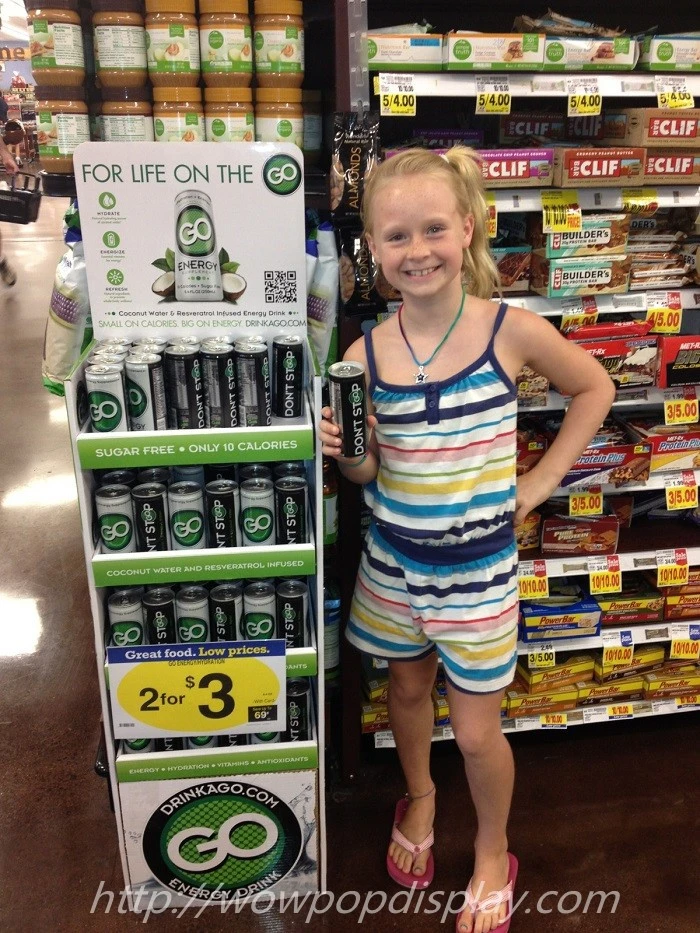
2.Consumer experience. When consumers pay attention to products on FSDU, they can more easily understand the features and advantages of the products, thereby increasing their purchase intention.
3.Increase sales. FSDUs are often used to promote special promotions, thus increasing sales and brand awareness.
An FSDU also gives a brand control over more than the front of a shelf. The header, side panels, shelf fronts and base can work together as one visual system. That makes the format useful when a campaign needs to communicate a new product, limited-time offer or clear difference between several SKUs.
Results still depend on the location, stock level, message and ease of shopping. An FSDU should therefore be treated as a complete merchandising tool rather than decoration alone. For a more focused discussion, read our guide to the benefits of FSDU displays.
Where Are FSDUs Commonly Placed?
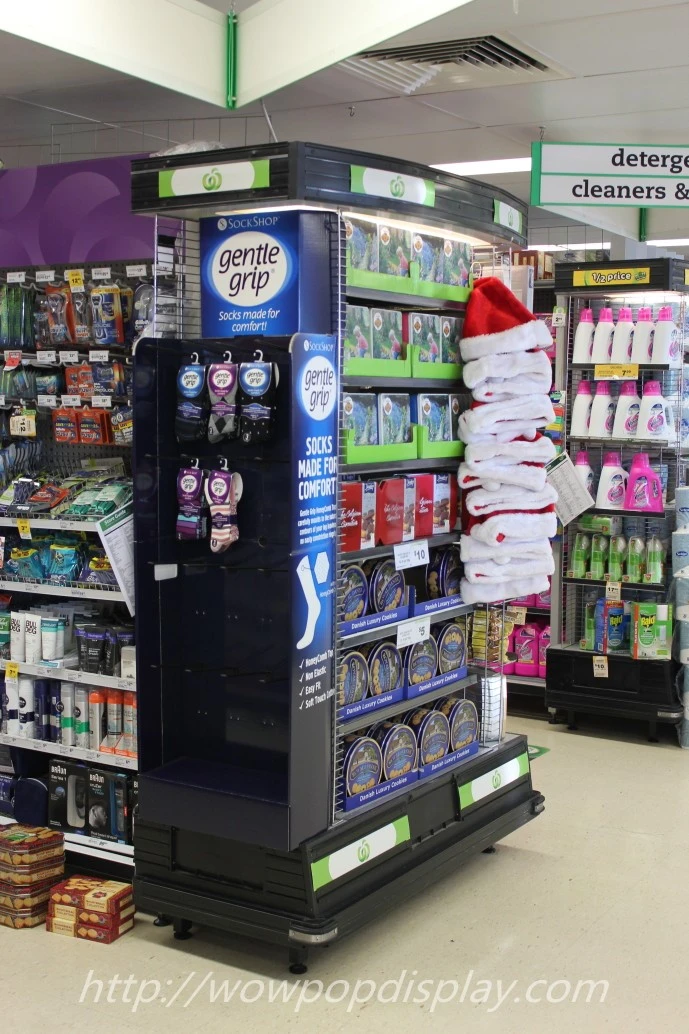
Although FSDU display is common in many retail scenarios, one of the areas where it is most effective is supermarkets. In supermarkets, FSDUs are usually placed in the center or prominent position of the aisle to attract consumers' attention. Additionally, FSDUs can be used to promote seasonal or themed items, such as Christmas gifts or Easter chocolates.
Other common locations include store entrances, category transition areas, beside checkout queues, near a related product category and within temporary promotional zones. The position should match the buying mission. A snack display may benefit from a high-traffic impulse area, while a skincare launch may need more space for product education and testers.
Store entrance: suitable for launches and seasonal campaigns that need immediate visibility.
Main aisle: useful for high-traffic categories and products that are easy to understand quickly.
Category area: keeps the display close to related products and supports comparison.
Checkout queue: works best for smaller, lower-priced impulse products.
End-of-aisle zone: provides strong exposure when the retailer permits a freestanding unit in that location.
In the retail industry, the design and placement of FSDUs requires careful planning and consideration. If it is misplaced or poorly designed, it can backfire and reduce consumer interest. Therefore, retailers need to understand consumer behavior and preferences to determine the optimal FSDU design and location.
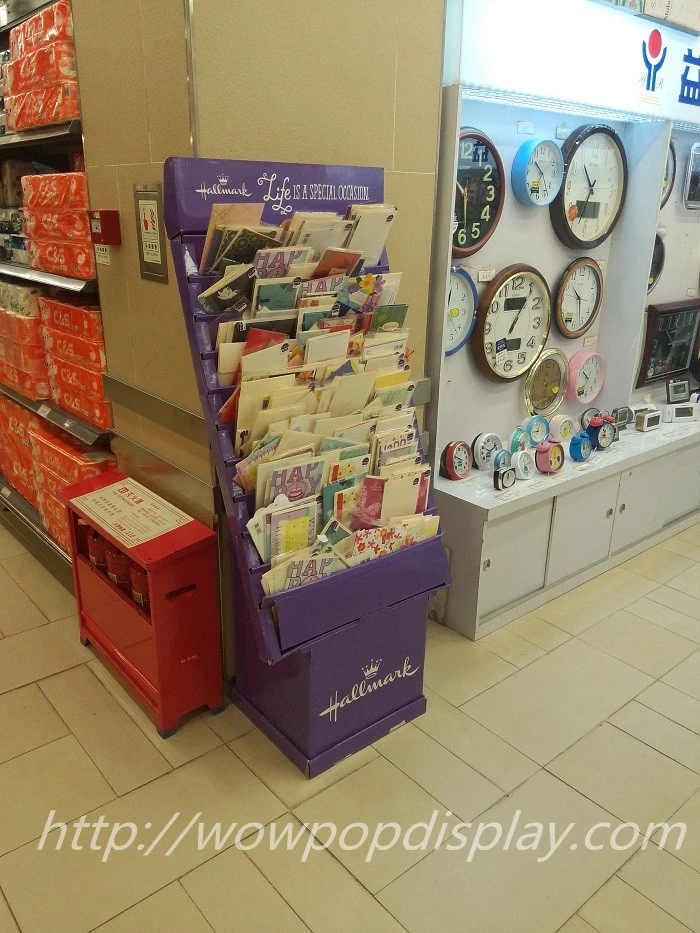
Common Types of FSDU Display Stands
A free standing display unit is not limited to one construction. The right format depends on how the product is packed, how customers take it from the display and how store staff replenish stock.
| FSDU type | Best suited for | Key design point |
|---|---|---|
| Shelf FSDU | Boxed products, bottles and multi-SKU ranges | Shelf span and total product load |
| Hook FSDU | Bagged products and hanging accessories | Hook spacing, backing strength and refill access |
| Dump-bin FSDU | Loose packs, snacks and fast-moving items | Reach depth and product visibility as stock falls |
| Hybrid FSDU | Mixed packaging formats or several SKUs | Balanced capacity and clear product organization |
Shelf-based FSDUs
Shelf units are one of the most familiar cardboard FSDU formats. Their engineering depends on the individual product weight, number of facings, shelf depth and distance between vertical supports. A heavier bottle does not simply require thicker board; the load must be transferred through the shelves and side panels to a stable base.
Hook and peg FSDUs
Hooks work well for light packs that already include a euro slot or hanging hole. The designer needs to know the loaded weight per hook, the required spacing and whether metal or plastic hooks are permitted by the retailer. The rear panel must remain flat when the display is fully loaded.
Dump-bin and mixed-format FSDUs
Dump bins allow fast product access and simple replenishment, while a hybrid unit combines shelves, hooks or bins in one display. These formats are useful when a campaign includes different packaging shapes. You can compare more examples in our cardboard floor displays section.
FSDU vs CDU: What Is the Difference?
An FSDU stands on the floor and normally provides a larger display area and greater stock capacity. A CDU, meaning Counter Display Unit, is positioned on a counter, shelf or checkout surface. CDUs are more appropriate for compact products, samples and smaller impulse purchases.
| Feature | FSDU | CDU |
|---|---|---|
| Position | Sales floor | Counter or existing shelf |
| Stock capacity | Medium to high | Low to medium |
| Typical use | Campaigns, launches and category promotions | Small products and checkout purchases |
If the product range is small and the available footprint is limited, view our counter display units before choosing a floor-standing format.
What Information Is Needed Before Designing an FSDU?
The quality of the design brief directly affects the final structure. A reference image can show a preferred style, but it cannot confirm whether the display will support the real products or fit the retailer's space.
Product dimensions, unit weight and packaging shape;
Number of SKUs and quantity required on each shelf or hook;
Maximum footprint and height permitted by the retailer;
Campaign length and expected store environment;
Required printing area, brand assets and promotion message;
Flat-packed, semi-assembled or pre-packed delivery preference;
Distribution route and number of stores in the rollout;
Any retailer rules covering materials, stability or assembly.
Product load comes before decoration
For a cardboard FSDU, flute direction, shelf span, internal dividers and base construction all affect performance. Load testing should reproduce the intended product arrangement because bottles, boxes and flexible packs distribute weight differently. Moisture exposure, shopper contact and partial stock levels should also be considered.
Flat-packed or pre-packed?
A flat-packed FSDU can reduce shipping volume, but store employees need clear instructions and a quick assembly sequence. A pre-packed display can shorten the time required on the sales floor, although it needs stronger transit protection and occupies more freight space. The best option depends on rollout scale, labor cost and product vulnerability.
How Cardboard FSDUs Support Temporary Retail Campaigns
Corrugated board is widely used for temporary and seasonal FSDU programs because the structure and graphics can be developed together. Headers, side panels and shelf fronts provide printable surfaces without adding separate signage. When designed for flat packing, the same structure can also support efficient storage and distribution before a campaign begins.
Cardboard is not automatically suitable for every product. Very heavy loads, long campaign periods or wet store environments may require reinforced board, additional support components or another material. The decision should follow the load test and retail conditions rather than a general material claim.
Brands looking for a campaign-specific structure can review our custom cardboard FSDU displays. That category page covers commercial options, while this article remains focused on FSDU meaning, use and selection.
In conclusion, Cardboard fsdu is a very useful retail display tool that can help brands and products stand out in a competitive market. For retailers, the correct use and placement of in store FSDUs can increase sales and brand awareness while enhancing the consumer buying experience.
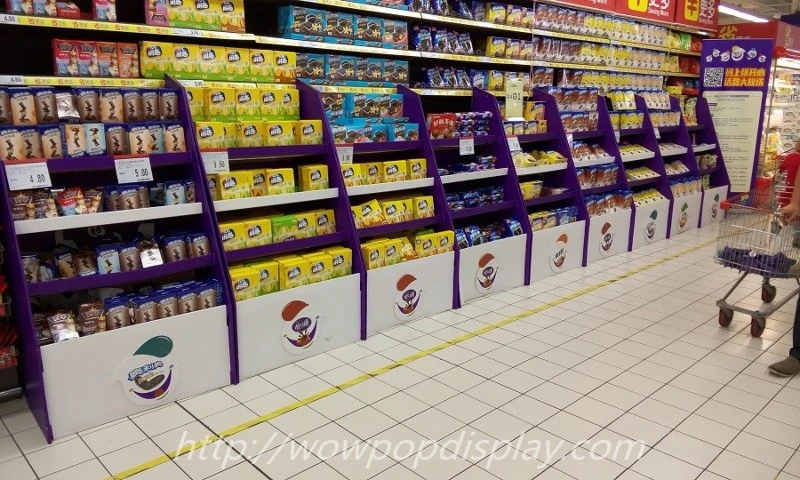
From Design Brief to Retail Rollout
A practical FSDU project normally moves through structural planning, white-sample testing, artwork checking, printed sample approval, production and packing. Early testing is especially important when several stores will assemble the same unit. Tabs, shelves and supports should be easy to identify without relying on the engineer who created the prototype.
WOW DISPLAY combines custom display design with engineering and supply-chain coordination. Our prototyping and production process is built around product data, retailer requirements, load testing and the chosen delivery method.
As a FSDU supplier, we attach great importance to the needs of our customers and always strive to provide the best quality products and services. We have an experienced team that can provide customers with comprehensive consultation and support to ensure they get satisfactory solutions.
If you need FSDU display stand or any other related products, please contact our sales representative, we will reply you as soon as possible and provide the best solution. We are very grateful for your trust and support and look forward to cooperating with you.
For more, please contact the sales manager of WOW: Aaron Li
Email: aaron@wowpopdisplay.com
Mobile: +86 186 7564 6976
Frequently Asked Questions About FSDUs
1.What is the FSDU meaning in retail?
FSDU means Free Standing Display Unit. It is an independent product display placed on the retail floor for merchandising, launches or promotional campaigns.
2.Is an FSDU the same as a floor display?
FSDU is a common industry term for a freestanding floor display. "Floor display" is broader and can also describe permanent, semi-permanent or temporary structures made from different materials.
3.What is the difference between an FSDU and a CDU?
An FSDU stands on the floor and carries more stock. A CDU sits on a counter or shelf and is generally used for smaller products and impulse purchases.
4.Can a cardboard FSDU hold heavy products?
It can hold substantial loads when the board grade, flute direction, shelf span, internal reinforcement and base are designed around the real product weight. A loaded prototype should be tested before production.
5.How are FSDU display stands delivered?
They may be shipped flat-packed, semi-assembled or pre-packed with products. The delivery format should balance freight volume, store labor, assembly risk and product protection.