












When customers walk into a retail store, their attention is often guided not only by the products but also by how those products are presented. Display stands play a vital role in this process. They are not just fixtures for holding merchandise but powerful marketing tools that enhance visibility, organize space, and influence purchasing decisions. From Cardboard display stands to Metal display stands, Acrylic display stands, PVC display stands, and Wooden display stands, each material comes with unique strengths and applications.
This article explores the main categories of display stands, their features, and where they are most effectively used. By understanding the differences, brands and retailers can make smarter investments in their in-store marketing.
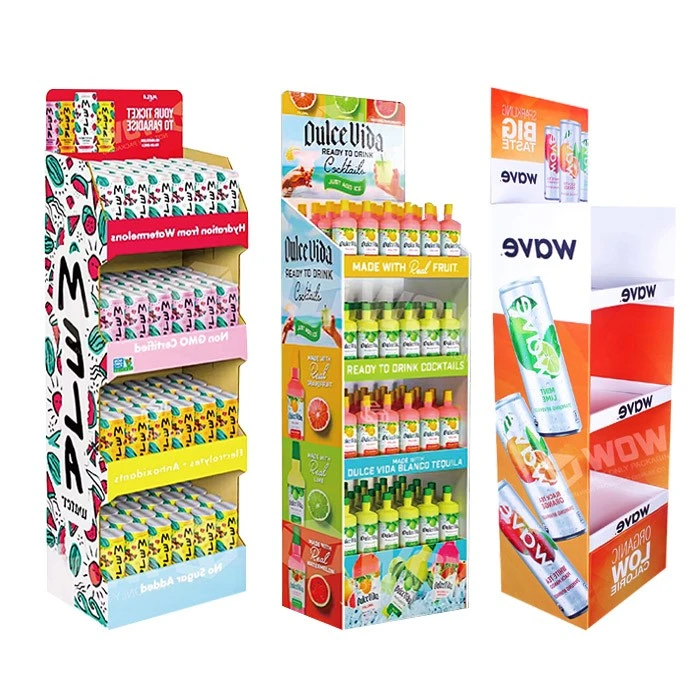
Cardboard Display Stand
Key Characteristics
The Cardboard display stand is one of the most popular choices for modern retailers. Made from corrugated or rigid cardboard, it is lightweight, cost-effective, and highly customizable. Thanks to advanced printing technology, cardboard stands can be fully branded with high-resolution graphics, vibrant colors, and seasonal promotions.
Cardboard displays are also environmentally friendly. According to a 2024 report from Smithers Pira, corrugated cardboard remains the most widely recycled packaging and display material worldwide, with recovery rates above 80% in Europe and North America. For brands aiming to showcase sustainability, this makes cardboard stands an attractive choice.
Application Scenarios
Supermarkets and convenience stores: Temporary promotions, new product launches, or holiday campaigns.
Pharmacies and cosmetics shops: Countertop cardboard display stands that highlight small items like lip balms or travel-sized skincare.
Trade shows and events: Easy to transport and assemble, providing a flexible solution for short-term branding.
Cardboard stands work best in campaigns requiring speed, flexibility, and budget control.
PVC Display Stand
Key Characteristics
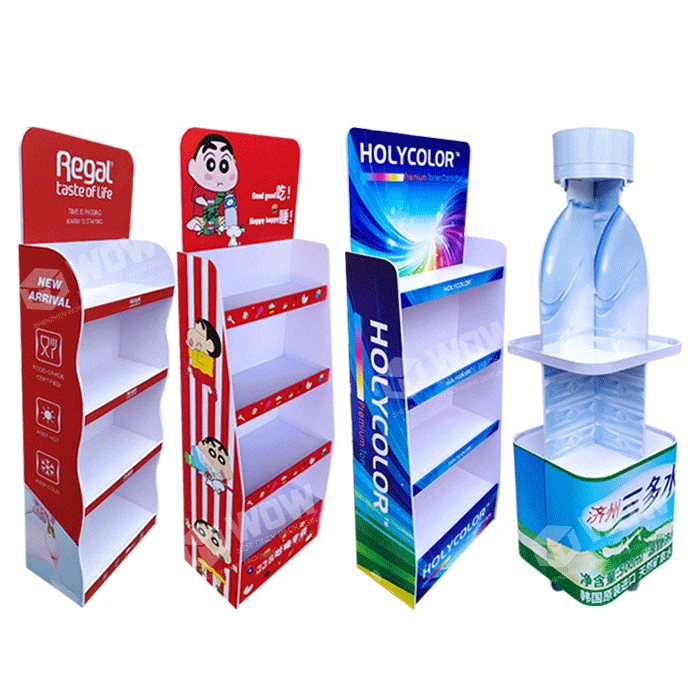
The PVC display stand is valued for its durability, lightweight structure, and moisture resistance. PVC (polyvinyl chloride) is a synthetic plastic polymer that allows for greater structural integrity compared to cardboard, while still being relatively economical.
PVC displays are versatile: they can be molded into free-standing structures, hanging racks, or wall-mounted systems. Unlike wood or metal, PVC stands do not corrode, making them a strong choice for humid environments or outdoor applications.
Application Scenarios
Cosmetics and skincare retail: PVC display stands are commonly used as Skin care product display stands because they can hold heavier bottles while maintaining a polished look.
Electronics stores: To organize accessories like phone cases, chargers, or earphones.
Outdoor retail kiosks: Water resistance makes PVC ideal for semi-outdoor retail zones.
PVC stands strike a balance between cost efficiency and structural longevity, appealing to both big chains and small businesses.
Acrylic Display Stand
Key Characteristics
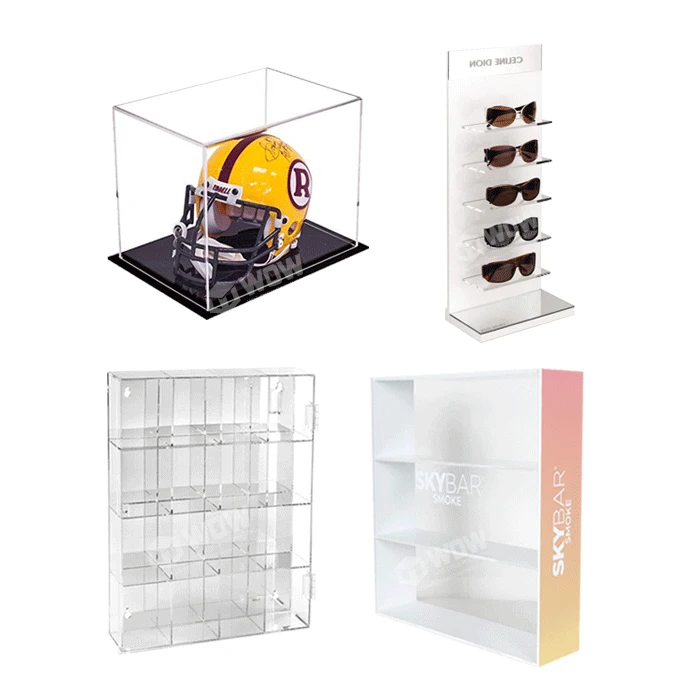
An Acrylic display stand is synonymous with clarity and elegance. Acrylic, also known as Perspex or PMMA, has a glass-like appearance but is lighter and more impact-resistant. This makes it perfect for retailers who want to highlight the product without distraction.
According to a 2023 Global Acrylic Market survey, demand for acrylic furniture and display products is expected to grow at a CAGR of 5.8%, driven by luxury retail and cosmetics. Retailers increasingly prefer acrylic stands because they provide a premium look while being relatively easy to fabricate into different shapes.
Application Scenarios
High-end boutiques and cosmetics shops: Acrylic showcases perfumes, jewelry, and premium skincare in a clean, modern way.
Tech retailers: Acrylic risers for smartwatches, headphones, or tablets, allowing a 360-degree view.
Showrooms and exhibitions: Transparent acrylic enhances product visibility while keeping the focus on the merchandise.
Acrylic stands are ideal when aesthetics and brand image are top priorities.
Metal Display Stand
Key Characteristics
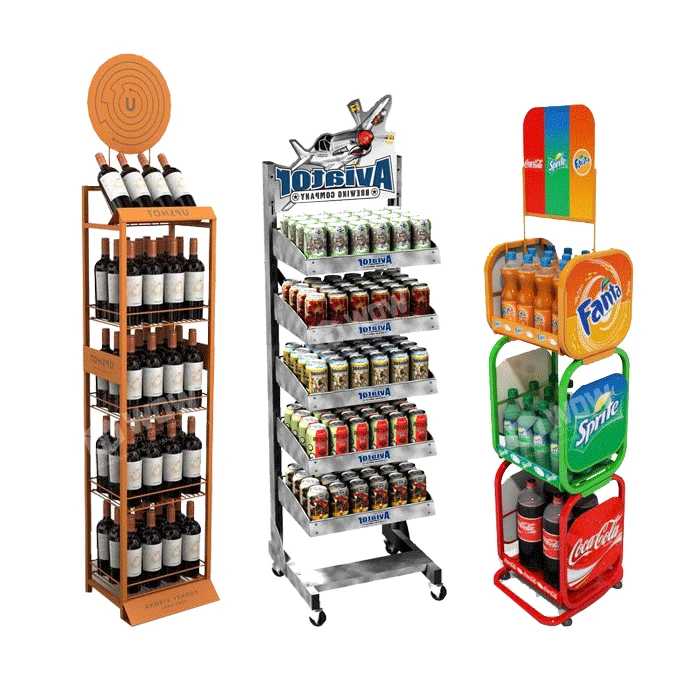
The Metal display stand is built for strength, longevity, and load-bearing capacity. Made from materials such as steel, aluminum, or wire, these stands can support heavy or bulky products that other materials cannot. Metal stands are also highly customizable with powder-coated finishes, hooks, or shelves.
A survey by Retail Systems Research (RSR) indicates that 63% of large retailers rely on metal fixtures for permanent store installations due to their durability. Compared to cardboard or PVC, metal stands often represent a higher upfront investment but offer a longer service life, making them cost-efficient over time.
Application Scenarios
Grocery stores: Heavy packaged goods like bottled beverages, canned food, or cleaning supplies.
Sports and outdoor equipment retailers: Sturdy stands for bicycles, helmets, or gym gear.
Apparel stores: Metal racks for accessories, hats, or rotating hooks for small garments.
The Metal display stand is the go-to option for long-term use where durability and high capacity are crucial.
Wooden Display Stand
Key Characteristics
The Wooden display stand combines natural aesthetics with durability. Crafted from plywood, MDF, or solid wood, these stands evoke a sense of craftsmanship and authenticity. They are often associated with artisanal, organic, or eco-friendly brands.
Wood offers excellent structural strength and can be stained, painted, or laser-engraved for branding. While heavier than cardboard or PVC, wood delivers an unmistakable visual appeal that aligns with premium brand identity.
Application Scenarios
Organic food and beverage shops: Wooden racks reinforce the "natural" message of organic and sustainable products.
Bookstores and libraries: Wooden shelving and floor displays provide a warm and inviting look.
Luxury retail: Custom Wooden display stands for wine, watches, or handcrafted goods.
For retailers who want to project authenticity and premium quality, wooden displays are unmatched.

Injection Display Stands
Key Characteristics
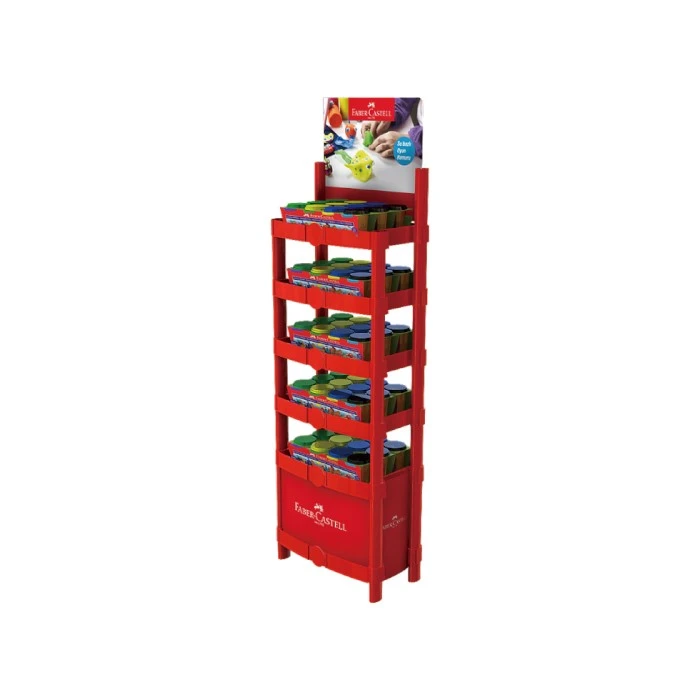
Injection displays represent another versatile option, though less common than PVC or acrylic. They are created by injecting custom molds, allowing precise, repeatable designs at scale. These stands are durable, lightweight, and can be produced in a wide range of colors.
Application Scenarios
Mass-market consumer goods: Household products, toys, or packaged food items.
Pharmaceuticals: Lightweight but durable structures for organizing pill bottles or healthcare products.
Convenience stores: Custom countertop units for candy, batteries, or drinks.
Injection-molded displays are best suited for large-scale retailers who require consistent quality and mass production.
Choosing the Right Display Stand
Each display material serves different purposes:
- Cardboard: Best for temporary promotions, high customization, and eco-friendly branding.
- PVC: Mid-range durability, good for cosmetics, electronics, and outdoor kiosks.
- Acrylic: Premium look, excellent for high-end retail and exhibitions.
- Metal: Heavy-duty, permanent installations, and long service life.
- Wood: Natural aesthetics, strong for artisanal or luxury branding.
- Injection-molded plastic: Mass production with consistent quality.
When selecting the right option, retailers must balance budget, lifespan, brand image, and product type. Data suggests that hybrid strategies are increasingly common-for instance, using cardboard stands for seasonal promotions while maintaining metal or wooden fixtures for core product lines.
Conclusion
Display stands are far more than functional equipment-they are extensions of a brand's identity and strategy. Whether it's the affordability and eco-friendliness of a Cardboard display stand, the durability of a Metal display stand, the elegance of an Acrylic display stand, the practicality of a PVC display stand, or the natural charm of a Wooden display stand, each type contributes uniquely to the customer journey.
Retailers who understand the strengths of each material can design store layouts that are not only visually appealing but also strategically effective in driving sales. Investing in the right display stand is not just about holding products-it's about holding attention.