










What Is a PDQ Display?
PDQ Display, short for "Pretty Darn Quick" display, refers to a retail-ready packaging and merchandising unit designed for easy setup and immediate use on retail shelves or checkout counters. These displays are pre-packed with products and delivered to retail stores ready for presentation.
Key Features:
- Designed for quick setup and stocking.
- Ideal for impulse buys and promotional items.
- Cost-effective and lightweight.
- Often recyclable and easy to dispose of.
Retailers favor PDQ displays because they reduce labor time, offer brand visibility, and drive last-minute purchases.
In simple terms, PDQ stands for retail speed, visibility, and convenience. If someone asks what is a PDQ or what is a PDQ in merchandising, the answer usually refers to a ready-filled display that moves quickly from shipping to shelf presentation. In many retail environments, pdq in retail is closely connected to pdq packaging, shelf-ready packaging, and fast merchandising execution.

Types of PDQ Displays by Structural Features
PDQ displays can be engineered into various formats depending on product size, weight, and visual merchandising goals.
Tray-Style PDQ Displays
Feature open-top trays holding small items.
Often placed on shelves or end caps.
Used for snacks, cosmetics, or small electronics.
Easy to replenish and rotate.
A pdq tray is one of the most common retail-ready formats because it combines simple product holding with fast shelf placement. Many pdq display boxes use this tray-style structure, especially for lightweight items that need easy access and quick replenishment. For brands starting with cardboard pdq displays, tray-style units are often the most practical entry point.
Stackable PDQ Displays
Modular units designed to be stacked vertically.
Optimize vertical space in retail settings.
Allow separate SKUs or categories to be displayed together.
Stackable PDQ displays are useful when brands want to show several product variations without using too much shelf space. This type of pdq packaging supports layered merchandising and helps retailers organize multiple SKUs in a compact vertical format. In busy stores, that can improve both visibility and stock efficiency.
Peg or Hook PDQ Displays
Equipped with hooks for hanging items.
Useful for carded products like batteries or accessories.
Include a backboard with branding and slot-holes.
Hook-style PDQ Display formats are especially effective for items sold in hanging packs, such as batteries, accessories, travel-size items, or seasonal add-ons. From a merchandising perspective, this structure works well because it keeps products front-facing and easy to browse.
Pop-Up PDQ Displays
Designed for flat-packing and instant assembly.
Frequently used in seasonal or limited-time promotions.
Pop-up pdq display boxes are widely used for short campaign cycles because they ship flat, open quickly, and reduce setup time at store level. For many corrugated pdq displays, this format offers a good balance between low freight volume and strong in-store presentation. It is especially useful for promotions that need speed more than long-term fixture durability.

Types of PDQ Displays by Usage Scenario
Checkout Counter PDQ Displays
Compact and placed near POS.
Target impulse purchases.
Commonly used for gum, candy, or novelty items.
In practice, checkout PDQ displays are designed for products that can sell with very little decision time. This is why pdq packaging is often used for candy, beauty minis, batteries, accessories, and other low-commitment items near POS. For many buyers trying to understand pdq in retail, counter placement is the most familiar real-world example.
Aisle-End PDQ Displays
Positioned at the end of aisles to grab attention.
Larger than counter displays.
Feature higher branding real estate.
Aisle-end PDQ displays often work in a similar way to an Endcap Display, giving products stronger exposure in high-traffic retail zones. This format is useful for featured launches, promotional bundles, or short-term campaigns that need more brand space than a standard shelf unit can provide. It is also one of the easiest ways to turn regular aisle traffic into better product awareness.
Pallet-Ready PDQ Displays
Fit directly onto retail pallets.
Popular in warehouse clubs or large-format stores.
Pre-packed and easy to roll onto the floor.
Pallet-ready cardboard pdq displays are particularly useful in club stores, warehouse formats, and high-volume retail programs. Because they arrive pre-packed and easy to position, they help store teams move products from logistics to the sales floor with minimal extra handling. For large retail rollouts, this can save both time and labor.
Shelf-Ready PDQ Displays
Sized to sit on regular retail shelves.
Allow easy integration with existing shelving units.
Shelf-ready corrugated pdq displays are ideal when the brand wants stronger shelf organization without disrupting the retailer's existing fixture layout. They make it easier to move products directly onto the shelf while keeping the display cleaner and more structured. That is one reason pdq display boxes are often chosen for compact shelf-level promotions.
PDQ Displays by Material
Plastic PDQ Displays
Durable and reusable.
Affordable, yet long-lasting.
Suitable for high-turnover or heavy products.
Plastic PDQ displays are often selected when the program requires repeated use and stronger moisture resistance.

PVC PDQ Displays
Affordable and moisture-resistant.
Suitable for permanent installation.
Commonly used in cold or humid retail environments.
This material can work well for semi-permanent pdq display applications where humidity or cleaning durability is a concern.

Metal PDQ Displays
Best suited for industrial or heavy products.
Can withstand heavy weight without deformation.
Often powder-coated for branding.
Metal versions are less common in short-term PDQ programs, but useful when heavier products need stronger structural support.

Acrylic PDQ Displays
High-end appearance and transparency.
Commonly used for cosmetics or electronics.
Affordable, yet offers a high-end display.
Acrylic PDQ Display formats are often chosen when the brand wants a more premium visual effect for cosmetics, electronics, or boutique retail items.

Cardboard PDQ Displays
Most commonly used.
Lightweight, customizable, and recyclable.
Ideal for promotional events and seasonal products. Including corrugated paper pdq display stand and cardboard pdq display stand varieties.
Cardboard PDQ displays are particularly popular due to low production costs, full-color printing compatibility, and flexible design options. Brands often choose corrugated pdq displays for their strength and support capabilities.

Types of PDQ Displays by Function
Promotional PDQ Displays
Designed for limited-time campaigns.
Feature bright colors and call-to-actions.
Usually cardboard pdq displays for cost-effectiveness.
Promotional PDQ displays are one of the most common forms of pdq in retail because they support quick campaign turnover without requiring large permanent fixtures. A well-designed PDQ Display can highlight price, newness, or limited availability in a very compact footprint. That makes it especially useful for short-term retail marketing.
Branding PDQ Displays
Emphasize brand storytelling and identity.
Include custom pdq trays and display boxes with high-end graphics.
Help build visual brand presence in competitive aisles.
Branding-focused pdq display boxes do more than hold products. They act as printed merchandising units that reinforce brand colors, product identity, and promotional messaging at shelf level. For many cardboard pdq displays, this branding function is just as important as the structural function.
Informational PDQ Displays
Feature printed product instructions, benefits, or nutritional info.
Useful for new product launches.
Informational PDQ displays are especially useful when the product needs fast shelf-level explanation. In this sense, the pdq display definition goes beyond packaging and includes shopper communication as well. This is often relevant for trial products, health-related goods, or new retail launches that need a little extra context.
Seasonal PDQ Displays
Target holidays or event-specific sales.
Quick to install and remove post-event.
Often pop-up designs with minimal material use.
Seasonal pdq packaging is often built around speed, light weight, and easy replacement. For brands using corrugated pdq displays, seasonal formats offer a practical way to refresh graphics and messaging without moving into expensive long-term fixtures. This makes them a good fit for holiday promotions and event-based campaigns.
Interactive PDQ Displays
Include QR codes, touch points, or sensory features.
Increase shopper engagement and time spent at display.
Interactive PDQ Display formats help brands increase shopper engagement by adding QR codes, touch points, digital triggers, or sampling prompts. In retail, this kind of PDQ can work well when the goal is not only visibility, but also stronger shopper participation and longer dwell time.

Why Cardboard and Corrugated PDQ Displays Remain Popular
Although PDQ displays can be produced from different materials, cardboard and corrugated board remain particularly important for temporary and promotional retail programs.
The reason is not simply cost.
Corrugated paperboard can be engineered into different structures, printed with high-quality graphics, produced in custom dimensions, and shipped in formats that are practical for retail distribution.
For brands running short-term promotions, this combination can be more useful than investing in a permanent fixture.
Cardboard PDQ Displays Can Be Engineered Around the Product
A common misconception is that a cardboard PDQ display is simply a printed box with an open front.
In practice, the structure can be designed around the actual product load.
Product dimensions determine the tray depth and divider arrangement. Product weight affects the board specification, support points, tray geometry, and base structure. The number of units per display affects how much load accumulates on each shelf or tray.
For heavier products, the engineering approach becomes even more important. Corrugated board can be combined with reinforced structures when a standard lightweight tray is not sufficient.
This is also why corrugated PDQ displays should not be evaluated only by board thickness. The overall construction, load distribution, locking points, support panels, and product placement all influence performance.
Graphics Are Part of the Structure's Job
A PDQ display has limited space, so its graphics need to work quickly.
The top panel can communicate the campaign or product category. The front edge can reinforce the brand or promotion. Side panels can provide secondary information without taking space away from the product.
Smurfit Westrock has also published a real retail example involving Futurewise, where a pre-stocked PDQ display was used not only to present products but also to explain the "slugging" skincare concept to shoppers. The example shows how a PDQ can function as both a merchandising structure and a communication tool.
For a brand, that distinction matters. The display does not have to choose between holding products and communicating a message. A well-engineered structure can do both.
How to Choose the Right PDQ Display
The right PDQ display is determined by more than the product category.
Start with the product itself. How large is each unit? How much does it weigh? Does it need to remain upright? Does the package hang, stand, or lie flat? These details determine whether a tray, box, hook, or modular structure is appropriate.
The number of SKUs is the next consideration. A single-product promotion can use a relatively simple tray, while several variations may require dividers, multiple levels, or separate product zones. Trying to fit too many SKUs into one display can make the merchandising look crowded and make replenishment slower.
Retail placement also changes the design. A shelf-ready PDQ display has to respect the available footprint. A counter display needs to remain compact. A pallet-ready unit needs to consider pallet dimensions, loading stability, transport, and floor placement.
Replenishment is often overlooked during the design stage. Store employees should be able to understand where products go without having to reconstruct the display. If the product disappears from the front row, the next units should be easy to bring forward.
Campaign duration matters as well. A display intended to run for several weeks during a seasonal promotion does not necessarily need the same construction as a fixture expected to remain in stores for months.
PDQ Box vs. PDQ Tray: What's the Difference?
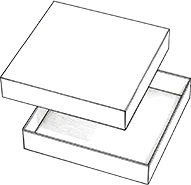
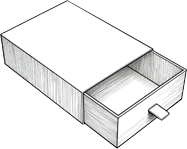
A PDQ box generally provides more enclosure around the product and can work well when the display needs to function partly as a shipping or protective structure. A PDQ tray leaves more of the product exposed and is often better when quick access and shelf presentation are the priorities.
The choice depends on what happens before and after the display reaches the store.
If the product is shipped already loaded into the display and needs to be placed directly onto a shelf, the box-to-display transition becomes important. If the display will remain open throughout the campaign, product visibility and replenishment may take priority.
For brands comparing the two formats, the better question is not "Which one is better?" but:
Which structure creates the simplest path from shipping carton to retail shelf?
That is the core principle behind effective PDQ display design.
For a more detailed look at tray structures, see [PDQ display tray design and selection]
PDQ Displays vs. Other Retail Display Formats
PDQ displays are only one option within the broader retail display system.
A counter display is generally chosen when the available space is limited and the product benefits from proximity to checkout or another high-traffic point.
A floor display provides more vertical and visual space and is better suited to larger assortments or campaigns that need a stronger standalone presence.
A pallet display is designed around high-volume merchandising and direct floor placement, making it particularly useful in warehouse-style retail.
A sidekick display attaches to an existing fixture and can provide additional product exposure without requiring a separate floor footprint.
The choice should therefore start with the retail problem rather than the display name. If the goal is to add a compact, shelf-ready merchandising solution with quick setup and replenishment, a PDQ may be appropriate. If the campaign needs a large branded structure, a floor display may make more sense.
Frequently Asked Questions About PDQ Displays
1.What is a PDQ display?
A PDQ display is a retail-ready merchandising structure designed for quick placement, product presentation, and replenishment. The term is commonly associated with "Pretty Darn Quick" displays.
2.What does PDQ stand for in retail?
PDQ commonly stands for "Pretty Darn Quick" in the retail display industry. The term describes the quick-deployment nature of these merchandising solutions.
3.What is a PDQ display box?
A PDQ display box is a retail display structure that can combine product packaging and merchandising functions. Depending on the design, it can be shipped with products inside and then converted or positioned for retail presentation.
4.What is the difference between a PDQ tray and a PDQ box?
A PDQ tray generally emphasizes open product access and shelf presentation, while a PDQ box can provide more enclosure and protection. The appropriate structure depends on the product, shipping method, retail placement, and replenishment process.
5.Are cardboard PDQ displays strong enough for heavier products?
They can be, provided the structure is engineered for the actual product load. Board specification, reinforcement, load distribution, tray geometry, and support structure all need to be considered rather than relying on board thickness alone.
6.Can PDQ displays be customized for different products?
Yes. Dimensions, tray depth, dividers, graphics, structural components, and loading configurations can be customized around the product and retailer requirements.
7.How do I choose the right PDQ display?
Start with product dimensions and weight, SKU count, retail placement, replenishment method, shipping requirements, and campaign duration. These factors usually provide a better basis for selecting a structure than the product category alone.
Choosing the right PDQ display type depends on several variables: retail space, product category, target audience, and promotional goals. Whether brands opt for durable plastic or customizable cardboard pdq displays, well-designed PDQ units can significantly enhance product visibility, streamline retail logistics, and increase sales.
If you would like to customize a PDQ display, welcome to contact WOW Packaging Display. Our experienced team will help you design a custom (PDQ) display to make your products stand out and thus increase your profits.