


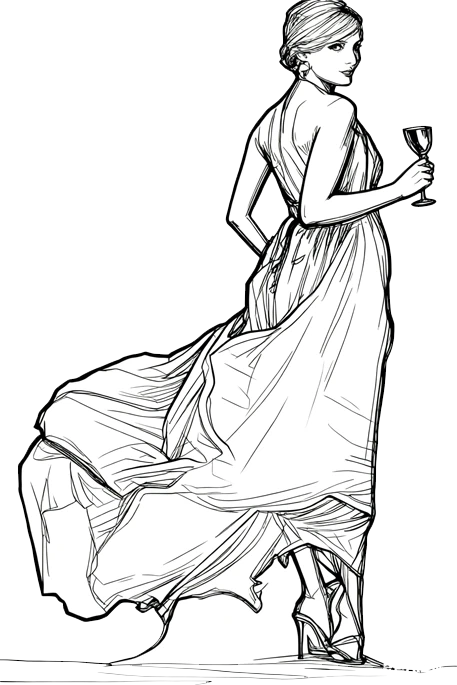




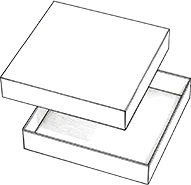
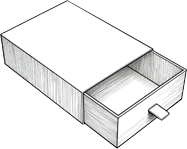



A customer sends an AI-generated image of a retail display and asks, "Can you make this? How much does it cost?"
For custom display manufacturers, this situation is becoming more common. A few years ago, customers usually sent product photos, rough sketches, brand guidelines, or simple reference images. Now, many buyers use AI tools to create display concepts before contacting a supplier. Some AI images look very polished. Some look almost like real retail photos.
At the same time, customers are also using AI to write inquiry emails, prepare design briefs, organize product requirements, and ask suppliers technical questions. Manufacturers are doing the same on the other side. Sales teams use AI to organize customer information, reply faster, explain sampling updates, and translate engineering comments into clearer customer language.
So, is AI good or bad for manufacturers?
The short answer: AI is helpful when it improves communication, but risky when people treat AI images or AI-written text as final production information.
For a custom display manufacturer, AI can make the early communication stage faster and more visual. It can help both customers and suppliers describe ideas more clearly. But AI cannot replace engineering review, real material selection, structural testing, quotation analysis, sample development, or production control.
That difference is important.
What Are the Benefits and Drawbacks of AI for Manufacturers?
AI tools bring real benefits to manufacturers, especially in customer communication. But they also create new problems when customers and suppliers rely on AI too much.
|
AI Benefits for Manufacturers |
AI Drawbacks for Manufacturers |
|
Helps customers show display ideas visually |
AI images may be unrealistic or impossible to produce |
|
Makes inquiry communication faster |
Customers may expect instant quotations from incomplete concepts |
|
Helps sales teams organize customer needs |
AI-written briefs may sound complete but miss key production details |
|
Supports clearer follow-up emails |
AI replies can sound professional but overpromise if not checked |
|
Helps explain design and sample changes |
AI cannot replace engineering review or production judgment |
|
Reduces communication friction across languages |
Sensitive customer information may be mishandled if used carelessly |
|
Helps turn rough ideas into structured project discussions |
Visual expectations may become higher than the budget or material allows |
In simple terms, AI is useful at the idea and communication stage.
It becomes risky when it is treated as a design file, quotation basis, engineering solution, or production promise.
How AI Is Changing Communication Between Customers and Manufacturers
AI has changed the starting point of many custom display projects.
Before, a customer might write:
> We need a cardboard display for our new product.
That kind of inquiry was very open. The sales team had to ask many follow-up questions before the project could move forward.
Now, a customer may send an AI-generated display image showing the shape, color style, product layout, store background, and even lighting atmosphere. The image may help the manufacturer understand what the customer has in mind much faster.
That is a good thing.
But the image often does not include the information needed for real manufacturing. It may not show the display size. It may not reflect real material thickness. The shelves may appear to float without support. The product may look lighter than it actually is. The display may be beautiful, but too expensive to make, too large to ship, or unstable in a real retail store.
This is the new communication challenge.
AI helps customers express ideas faster. But manufacturers still need to turn those ideas into practical display structures.
Benefit 1: AI Helps Customers Express Their Ideas More Clearly
For many buyers, describing a custom display stand is not easy.
They know the feeling they want. They may know the brand color, product type, and store environment. But they may not know the difference between a floor display, counter display, sidekick display, dump bin, pallet display, or mixed-material retail display.
AI helps close that gap.
A customer can generate a concept image and say:
> This is close to what we want.
That image may not be production-ready, but it gives the manufacturer useful information:
- Preferred display shape
- Color direction
- Product presentation style
- Retail atmosphere
- Branding intensity
- Number of shelves or display zones
- Temporary or premium visual feeling
- Whether the customer wants paper, acrylic, metal, wood, or a mixed-material look
For a custom display manufacturer, this can save time in the early discussion.
Instead of guessing the buyer's visual direction, the sales and design team can start with a clearer reference.
Still, the manufacturer needs to ask:
> Is this image only a style reference, or do you want us to develop a real structure based on it?
That one question prevents a lot of misunderstanding.
Benefit 2: AI Helps Manufacturers Organize Inquiries Faster
When a sales team receives an inquiry, the first task is not quoting. The first task is understanding.
AI can help organize scattered customer information into a clearer project brief. For example, if a customer sends several messages, product photos, AI concept images, and rough requirements, AI can help summarize:
- What product will be displayed
- What kind of display the customer wants
- Which information is missing
- What questions should be asked next
- Whether the project is for retail stores, events, supermarkets, or exhibitions
- Whether the customer is talking about cardboard, PVC, acrylic, metal, wood, or honeycomb board
- Whether the project needs design, sampling, production, or only a price estimate
This is useful for sales communication.
A customer may write:
> Can you quote this display? We need something like the image for our snack brand.
AI can help the sales team organize a professional response:
- Thank the customer for the concept reference.
- Explain that the image can be used as a design direction.
- Ask for product size and weight.
- Ask for expected display dimensions.
- Ask for order quantity.
- Ask whether the display should be shipped flat-packed or assembled.
- Ask whether the customer has artwork files.
- Explain that engineering review is needed before accurate quotation.
The reply is faster. More structured. Easier for the customer to understand.
But AI should not decide the quotation strategy. It cannot judge the customer's budget, urgency, seriousness, or long-term value. Those still depend on sales experience.
Benefit 3: AI Makes Follow-Up Communication More Efficient
Follow-up communication is a big part of custom display projects.
After the first inquiry, there may be many rounds of discussion:
- Material selection
- Structure adjustment
- Artwork confirmation
- Quotation revision
- Sample progress
- Shipping method
- Packing design
- Production schedule
- Customer feedback
- Engineering suggestions
AI can help sales teams write clearer follow-up messages, especially when the topic involves technical information.
For example, an engineer may tell the sales team:
> The shelf angle needs adjustment. Otherwise, the product may slide forward after loading.
A sales person can use AI to turn that into customer-friendly English:
> Our engineering team suggests adjusting the shelf angle slightly to improve product stability during retail use. This change will help the products stay in position after loading.
That kind of communication matters.
Customers do not always need to read internal technical language. They need to understand the reason behind the change.
AI can also help prepare:
- Quotation follow-up emails
- Sample progress updates
- Design revision explanations
- Customer reminder messages
- Meeting summaries
- Confirmation checklists
The advantage is not that AI "does the follow-up." The advantage is that AI helps sales teams express the message more clearly and consistently.
Benefit 4: AI Helps Explain Design Files and Sampling Details
Custom display projects often involve many files and confirmations.
Customers may send AI images, brand guidelines, packaging artwork, product photos, or rough sketches. Manufacturers may prepare 3D renderings, structure drawings, dielines, sample photos, material suggestions, and packing instructions.
AI can help explain these files in a more organized way.
For example, before sampling, a supplier may need the customer to confirm:
- Overall display size
- Product size and weight
- Number of shelves
- Material choice
- Printing artwork
- Surface finish
- Assembly method
- Packing method
- Shipping requirements
- Sample revision points
AI can help turn this into a clean sample confirmation checklist.
This is helpful because many sample problems come from incomplete confirmation. The customer may approve the appearance but forget to confirm shelf loading. Or they may approve the display size but later change the product packaging size.
AI cannot prevent all of this. But it can help manufacturers communicate the confirmation points more clearly.
The final responsibility still belongs to the team.
Before sampling, engineering, design, sales, and customer approval should all line up. AI can help with the language. It cannot replace the review.
Risk 1: AI-Generated Images Often Look Good but Are Not Production-Ready
This is the biggest problem manufacturers face now.
AI-generated display images can look impressive. They may have beautiful lighting, perfect shelves, clean retail backgrounds, and attractive product placement. But many of these images do not follow real production logic.
Common problems include:
- No real dimensions
- Unrealistic material thickness
- Shelves without proper support
- Structures that cannot be flat-packed
- Shapes that are difficult to die-cut or assemble
- Product weight not considered
- Display base too small for stability
- Printing area not separated from structural parts
- Expensive visual details that the customer does not expect
- Mixed materials shown in the image but not defined clearly
For example, an AI image may show a cardboard display with a curved floating shelf, glossy acrylic-like panels, metal-looking frames, and wood texture all in one design. The customer may ask for a simple cardboard price, but the image actually suggests a complex mixed-material structure.
This is why manufacturers should not quote directly from an AI image.
An AI-generated image is a concept reference, not a production drawing.
A responsible manufacturer should explain this clearly:
> We can use this image as a design direction. Before quoting accurately, our engineering team needs to review the structure, size, material, product weight, assembly method, and packing requirement.
That response protects both sides.
Risk 2: AI Can Make Customers Expect Faster Quotes Than Reality Allows
AI creates concepts quickly. That speed changes customer expectations.
Some buyers may think:
> I already have the image. Why can't you quote immediately?
But for a custom display manufacturer, a picture is not enough.
An accurate quotation usually needs:
- Display size
- Material
- Product size
- Product weight
- Number of shelves
- Quantity
- Printing method
- Surface finish
- Structure complexity
- Packing method
- Shipping method
- Whether a sample is required
- Whether the design needs engineering development
A quick estimate may be possible, but a formal quotation requires more detail.
This is especially true for custom cardboard displays, acrylic displays, PVC displays, metal displays, wood displays, and honeycomb board structures. Each material has different production logic. A design that looks simple in an AI image may require expensive tooling, special printing, extra reinforcement, or complicated packing.
So the manufacturer needs to manage expectations.
A professional answer is not always the fastest answer. A professional answer is the answer that reduces risk before production starts.
Risk 3: AI-Written Customer Briefs Can Sound Complete but Still Miss Key Details
Customers now also use AI to write project descriptions.
The result may sound polished:
> We are looking for an eco-friendly, premium retail display solution that improves product visibility and supports brand storytelling in a modern retail environment.
That sounds professional. But for manufacturing, it may still be incomplete.
The supplier still needs to know:
- What product will be displayed?
- What are the product dimensions?
- What is the product weight?
- How many SKUs?
- How many units per shelf?
- Where will the display be used?
- Is it temporary or long-term?
- What is the target quantity?
- Does the customer need flat-pack shipping?
Is there a budget range?
Does the customer have artwork files?
This is a strange new problem: the inquiry looks better, but it may not be more useful.
A polished AI-written brief can still be missing the production data needed for quotation and design.
Sales teams should not be distracted by fluent language. They should check whether the brief contains real manufacturing information.
Risk 4: AI Replies Can Make Manufacturers Sound Professional but Less Responsible
Manufacturers are also using AI to reply to customers. This is useful, but it needs control.
AI can write smooth, polite, professional responses. Sometimes too smooth.
The danger is that an AI-generated reply may sound more certain than the team actually is. It may say:
> Yes, we can make it exactly like the image.
That is risky.
A better response would be:
> The image can be used as a concept reference. Our engineering team will review the structure, material, product loading, assembly method, and packing requirements before confirming feasibility and quotation.
That difference matters.
In manufacturing, words create responsibility. If a supplier promises too early, the customer may expect the final sample to match the AI image exactly. But after engineering review, the structure may need changes. The material may need adjustment. The cost may be higher. The display may need reinforcement.
AI can help write the message. It should not make the promise.
Every reply related to feasibility, quotation, delivery time, material, structure, loading, or production risk should be reviewed by a human team.
How Manufacturers Should Handle AI-Generated Customer Requests
AI-generated requests are not a problem if they are handled correctly.
Manufacturers should create a clear process for turning AI concepts into real projects.
Step 1: Treat the AI Image as a Concept Reference
The first step is to respect the customer's idea.
Do not reject the AI image immediately. It may contain useful visual direction. It may show the display style the customer likes.
But the supplier should clearly explain that the image is not a production file.
A good reply could say:
> Thank you for sharing the concept image. We can use it as a visual reference and review how to convert it into a practical display structure.
This keeps the conversation positive while setting the right expectation.
Step 2: Ask for Product and Retail Details
After receiving the AI image, the supplier should ask for real project information.
Important questions include:
What product will be displayed?
What is the product size?
What is the product weight?
How many SKUs will be displayed?
How many products should each shelf hold?
Where will the display be used?
Is it for a supermarket, specialty store, event, or exhibition?
How long will the display be used?
Do you prefer cardboard, PVC, acrylic, metal, wood, or mixed materials?
Should the display be shipped flat-packed or assembled?
What is the target order quantity?
These questions turn a visual idea into a manufacturable project.
Step 3: Let Engineering Review Feasibility Before Quoting
Once the basic information is clear, the engineering team should review the concept.
They need to check:
Whether the structure is stable
Whether the selected material is suitable
Whether shelves can support the product
Whether the display can be assembled easily
Whether the design can be packed and shipped efficiently
Whether the cost matches the customer's likely budget
Whether the display needs prototype testing
This step is where manufacturers create real value.
AI can produce the picture. Engineering turns the idea into something that can stand, hold products, ship safely, and work in store.
Step 4: Convert the Concept into a Real Design File
After feasibility review, the AI concept should be converted into real design materials.
This may include:
3D rendering
Structure drawing
Dieline for cardboard display
Material specification
Printing layout
Assembly instruction
Sample confirmation file
Packing plan
This is the difference between a concept and a production-ready design.
A customer may start with AI. But production needs real files.
Step 5: Confirm Sample Details Before Production
Before sampling, both sides should confirm the key details.
This includes:
Size
Material
Printing
Product loading
Shelf quantity
Assembly method
Packing method
Sample purpose
Expected changes
Production quantity
This confirmation protects the project from misunderstanding.
AI can help prepare the checklist. The customer and manufacturer must still confirm it.
Final Thoughts: AI Makes Communication Faster, but Manufacturing Still Needs Real Expertise
AI is changing how customers and manufacturers talk to each other.
Customers can now create display concepts before contacting a supplier. They can write clearer emails, prepare visual references, and describe brand ideas faster. Manufacturers can also use AI to organize inquiries, reply more efficiently, explain sampling updates, and improve communication across sales, design, and engineering teams.
These are real benefits.
For production, speed is useful. Accuracy is more important.
A custom display project still needs human judgment: product weight review, material selection, structure engineering, sample testing, printing confirmation, packing planning, and production control.
AI can start the conversation.
Manufacturing still has to finish the work.