









A beverage display can look impressive in a rendering and still fail in a real store. Bottled drinks are dense, mixed flavors complicate replenishment, and a unit that feels stable when full may behave differently after shoppers remove products from one side.
The most useful creative beverage displays are designed around four practical questions: what the pack weighs, how much stock the retailer wants on the floor, how employees will refill it, and where the display will sit. For buyers comparing beverage display solutions, this guide reviews seven practical formats and explains where each one works, where it does not, and what should be confirmed before production.
What Makes a Beverage Display Work in a Real Store?
Start with the product, not the outline of the display. A tray for drink-mix sachets has almost nothing in common with a four-tier unit carrying glass bottles. Product dimensions, individual pack weight, facings per shelf and total displayed quantity determine the shelf span, flute direction, internal supports and base construction.
Store operation matters just as much. In a busy aisle, the display needs a controlled footprint and clear product access. In a club store, stock capacity and pallet handling may take priority. Near a refrigerated case, condensation and floor cleaning become part of the structural brief. A format is only "creative" when the visual idea survives these everyday conditions.
- Product: dimensions, packed weight, bottle or carton shape, and leak risk.
- Merchandising: SKU count, facings, eye-level priority and price communication.
- Store fit: approved width, depth, height, aisle clearance and placement rules.
- Replenishment: refill frequency, front access and whether cases can be loaded directly.
- Distribution: flat-packed, semi-assembled or shipped pre-packed with product.
1. Tiered Cardboard Floor Displays for Single-Serve Packs
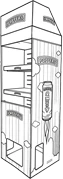
A tiered cardboard floor display gives smaller bottles, cans and beverage cartons more separation than a bulk presentation. It is useful for flavor-led launches, functional drinks and mixed-SKU campaigns where shoppers need to see the front of each pack.
The key question is not how many tiers look good; it is how much weight each tier transfers into the side walls and base. Wide shelves holding liquids normally need more than a thicker outer board. Shorter shelf spans, reinforced front edges, vertical partitions or internal supports may provide a more reliable load path. The unit should also remain stable when the upper shelves are stocked and the lower shelf is partly empty.

2. Pallet Displays for Cases and Multipacks
For bottled water, canned drinks and larger multipacks, a pallet display is usually more practical than a narrow floor stand. It keeps a larger quantity of stock together and can support faster placement when the unit is prepared for pallet handling and distribution from the beginning.
Design decisions should follow the retailer's approved pallet or half-pallet footprint. The team must confirm the case stack pattern, total load, pallet deck height, access for handling equipment and whether the printed surround is load-bearing or decorative. A pre-packed beverage pallet also needs packaging and transit checks with the actual product arrangement, because a stable display in the factory may face compression, vibration and uneven handling before it reaches the sales floor.

3. End Cap Displays for Launches and Mixed SKUs
An aisle end gives a beverage campaign visibility from the main traffic path. It works especially well for a new flavor, a seasonal range or a promotion that needs a stronger brand block than the normal shelf can provide. The structure may be a freestanding cardboard unit or printed cladding fitted to the retailer's existing gondola, and those two formats require different measurements and fixing methods.
For mixed-SKU retail beverage displays, dividers and clear shelf-front communication help staff return each flavor to the correct position. The header should carry the campaign message, while shelf lips can identify flavor or pack size. The display also needs to retain a coherent brand shape after stock levels fall; oversized graphics that depend on a completely full shelf often lose their effect during the day. See our detailed guide to cardboard end cap displays for structure, installation and cost considerations.

4. Dump Bins for Energy Shots, Sachets and Drink Mixes
A dump bin is useful when the product is small, easy to pick up and does not need a strict front-facing presentation. Energy shots, powdered drink sticks, electrolyte sachets and small boxed beverage products can fit this behavior. Full-size glass bottles or loosely loaded heavy cans are usually a poor match: they create concentrated weight, become untidy as stock moves and may be awkward for shoppers to lift from a deep container.
The bin depth should match the shopper's reach and the quantity required on the floor. A false bottom can keep smaller packs visible without filling the whole volume, while partitions prevent different flavors from mixing. If the product is dense, the base and lower side walls need to be treated as structural components rather than printed panels.

5. Sidekick Displays for Small Add-On Products
Sidekicks use narrow areas beside an endcap or gondola. For beverage merchandising, they are better suited to drink enhancers, coffee sachets, powdered supplements, reusable straws or other lightweight add-ons than to rows of filled bottles. This is an important distinction: a slim profile saves floor space, but it also limits the depth and load that can be carried safely.
Before production, confirm how the sidekick attaches to the store fixture and what hardware the retailer permits. Hook spacing should follow the pack width, with enough clearance for shoppers to remove one item without pulling adjacent packs off the display. The lowest product should remain reachable without placing merchandise where carts are likely to strike it.
6. Cooler-Adjacent Displays Without the Moisture Surprise
The area beside a refrigerated case can connect chilled drinks with an ambient promotion, but it is not a normal dry-store environment. Condensation, spills and routine floor cleaning can affect exposed board edges and the bottom of a cardboard structure. A surface coating alone does not solve every moisture path.
When a cardboard display must sit near a cooler, the brief should identify the likely exposure and required campaign duration. Options may include a moisture-resistant printed surface, protected cut edges, a raised base or a separate barrier between the board and floor. The display should not be positioned where it blocks the cooler door, narrows the approach or receives direct water runoff.
7. Cross-Merchandising Displays Built Around an Occasion
Some of the strongest beverage display ideas begin with an occasion rather than a drink category. Sparkling water can sit beside lunch snacks; sports drinks can be paired with protein bars; mixers can be presented near spirits; coffee cans can support a grab-and-go breakfast message. The relationship should be obvious without requiring a long headline.
Operational ownership still needs attention. If products come from two categories, store staff must know who replenishes each side and where reserve stock is kept. Separate trays or dividers make the pairing easier to maintain. Price messages should also remain clear so shoppers can tell whether the items are sold individually or as a promotion.
Which Beverage Display Format Fits the Campaign?
| Format | Best fit | Main design concern |
|---|---|---|
| Tiered floor display | Single-serve packs and mixed flavors | Shelf span, load transfer and stability |
| Pallet display | Cases, multipacks and high stock volume | Pallet footprint, handling and transit |
| End cap display | Launches, seasonal ranges and multi-SKU stories | Retailer fit, product organization and replenishment |
| Dump bin | Sachets, drink mixes and small boxed products | Reach depth, product mixing and dense loads |
| Sidekick | Lightweight beverage add-ons | Attachment method, width and hook load |
For busy retail aisles, a narrow tiered floor display or an approved sidekick can preserve shopper flow. If the campaign needs substantial stock, an endcap or pallet format is usually more realistic. The best answer is determined by the retailer's space and replenishment plan, not by a display name alone.
What Matters in High-Volume Beverage Displays?
Load planning beyond board thickness
Liquid products make small dimensional decisions important. During structural development, calculate the load on every shelf and the total load at the base. Then look at how that weight travels through shelf tabs, side panels, dividers and vertical supports. Flute direction, lamination and shelf span often matter more than simply specifying a heavier grade of board.
Fast replenishment without losing presentation
A high-capacity display should not require employees to remove graphics or unload another SKU before refilling it. Open facings, adequate hand clearance, case-ready trays and clearly separated product zones reduce unnecessary handling. If bottles tend to fall backward as stock is removed, a front stop or tray geometry change may work better than asking the store to tidy the display repeatedly.
Testing the real use sequence
Test with the actual product or an accurate equivalent, not only evenly distributed dead weight. Load the unit fully, remove products unevenly, refill it, and repeat the assembly with someone who did not design the structure. If the program ships pre-packed, the packed display and outer protection should be evaluated for the intended distribution route. This exposes weak shelf edges, confusing parts and stability problems before mass production.
Information to Confirm Before Design Starts
A useful quotation and prototype depend on complete product and rollout information. A reference photo can communicate style, but it cannot establish the load or retailer fit.
- Product dimensions, individual weight and samples when available.
- Number of SKUs, facings and units required per shelf.
- Approved retail footprint, maximum height and placement.
- Campaign duration and expected refill frequency.
- Flat-packed, semi-assembled or pre-packed delivery.
- Distribution route, outer carton limits and retailer specifications.
- Moisture exposure, cooler adjacency and store cleaning conditions.
Frequently Asked Questions
1.What are the best display formats for beverage merchandising in busy retail aisles?
Narrow tiered floor displays and retailer-approved sidekicks work well when space is limited. Endcaps suit more visible multi-SKU campaigns, while pallet displays are better for high stock volume. The choice should follow the permitted footprint, product weight and refill method.
2.Can a cardboard display safely hold bottled beverages?
Yes, when the structure is engineered for the actual bottle weight and quantity. Shelf span, flute direction, dividers, vertical supports and base construction all affect performance. A generic load claim should not replace testing with the intended product arrangement.
3.How do pallet displays differ from beverage floor displays?
Pallet displays are built around higher inventory and pallet handling. Floor displays usually have a smaller footprint and use shelves or trays to organize individual packs. Pallet units suit cases and multipacks; floor displays are better when product visibility and SKU separation are more important.
4.How can cardboard beverage displays be protected near coolers?
Protection may include a moisture-resistant surface, sealed or protected vulnerable edges, a raised base or a separate floor barrier. The correct solution depends on exposure and campaign duration. Cardboard should not be placed in direct runoff or where repeated wet cleaning reaches unprotected board.
5.What information is needed to quote a custom beverage display?
Provide product dimensions and weight, displayed quantity, SKU count, retail size limits, campaign duration, order quantity, artwork expectations and delivery method. For palletized or pre-packed programs, include the retailer's handling and packaging requirements.
Creative Ideas Still Need Engineering Discipline
Strong food & beverage POP displays do more than create a branded shape. Well-planned beverage point of sale displays also make the campaign easier for store teams to install, shop and replenish. They carry the planned load, keep products easy to shop, fit the retailer's space and remain efficient to refill after the launch team has left the store.
WOW DISPLAY develops cardboard beverage displays from structural design and prototyping through printing, production and packing. Share your product samples, store dimensions and rollout plan through our custom display service or contact our team to begin with a structure that is realistic to manufacture and ready for retail use.