





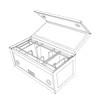



Choosing the right box structure is an important part of developing premium gift packaging. Drawer boxes and Top & Bottom Boxeses are both popular choices for brands looking for a refined appearance, sturdy construction, and a memorable unboxing experience. Although both styles can be made from rigid paperboard and customized with decorative finishes, they offer noticeably different experiences when customers open, handle, and use the packaging.
For brands comparing drawer box vs top & bottom boxes designs, the decision involves more than visual preference. The opening mechanism, product dimensions, internal inserts, manufacturing requirements, and overall packaging budget can all influence which structure works best. Understanding these differences helps brands select packaging that complements their products while remaining practical for production and distribution.
What Are Drawer Boxes and Top & Bottom Boxes?
Before comparing their performance, it is useful to understand how each box is constructed. Both styles are commonly produced as rigid gift boxes, but their structural differences affect everything from product presentation to assembly and handling.
What Is a Drawer Box?
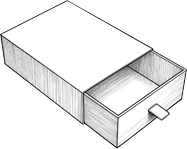
A drawer box, also known as a sliding box or sleeve-and-tray box, consists of an outer sleeve and an inner tray that slides horizontally to open. The outer sleeve forms the visible exterior, while the inner tray holds the product and any protective inserts. Depending on the design, the tray may be pulled out using a ribbon, a small tab, or a shaped opening at the front of the sleeve.
The sliding mechanism creates a gradual reveal rather than exposing the contents immediately. This makes drawer boxes particularly suitable for jewelry, small accessories, fragrance sets, and other products where the opening process contributes to the overall presentation. However, a well-made drawer box must do more than slide smoothly. The sleeve and tray need appropriate clearance so that the box opens comfortably without feeling loose or allowing the inner tray to move unintentionally.

What Is a Top & Bottom Boxes?
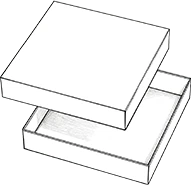
A top & bottom boxes, often called a two-piece rigid box or lift-off lid box, consists of a separate lid and bottom tray. The lid is lifted vertically to reveal the contents, allowing customers to view the product arrangement from above. Depending on the design, the lid may cover the entire depth of the base or only part of its sides.
This structure is widely used for cosmetics, gift sets, fashion accessories, and other premium retail products. Its straightforward opening method provides direct access to the contents and allows brands to create an organized presentation using custom inserts or dividers. The fit between the lid and base is particularly important: a lid that fits too tightly can be difficult to remove, while an excessively loose fit may affect the perceived quality of the packaging.
Drawer Box vs Top & Bottom Boxes: Unboxing Experience and Product Presentation
For premium gift packaging, the way a box opens can influence how customers perceive the product inside. Drawer boxes and Top & Bottom Boxeses create different opening experiences, and neither is automatically better for every brand or product category.
Sliding Reveal vs Full Product Reveal
The main appeal of a drawer box is its controlled opening sequence. As the inner tray slides out, the product becomes visible gradually. This allows brands to create a sense of anticipation and can work particularly well when the product is positioned within a fitted insert. A small fragrance collection, for example, can be arranged so that the bottles remain securely in place as the tray is pulled from the sleeve.
A top & bottom boxes offers a more immediate presentation. Once the lid is removed, the entire product arrangement is visible, making it easier to display multiple items together. For a skincare gift set containing several bottles, jars, and accessories, this can be particularly effective because the customer can see how the products relate to one another without moving the packaging.
The difference is therefore less about which box looks more luxurious and more about how the brand wants customers to discover its products. Drawer boxes emphasize the opening movement, while top & bottom boxess place greater emphasis on the complete presentation of the contents.
Product Accessibility and Everyday Use
Product accessibility is another consideration, especially for packaging intended to be kept and reused. With a drawer box, customers must pull out the inner tray before accessing the product. This works well for compact items, but the design should allow enough clearance for fingers to reach the product without forcing it out of its insert. The tray should also remain stable during opening, particularly when it contains heavier items.
Top & bottom boxess generally provide more direct access from above. This can be useful for products that are removed frequently or for sets containing items of different heights. A well-designed insert can keep each item visible and accessible while maintaining a neat arrangement after repeated use.
For brands developing custom gift boxes, it is worth considering not only the first unboxing experience but also how customers will interact with the packaging afterward. A box that looks impressive when first opened should remain convenient to use.
Structural Strength and Insert Compatibility
Both drawer boxes and Top & Bottom Boxeses can provide a sturdy packaging structure when manufactured with suitable materials. Their protective performance, however, depends on more than the box style. Board thickness, product weight, internal support, and the relationship between the box and its insert all need to be considered during structural development.
How the Two Box Structures Support Products
Most premium rigid gift boxes use a solid paperboard core, often referred to as greyboard or chipboard, covered with printed or decorative paper. The board provides the main structural rigidity, while the wrapping paper contributes to the finished appearance. The appropriate board specification depends on the dimensions of the box, the weight of its contents, and the handling conditions it is expected to encounter.
For drawer boxes, the inner tray must remain sufficiently rigid when partially or fully extended from the sleeve. This becomes particularly important when packaging heavier products, such as glass fragrance bottles. If the tray flexes or the product is poorly positioned, the sliding action may feel unstable. The outer sleeve must also maintain its shape to prevent excessive friction or an uneven opening movement.
Top & bottom boxes have different structural considerations. The base supports the product while the lid provides closure and protection. The dimensions and fit of both components need to be controlled so that the lid can be removed without pulling the entire box upward or placing unnecessary pressure on the contents.
Neither structure should be assumed to offer better protection solely because of its opening mechanism. A properly engineered insert and an appropriate outer shipping carton can be just as important as the rigid box itself.
Choosing Inserts for Drawer Boxes and Top & Bottom Boxes
Custom inserts help position products, reduce unwanted movement, and create a consistent presentation inside the box. Common options include die-cut paperboard inserts, corrugated cardboard supports, molded pulp components, and foam inserts. The most suitable material depends on the product's weight, shape, fragility, and presentation requirements.
In a drawer box, the insert must keep the product stable during the sliding movement. For example, a gift set containing a glass perfume bottle and two smaller accessories may require separate compartments that prevent the items from shifting toward the front of the tray. The insert should also provide enough support for the product when the tray is extended, without making the box unnecessarily bulky.
For a top & bottom boxes, the insert can be designed around the top-opening presentation. A cosmetics set may use a die-cut paperboard insert with individual openings for bottles and jars, allowing customers to see each product immediately after removing the lid. The height of the insert, the exposed portion of each product, and the available finger clearance should all be considered to make removal convenient.
Where fragile products are involved, prototype evaluation is essential. The insert should be checked for product movement, pressure on vulnerable areas, and ease of removal. For products distributed through demanding shipping environments, appropriate package testing may also be necessary.

Branding and Finishing Options for Premium Gift Boxes
Both box styles offer considerable flexibility for brand customization. Their different surfaces and opening mechanisms, however, create different opportunities for presenting logos, graphics, and decorative details.
Logo Placement and Visual Design
Drawer boxes provide several distinct areas for branding, including the top and sides of the outer sleeve, the front of the inner tray, and surfaces revealed during opening. This allows brands to distribute visual elements across different stages of the unboxing experience. A minimalist jewelry brand, for example, might place a small foil-stamped logo on the sleeve and use a contrasting color inside the tray to create visual interest when the box is opened.
Top & bottom boxes offer a prominent top surface for branding. The lid can accommodate a centered logo, an illustrated design, or a more extensive printed pattern. When the lid is removed, the interior can continue the same visual theme through printed lining paper, coordinated inserts, or a branded information card.
The better option depends on the artwork and the intended presentation. A design that works effectively across the sleeve and tray of a drawer box may need to be rearranged for the larger uninterrupted lid surface of a two-piece box.
Printing and Surface Finishes
Both styles can be customized with specialty papers, foil stamping, embossing, debossing, and various printed finishes. Matte lamination, textured wrapping papers, and carefully selected color combinations can also contribute to the appearance and tactile quality of the packaging.
For luxury custom boxes, consistency between the material, finish, and box structure is often more important than using multiple decorative processes. A simple rigid box with precise edges, clean wrapping, and a well-positioned logo can create a more refined impression than a heavily decorated box with inconsistent finishing.
Brands should also consider how the chosen finish performs during production and handling. Certain textured papers, dark-colored surfaces, and delicate decorative treatments may require additional evaluation for scuffing, marking, or visible handling damage. Reviewing physical samples before confirming the final specification helps identify these issues early.
Cost Comparison: Which Gift Box Is More Economical?
Cost is often one of the deciding factors when choosing between drawer boxes and Top & Bottom Boxeses. However, comparing the two structures without considering their specifications can lead to misleading conclusions.
Material and Manufacturing Costs
The cost of a rigid gift box is influenced by its dimensions, board specification, wrapping paper, printing, surface finishing, internal inserts, and assembly requirements. Each of these factors can change the total manufacturing cost, sometimes more significantly than the basic box style.
A drawer box requires an outer sleeve and an inner tray that fit together accurately. Depending on the design, it may also include a ribbon pull or other opening feature. The manufacturing process must account for the dimensions of both components and the clearance needed for smooth movement. More complicated tray designs or decorative details can increase production requirements.
A top & bottom boxes also involves two separately formed components, each requiring accurate dimensions and finishing. The depth of the lid, the wrapping construction, and the fit between the two pieces can affect material consumption and assembly work. A deep lid or a more elaborate construction may require different production considerations from a simple shallow-lid design.
It is therefore inaccurate to assume that drawer boxes are always more expensive or that top & bottom boxes are always the economical choice. A meaningful comparison requires both designs to be quoted against the same product dimensions, material specifications, printing requirements, and order quantity.
Order Quantity, Assembly, and Shipping Considerations
Order quantity can influence the unit cost of both structures because setup, tooling, and production preparation expenses are distributed across the order. The relationship between quantity and price will vary depending on the manufacturing process, level of customization, and supplier's production arrangements.
Assembly requirements also deserve attention. Drawer boxes must be checked for consistent sliding performance, while top & bottom boxes require reliable lid-to-base fitting. When custom inserts, ribbons, or additional accessories are included, these components can add assembly steps and inspection requirements regardless of the box style.
Shipping and storage costs should be evaluated separately from the manufacturing price. Conventional rigid boxes are generally supplied in an assembled form, although specialized collapsible constructions are available. The finished dimensions, carton packing method, number of boxes per shipping carton, and level of transit protection can all affect logistics costs.
For international buyers, comparing the complete delivered packaging cost is more useful than comparing the unit box price alone. A slightly lower manufacturing price may offer limited savings if the finished packaging occupies significantly more shipping volume or requires additional protective packing.
Which Box Style Is Better for Different Gift Products?
The most practical way to choose between the two structures is to begin with the product itself. Its dimensions, weight, presentation requirements, and intended customer experience will usually provide a clearer direction than general assumptions about premium packaging.
When to Choose a Drawer Box
Drawer boxes are worth considering when the brand wants the opening movement to form part of the product experience. They are particularly suitable for compact products that can be secured within a sliding tray, including jewelry, watches and accessories, fragrance samples, and selected confectionery gift sets.
For example, a jewelry collection containing a necklace and matching earrings can be arranged within a fitted insert so that the pieces remain organized as the tray is opened. The outer sleeve provides a clean exterior, while the sliding movement introduces the contents gradually. If the box is intended for long-term storage, the drawer format may also offer a convenient way to keep the pieces together.
However, brands should pay attention to product weight and tray dimensions. A large or heavy product may require additional structural reinforcement, and an overly tight sliding mechanism can make the box difficult to open. The opening experience should be evaluated using a sample containing the actual product rather than an empty box.
When to Choose a Top & Bottom Boxes
Top & bottom boxes are often a practical choice when the packaging needs to display several products together or provide direct access from above. Skincare collections, holiday gift sets, fashion accessories, and larger presentation boxes are common examples.
Consider a premium skincare set containing a cleanser, serum, moisturizer, and application tool. A top & bottom boxes allows the items to be arranged in a coordinated layout, with each product visible immediately after opening. A fitted insert can maintain consistent spacing and help prevent the components from coming into contact during handling.
This structure can also be useful when the products vary in height or need to be removed individually. The open top provides flexibility for arranging compartments, although the box depth and insert design must still be matched to the products. For taller or heavier items, the structural specification should be evaluated carefully rather than relying on the box format alone.
Matching the Box Style to the Product
Some products can work equally well in either structure. Perfume gift sets are a good example. A compact fragrance collection may benefit from the gradual reveal of a drawer box, while a larger set containing a full-size bottle and several accessories may be more conveniently presented in a Top & Bottom Boxes.
The same applies to premium chocolates, small electronics, and branded promotional gifts. The preferred structure may change depending on how the products are arranged, how frequently they are accessed, and whether the packaging is intended to be retained after purchase.
Rather than selecting a box style based only on appearance, brands can compare both options using a simple physical mock-up. This allows the packaging team to assess product placement, opening movement, overall proportions, and handling convenience before investing in detailed artwork and production tooling.
What to Confirm Before Ordering Custom Rigid Gift Boxes
Once a preferred structure has been identified, the next step is to translate the design concept into a practical manufacturing specification. Accurate product dimensions, weight, quantity per box, and information about fragile components provide the starting point for structural development. Brands should also clarify whether the packaging will be used primarily for retail display, gifting, e-commerce fulfillment, or a combination of these purposes.
Material preferences, printing artwork, surface finishes, insert requirements, estimated order quantities, and delivery expectations should be discussed before finalizing the design. These details allow the packaging manufacturer to assess construction methods, prepare suitable samples, and compare the cost implications of different options.
Working with a manufacturer that has experience in structural packaging design can be particularly valuable when the product requires a custom insert or an unusual box dimension. At WOW DISPLAY, the development process can begin with the product specifications and intended presentation, allowing the box structure and internal packaging to be considered together rather than as separate components.
Frequently Asked Questions
Are Drawer Boxes More Expensive Than Top & Bottom Boxes?
Not necessarily. The cost depends on the box dimensions, board material, wrapping paper, finishing processes, inserts, and production quantity. Drawer boxes may require additional attention to the sliding mechanism and pull features, while Top & Bottom Boxeses have their own forming and fitting requirements. Comparing equivalent specifications is the most reliable way to determine the price difference.
Which Box Style Is Better for Luxury Gift Packaging?
Both can be suitable for premium packaging. Drawer boxes offer a gradual opening experience, while top & bottom boxes provide a direct view of the contents. The best choice depends on the product, brand presentation, and intended customer experience rather than the structure alone.
Can Both Box Styles Be Made With Custom Inserts?
Yes. Both drawer boxes and Top & Bottom Boxeses can accommodate custom paperboard, corrugated, molded pulp, or other suitable inserts. The insert design should account for the opening direction, product weight, fragile areas, and ease of removal.
Which Box Style Is Better for Heavy Products?
Neither structure is automatically better for heavy products. The appropriate choice depends on board strength, box dimensions, insert support, and handling conditions. Drawer boxes require particular attention to tray stability during opening, while top & bottom boxes need adequate base support and reliable lid fitting. Physical samples should be evaluated with the actual product.
Can Drawer Boxes and Top & Bottom Boxeses Use Recyclable Materials?
Both styles can be designed using paperboard and paper-based wrapping materials. Their actual recyclability depends on the complete material construction, including coatings, adhesives, decorative components, and inserts, as well as the recycling facilities available in the destination market. Brands seeking certified fiber materials should also confirm the relevant sourcing and certification requirements with their packaging supplier.
Conclusion
Drawer boxes and top & bottom boxes can both provide an effective solution for premium gift packaging, but they serve different presentation and handling needs. Drawer boxes emphasize a controlled sliding reveal, while top & bottom boxes offer immediate access and a clear view of the products inside. The right choice depends on the product's size, weight, insert requirements, branding objectives, and overall packaging budget.
For brands developing custom gift boxes, evaluating both structures with actual product samples can help identify the most suitable design. An experienced packaging manufacturer can assist with material selection, structural development, insert design, and production planning to create packaging that balances appearance, functionality, and manufacturing practicality.