











Paper is one of the most important materials in packaging and display production. For printed products, the final result is not decided by artwork alone. Paper texture, surface coating, thickness, stiffness, ink absorption, and printing method all affect how the printed piece looks after production.
In the custom display industry, paper selection becomes even more important. A printed sheet may only need to look good, but a paper display also needs to carry products, fold correctly, stand steadily, and keep the brand image clear in a retail environment.
This is why different types of paper have different requirements for printing. Coated paper, white cardboard, specialty paper, and corrugated board are not used in the same way. Each material has its own printing performance and its own role in display and packaging projects.
For brands developing a custom paper display stand, understanding these paper differences can help avoid poor color results, weak structure, surface cracking, or unnecessary production cost.
Coated Paper for Clear and Colorful Printing
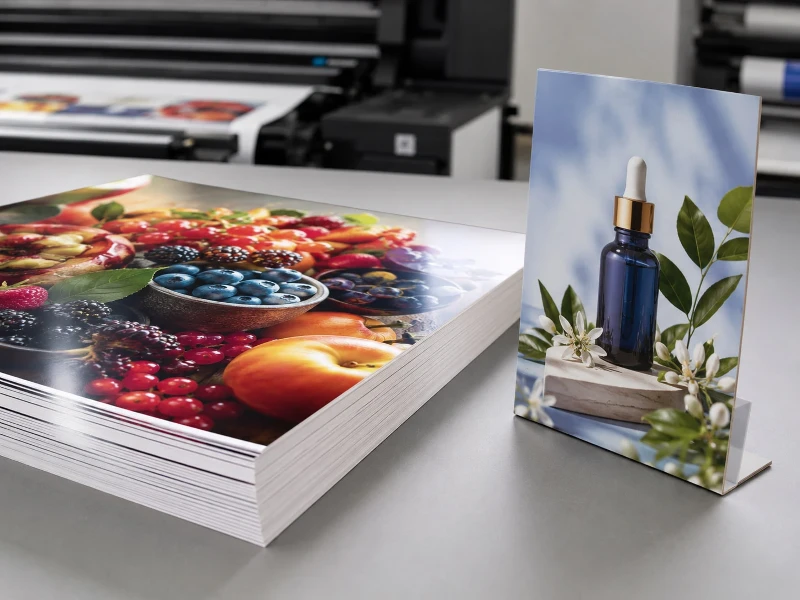
Coated paper is widely used when a printed surface needs clear images and bright colors. Its surface is smoother than ordinary paper, so the ink sits more evenly on the paper. This makes it suitable for product photos, brand graphics, promotional messages, and colorful retail display artwork.
In paper display printing, coated paper is often printed first and then mounted onto corrugated board or cardboard. This combination gives the display both a clean printed surface and stronger structural support.
For example, snack displays, candy displays, cosmetic displays, beverage displays, and gift product displays often use coated paper for the outer graphic layer. The paper helps the brand color look more accurate and makes the product image easier to notice in stores.
However, coated paper alone is not usually strong enough for a display structure. It is mainly used for print quality, not load-bearing. If the display needs to hold products, the printed coated paper should be combined with a stronger base material.
When using coated paper for display production, buyers should pay attention to:
color accuracy
surface smoothness
lamination effect
mounting quality
folding performance
resistance to cracking at crease lines
If the display has dark colors or large solid-color areas, sample checking is especially important.
Art Paper for Premium Visual Effects
Art paper is often selected for projects that need a better visual finish. Compared with ordinary printing paper, art paper usually has a smoother texture and can show more refined details. It is commonly used for high-quality packaging, brochures, gift boxes, labels, and premium display surfaces.
For a paper display for retail stores, art paper can improve the visual level of the display, especially when the product itself is positioned as premium or gift-oriented. Beauty products, jewelry accessories, perfume gift sets, stationery, and limited-edition products may use this type of paper to create a cleaner and more polished appearance.
But art paper also needs proper handling during printing and finishing. If the paper is too thick or the folding line is not processed well, cracks may appear after die cutting or folding. This is a common issue in display production, especially when the design includes sharp corners, curved panels, or folding header cards.
Art paper is suitable when the visual effect is more important than low cost. For short-term promotional displays, it may not always be necessary. The choice should depend on the brand requirement, target retail environment, and project budget.
White Cardboard for Packaging and Small Display Parts
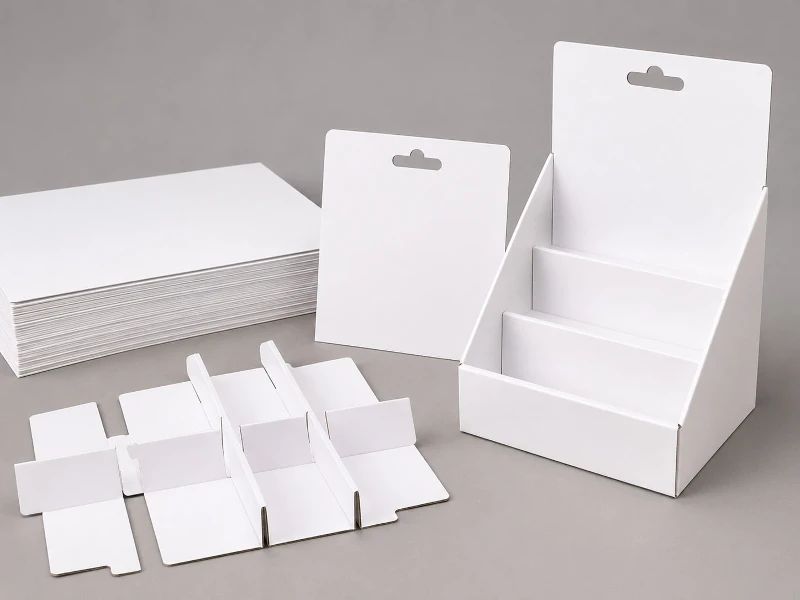
White cardboard has good stiffness and a clean white surface. It is often used for retail boxes, small packages, cards, dividers, header cards, and lightweight display components.
In display production, white cardboard can be used for smaller structures or parts that do not need to carry much weight. For example, it can be used for product cards, internal partitions, small counter trays, printed inserts, or display headers.
For a lightweight custom paper display stand, white cardboard may work well if the products are small and the structure is simple. It gives a clean printed result and can be die cut into different shapes.
However, white cardboard is not always suitable for large or heavy displays. If the display needs shelves, side panels, or load-bearing sections, corrugated board is usually a better option. In many cases, white cardboard is used together with corrugated material instead of being used alone.
When choosing white cardboard, the main points to check are:
paper thickness
stiffness
printing surface
folding line quality
die-cut accuracy
edge cleanliness
This material is especially useful when the display needs a neat and clean look at close viewing distance.
Specialty Paper for Different Brand Effects
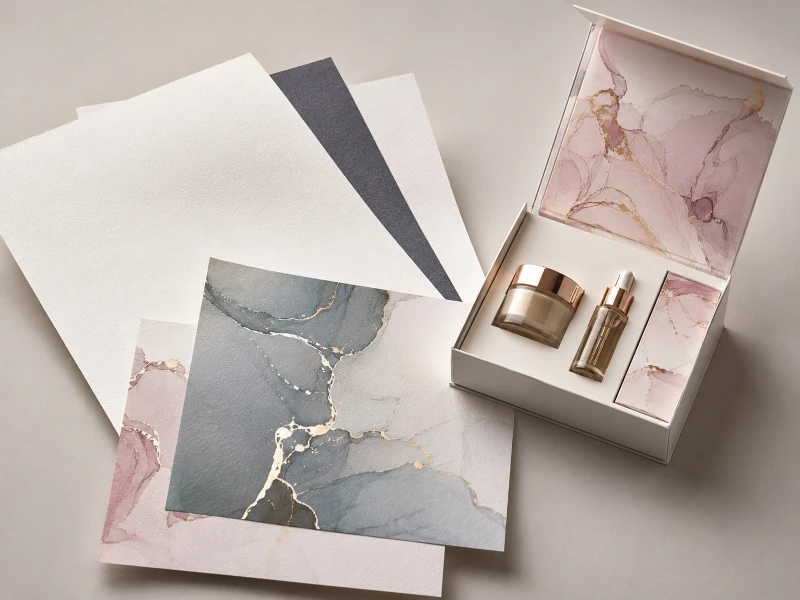
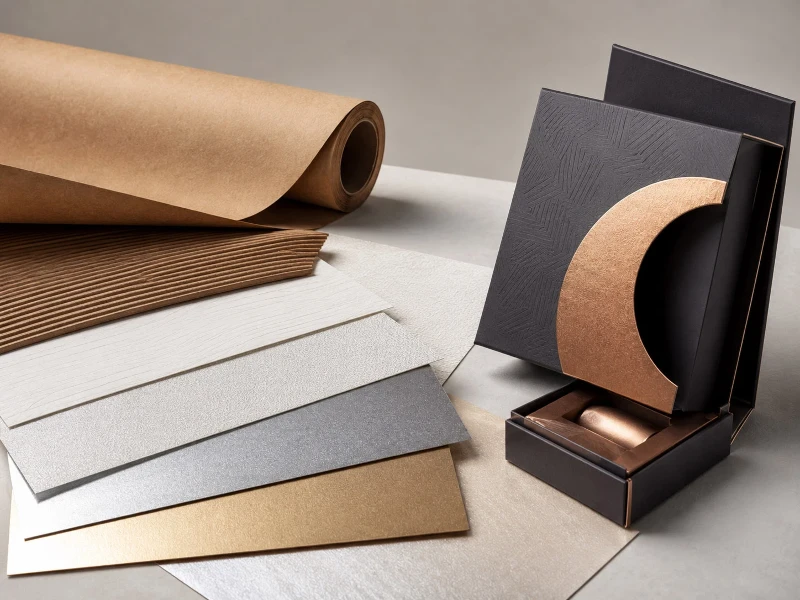
Specialty paper is used when a display or packaging project requires a special texture, color, or premium feel. It may include textured paper, metallic paper, kraft paper, pearl paper, or other decorative paper types.
This type of paper is not mainly chosen for everyday promotional displays. It is more often used for gift packaging, luxury packaging, seasonal campaigns, cosmetic packaging, and premium product presentation.
For display projects, specialty paper can help create a stronger brand impression. A kraft paper surface may give a natural or eco-friendly feeling. A metallic paper surface may create a premium look. A textured paper surface may make the product feel more refined.
Still, specialty paper should be tested before mass production. Some specialty papers absorb ink differently. Some are not suitable for detailed photo printing. Some may require specific printing or finishing methods.
For paper display printing, specialty paper should be selected carefully. It should match the product positioning, but it should also work with the display structure, cutting process, folding lines, and overall cost.
Cardboard for Structure and Support
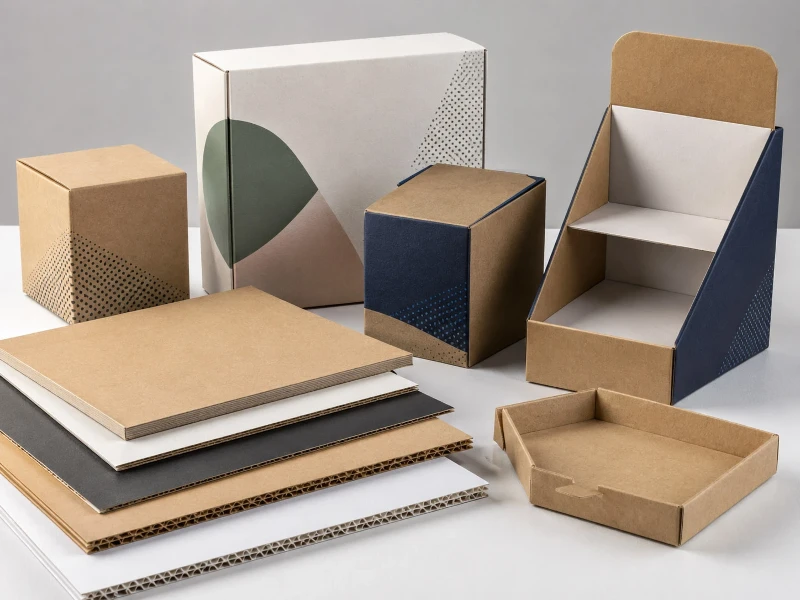
Cardboard is a common material for packaging and display products. It is thicker and stiffer than ordinary paper, so it can provide better support. Depending on the grade and thickness, cardboard can be used for boxes, trays, inserts, partitions, display backing boards, and lightweight display units.
In printing, cardboard requires attention to ink absorption and surface quality. If the surface is not smooth enough, the printed result may look less sharp. If the cardboard is too thick, folding and die cutting need to be handled carefully.
For display production, cardboard is often used where a balance is needed between cost, stiffness, and printability. It can support small products, but for larger retail displays, corrugated board is usually more reliable.
Cardboard can be useful for:
counter display trays
header cards
small packaging boxes
product dividers
lightweight retail display parts
printed promotional boards
The main requirement is to choose the right thickness and surface based on the final use.
Corrugated Board for Paper Display Production
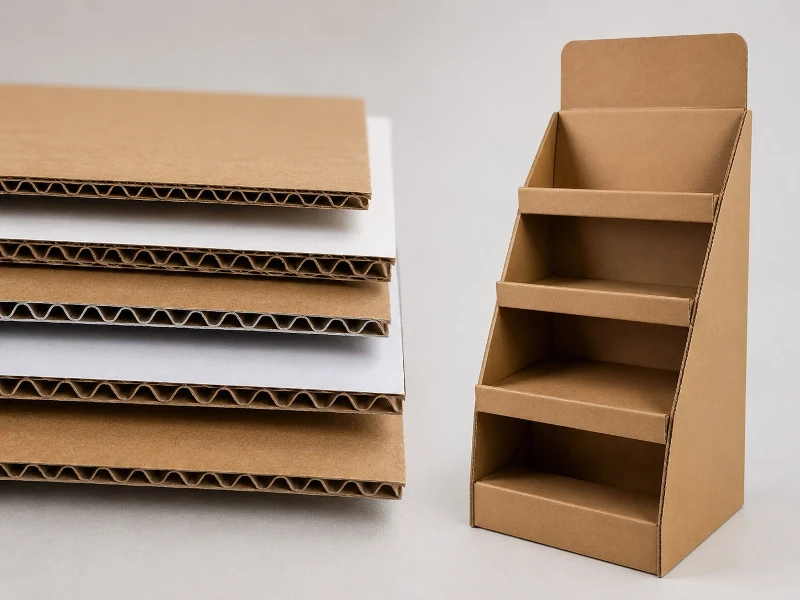
Corrugated board is one of the most important materials for display stands. It has a fluted layer between paper liners, which gives the board better strength and cushioning than flat paperboard.
A corrugated paper display is commonly used in supermarkets, convenience stores, club stores, and promotional retail areas. Floor displays, counter displays, dump bins, pallet displays, sidekick displays, and PDQ trays often use corrugated board as the main structure.
For printing, corrugated board is usually handled in two ways. One method is direct printing on the board. Another method is printing on coated paper first and then mounting it onto corrugated board. The second method is more common when the display needs better graphics and cleaner brand presentation.
Corrugated board is suitable for display production because it offers:
- better load-bearing capacity
- lower weight than wood or metal
- easy die cutting
- flat-pack shipping
- lower cost for promotional use
- flexible structure design
- good compatibility with printed surfaces
The printing requirement depends on the display type. A small counter display may need fine printing and clean edges. A floor display may need stronger structure and accurate mounting. A pallet display may need higher board strength and better compression resistance.
For heavier products, material selection should not be based only on appearance. The board grade, flute type, shelf structure, product weight, and shipping method all need to be considered.
Different Paper Choices for Different Display Uses
Not every display needs the same paper. The right paper should match the product, store environment, and promotion goal.
For a small counter display, the printed surface is very important because customers see it closely. Coated paper or white cardboard with clean printing may be enough if the product is light.
For a floor display, the structure is more important. Corrugated board is usually needed to support shelves and products. Printed coated paper can be mounted on the outside to create a better visual effect.
For a dump bin, strength and edge protection matter more. The display may hold loose products, so the board needs to resist pressure and handling.
For a PDQ tray, paper quality affects both packaging and retail presentation. The tray must be easy to open, easy to place, and strong enough to hold products during transport and display.
For a paper display packaging solution, printing and structure should be planned together from the beginning. If the paper is chosen only for appearance, the final display may not work well in the store.
Printing Requirements That Buyers Should Pay Attention To
When ordering printed paper products or paper displays, buyers should not only ask for a beautiful design. They should also confirm whether the selected paper can meet production and retail requirements.
Important details include:
- paper thickness
- surface smoothness
- ink absorption
- color accuracy
- lamination choice
- die-cut tolerance
- folding performance
- mounting quality
- product weight
- display structure
- shipping method
If the display needs to be shipped flat, folding lines and locking tabs must be tested. If the display will carry heavy products, the board structure needs to be checked before mass production. If the display uses brand colors, printed samples should be approved before full production.
A good paper choice can make the display look clean and professional. A wrong paper choice can lead to dull printing, weak structure, cracked folds, or poor shelf appearance.
Why Paper Selection Affects Retail Display Quality
A paper display is seen by shoppers in a real retail space, not only on a computer screen. Store lighting, product weight, customer handling, and shelf placement can all affect how the display performs.
If the material is too weak, the display may lean or lose shape.
If the surface is too rough, the color may not look attractive.
If the paper cracks after folding, the display will look cheap.
If the board is too heavy, the shipping cost may increase.
If the structure is not matched with the material, the display may not assemble smoothly.
This is why paper selection should be part of the display development process, not a last-minute decision.
Conclusion
Different paper materials have different printing requirements. Coated paper is good for colorful graphics. Art paper helps create a refined visual effect. White cardboard works well for clean packaging and small display parts. Specialty paper can support premium branding. Corrugated board gives strength to retail display structures.
For a successful paper display, the paper should match the printing method, product weight, display structure, and retail environment. Good printing makes the brand look better, but the material must also support the final use of the display.
If you are developing a custom printed display or packaging project, the best choice is not always the most expensive paper. The right choice is the material that fits your product, your store placement, your budget, and your brand image.