







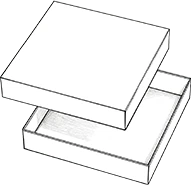
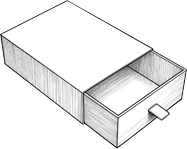



Two suppliers receive the same request: a custom cardboard PDQ display for 24 boxed skincare products.
Both propose a printed countertop tray. Both designs look similar, and both hold the same number of products. Yet their quotations are noticeably different.
One supplier has priced a basic tray with a removable shipping carton. The other has included internal dividers, reinforced edges, and a pre-glued structure designed to reduce assembly work.
Neither quotation is necessarily wrong. They simply cover different things.
The cost of a custom PDQ display depends on what the structure must do, how it is manufactured, and how it reaches the store. Understanding these differences helps brands compare quotations more accurately and avoid paying for features their retail program does not need.
How Much Does a Custom PDQ Display Cost?
There is no single unit price that applies to every custom PDQ display. A small, open-top cardboard tray and a fully printed retail-ready PDQ with dividers and protective shipping packaging are different products, even when they are designed to hold the same merchandise.
A typical quotation may include structural development, corrugated material, printing, die-cutting, gluing, assembly, and packing. Depending on the supplier's terms, sampling, tooling, freight, and product pre-packing may be quoted separately.
The configuration makes a significant difference.
| PDQ Configuration | What the Quote May Include | Main Cost Factors |
|---|---|---|
| Basic PDQ Tray | Die-cut tray, printed graphics, folding structure | Board usage, printing, quantity |
| PDQ With Dividers | Tray with partitions or internal supports | Additional parts, assembly, material utilization |
| Shelf-Ready PDQ | Display tray and removable shipping cover | Packaging materials, cover construction, labor |
| Pre-Glued PDQ | Factory gluing or partial assembly | Factory labor, packed dimensions, setup time |
These configurations are illustrative, not fixed industry price categories.
For a meaningful PDQ display price comparison, buyers need to know exactly what each supplier has included. A quotation for an empty flat-packed tray should not be compared directly with one covering a pre-assembled, retail-ready unit.
An actual price range is most useful when attached to a defined product specification and order quantity. Without those details, even an apparently precise price can be misleading.
Why Can Two Similar PDQ Displays Have Different Prices?
Return to the 24-product skincare display.
Imagine two possible designs. In the first, the products sit directly inside a simple corrugated tray. In the second, they are arranged in separate compartments, with a stronger front edge and a removable cover for shipping.
From the shopper's perspective, both displays may look almost identical. From a manufacturing perspective, they involve different materials, tooling layouts, and production steps.
The Number of Structural Components Matters
Adding a divider does more than increase the amount of cardboard used.
The divider may require its own die-cut layout, additional folding, insertion, or gluing. If the design contains several separate pieces, production workers may need to assemble them individually before the display is packed.
However, fewer pieces do not automatically mean a lower cost. A one-piece structure may require a larger sheet or create more waste during die-cutting. In some cases, separating the tray and internal support into two components can improve board utilization or simplify production.
This is where structural engineering affects custom PDQ display cost. The objective is not simply to remove material. It is to develop a structure that achieves the required product support with an efficient combination of board usage, cutting, and assembly.
Product Arrangement Can Change the Entire Cost Structure
Suppose the same 24 skincare products can be arranged in either six columns of four or eight columns of three.
Both arrangements hold the same quantity, but their footprints differ. One may require a wider tray. The other may need greater depth. Those changes influence the unfolded board size, the position of fold lines, the internal supports, and the dimensions of the shipping carton.
They can also affect how many finished trays fit into a master carton. For a large production run, small differences in board utilization or packed dimensions can become meaningful. Yet the cheaper layout cannot be determined from product count alone.
Practical Buying Tip: Before requesting a final price, confirm the preferred number of facings, product orientation, and available retail space. These decisions give the manufacturer a basis for developing an efficient structure rather than pricing an arrangement that may later need to change.
How Does Order Quantity Affect PDQ Display Pricing?
Order quantity affects almost every custom-printed cardboard display project, but the relationship between quantity and price is not always straightforward.
Why Smaller Orders Often Have a Higher Unit Cost
Custom PDQs may require structural preparation, die-cutting tools, printing setup, machine adjustments, and production planning. Some of these activities create costs that do not increase proportionally with each additional unit.
Consider a hypothetical order with the same fixed setup cost at two production quantities:
| Cost Component | 500 Units | 3,000 Units |
|---|---|---|
| Fixed preparation cost | Spread across 500 units | Spread across 3,000 units |
| Setup cost per unit | F / 500 | F / 3,000 |
| Material and conversion | Depends on design | Depends on design |
| Total order expenditure | Based on 500 units | Based on 3,000 units |
F represents a hypothetical fixed preparation cost. This is an illustration of cost allocation, not a supplier quotation.
The larger order spreads fixed expenses across more units. It may also allow more efficient production scheduling and material purchasing.
However, production price breaks depend on printing methods, board specifications, and manufacturing capacity.
Is Ordering More Always the Best Way to Save Money?
Not necessarily.
A brand supplying 120 stores with one PDQ per location does not automatically benefit from purchasing several thousand displays just to obtain a lower unit price.
The additional displays still need to be paid for, stored, and eventually used. If the promotion changes, remaining inventory may become obsolete.
A practical order quantity should begin with the rollout plan: number of stores, units required per location, expected replacements, and any later replenishment.
It is useful to request quotations at more than one quantity, but the final decision should consider total expenditure as well as unit price. The applicable PDQ display MOQ should also be confirmed with the supplier because minimum quantities vary by design and production process.
Flat-Pack, Pre-Glued or Pre-Packed: Which Costs Less Overall?
This is one of the most important decisions in PDQ purchasing because it exposes the difference between factory price and total project cost.
A lower-priced display is not necessarily the cheaper option once packing, transportation, assembly, and store preparation are included.
Flat-Pack PDQs: Lower Shipping Volume, More Assembly
A flat-packed PDQ is supplied in a folded or unassembled condition. Depending on its structure, several units can be packed into a relatively compact shipping carton.
This can reduce the space occupied by empty displays during transport and storage. The trade-off is assembly.
Some trays require only a few folds and locking tabs. Others have multiple components that must be positioned and secured before products can be loaded.
If assembly takes place at a distribution center or store, that work has a cost-even when it does not appear on the manufacturer's invoice.
For simple countertop PDQs, flat-pack construction may be a practical choice. For large rollouts involving complicated structures, the required assembly process deserves closer attention.
Pre-Glued PDQs: Paying for Work at the Factory
A pre-glued design shifts part of the assembly process to the manufacturer.
Instead of manually locking every component at the destination, store personnel may only need to unfold or open the display.
That convenience can increase factory conversion costs because gluing operations and additional handling may be required. It may also change how efficiently finished displays can be packed.
Brands should ask how much assembly work is removed, where that work would otherwise take place, and whether the change affects shipping volume.
Pre-Packed PDQs: Another Level of Cost
A pre-packed PDQ arrives with merchandise already arranged in its selling configuration.
This can simplify store preparation, particularly when the display is intended to move quickly from the shipping carton to the shelf.
But product loading introduces additional operations, including product handling, counting, orientation checks, protective packaging, and coordination between the display manufacturer, brand, and co-packer.
For some programs, the benefits of pre-packing justify these costs. For others, shipping empty PDQs and products separately may be more appropriate.
To understand where these formats overlap, read our Shelf-Ready Packaging vs PDQ Display comparison.
Compare the Total Cost, Not Just the Factory Price
| Cost Consideration | Flat-Pack | Pre-Glued | Pre-Packed |
|---|---|---|---|
| Factory conversion | Usually fewer assembly operations | Additional gluing | Depends on packing scope |
| Shipping volume | Often compact | Depends on design | Includes product pack-out |
| Downstream assembly | Usually required | Often reduced | May be minimal |
| Product loading | Performed later | Performed later | Part of packing process |
Total PDQ Program Cost
Display Production + Tooling & Sampling + Packing & Assembly + Freight & Handling + Other Project Costs
Each cost should be counted once, under the party responsible for it. This gives procurement teams a more complete picture than comparing factory unit prices alone.
Which PDQ Design Choices Are Worth Paying For?
Not every feature that increases production cost is unnecessary. Some improve performance, reduce handling problems, or protect the merchandise.
The important question is whether the feature solves a real requirement.
Does Stronger Cardboard Always Mean a Better PDQ?
Suppose the skincare tray develops sidewall deformation after the shipping cover is removed.
One possible response is to use thicker corrugated board. That may help, but it is not the only option.
The problem could be related to the placement of fold lines, unsupported wall length, weak locking tabs, or the way products transfer their weight to the tray.
Depending on the structure, adjusting the support design may be more effective than simply increasing board thickness.
For example, changing the position of an internal divider could help support a sidewall while keeping products correctly separated.
The revised design would still need to be tested with the actual product load. Structural changes should be assessed against material usage, conversion cost, and performance rather than assumed to reduce expense.
For a closer look at structural performance, see Why Does a PDQ Tray Survive Shipping but Collapse After Opening?
Printing Should Match the Display's Purpose
A temporary PDQ display needs clear branding and product presentation, but not every campaign requires the same printing specification.
Printing method, number of colors, surface finish, and production quantity can influence the final quotation.
For a simple promotional tray, an economical printing specification may be sufficient. A product launch requiring consistent brand colors and more demanding graphics may justify a different process or finishing treatment.
The decision should be based on the approved artwork, required appearance, production quantity, and intended retail conditions.
Rather than asking suppliers to reduce print quality without considering the result, brands can identify which graphic elements are essential and where the specification allows flexibility.
What Costs Are Often Missing From a PDQ Display Quote?
Two suppliers may quote the same basic tray at different prices because they have included different services.
One may provide a unit production price only. Another may include tooling, sampling, individual packing, or delivery to a specified location. Neither quotation can be evaluated properly until the scope is clear.
Before comparing PDQ display pricing, check whether the following items are included:
| Potential Cost | What Buyers Should Confirm |
|---|---|
| Structural design and samples | Are prototypes and revisions included? |
| Tooling | Are die-cutting tools or printing plates charged separately? |
| Assembly | Does the price include folding and gluing? |
| Individual or master cartons | How will finished displays be packed? |
| Product pre-packing | Who loads and checks the products? |
| Freight | Which Incoterm and delivery location apply? |
| Urgent production | Will a shorter lead time affect the price? |
One supplier may offer a lower ex-factory price while excluding services that another includes.
For an accurate comparison, ask suppliers to quote the same product specification, order quantity, packaging method, and delivery terms. This also makes it easier to identify where an alternative structure or packing method could reduce total costs.
How to Get an Accurate Custom PDQ Display Quote
You don't need a finished engineering drawing to start discussing a custom PDQ display with a manufacturer. However, a few project details make the quotation much more useful.
The most important information includes:
Product details: Dimensions, weight, packaging type, and preferably product samples.
Display capacity: Number of products per tray and preferred arrangement.
Order quantity: Estimated volume and rollout requirements.
Retail application: Countertop, shelf, or another approved placement.
Branding: Artwork, printing requirements, and finishing preferences.
Shipping: Destination, packing format, and whether assembly or product loading is needed.
Schedule: Target delivery date and fixed retail launch deadlines.
With these details, a display manufacturer can evaluate material selection, structural design, and production methods before preparing a more reliable quotation.
Discuss Your Custom PDQ Display Project
At WOW DISPLAY, we design and manufacture custom cardboard PDQ displays for retail promotions, combining structural engineering, prototyping, printing, and production.
If you're comparing options for an upcoming launch, explore our custom PDQ display range or contact our team with your product dimensions, estimated quantity, and intended retail application. We can help evaluate the display structure and the factors affecting its production cost.
Explore Custom PDQ Displays →
Frequently Asked Questions
How Much Does a Custom PDQ Display Cost per Unit?
The unit cost depends on the tray's dimensions, construction, printing, order quantity, and packing requirements. A basic printed tray and a retail-ready PDQ with dividers and a protective shipping cover require different production processes. For a meaningful price estimate, suppliers need a defined specification and expected order quantity.
What Is the Typical MOQ for a Custom PDQ Display?
There is no universal minimum order quantity. MOQ varies according to the supplier, materials, printing process, and display complexity. Small orders may have higher unit prices because tooling and setup expenses are spread across fewer units. Requesting quotations at several quantities can help identify a practical production volume.
Is a Flat-Pack PDQ Cheaper Than a Pre-Assembled Display?
A flat-pack design may require less shipping space and fewer factory assembly operations. However, it can create additional work at the destination. A pre-glued or pre-assembled option may cost more to manufacture but reduce downstream setup. Comparing both options requires an assessment of production, packing, freight, and assembly costs.
Are Tooling and Sample Costs Included in PDQ Display Pricing?
Not always. Some suppliers quote tooling and prototypes separately, while others include certain development costs under specific order conditions. Buyers should confirm whether sampling, die-cutting tools, printing plates, and design revisions are covered before comparing quotations.
Can I Reduce PDQ Display Costs Without Compromising Strength?
Potentially. Reviewing product arrangement, board utilization, unnecessary components, and assembly methods may reveal opportunities to improve cost efficiency. However, structural changes should be validated using actual products and the intended shipping configuration. Reducing material without checking performance can create more expensive problems later.
Conclusion
The most useful custom PDQ quotation is not necessarily the one with the lowest unit price.
Two displays that look alike can have different costs because of their internal construction, production quantity, packing method, and distribution requirements.
For brands, the best approach is to define what the display must do, compare quotations on the same basis, and evaluate the full cost of bringing the finished unit into the store.
A well-engineered PDQ should meet the project's merchandising requirements without adding unnecessary material, handling, or production complexity.
Understanding those trade-offs makes it easier to choose a display solution that works for both the budget and the retail rollout.