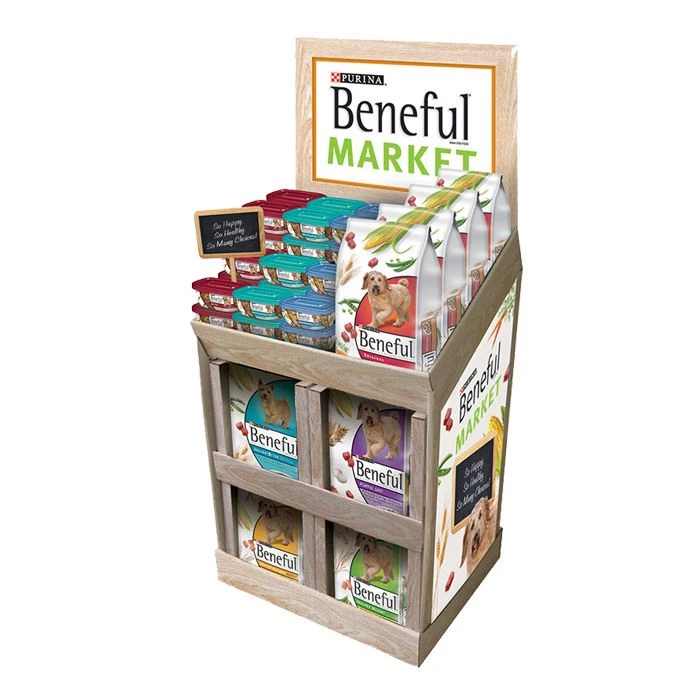








Commodity display is for the purpose of commodity marketing, with the help of certain props decoration, certain artistic display methods and techniques, and the orderly, regular and skillful display of goods. Product display is a visual impact on consumers and takes advantage of people’s Visual habits, product modeling, and atmosphere make products more eye-catching, highlight product information, and stimulate consumers' senses.
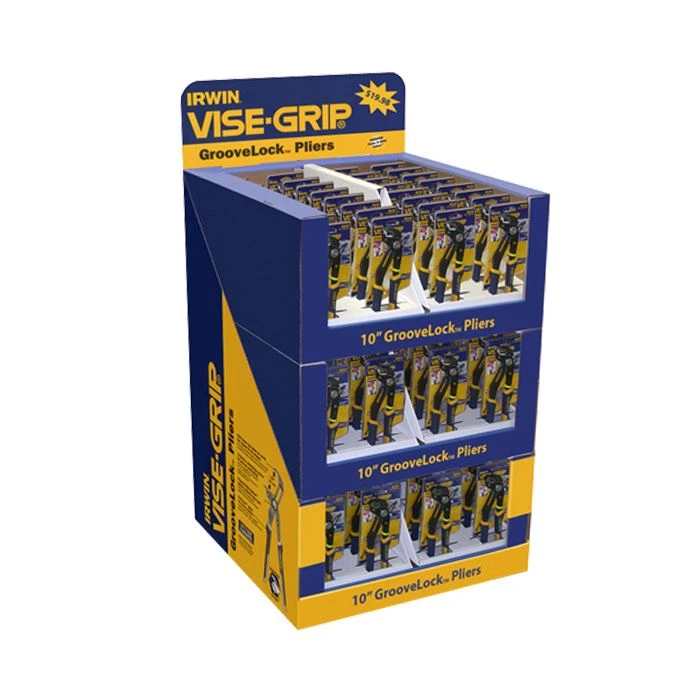
Commodity display is a direct static marketing, a silent promoter, an important publicity means to improve sales efficiency, and the main form of sales industry advertising.
1. Classification and display principle
Classified display is to classify products according to consumer objects, product quality, product variety, product performance, characteristics and packaging, and display products of the same category in a centralized manner, so that consumers can easily compare different colors, brands, quality, specifications and sizes among similar products. , Compare and choose between prices.
Supermarket products are mainly divided into three categories: food and beverage, fresh vegetables, and daily necessities:
Food and alcoholic beverages: cereals and oils, snack foods, beverages, health care products, brewed drinks, candy, tobacco, alcohol, tea, holiday food, milk powder, dairy products, biscuits, cooking dry goods, seasonings, baked goods, pickles Prepared food, instant food, etc.;
Fresh vegetables: fruits and vegetables, meat, bread cooked food, frozen food, aquatic seafood, etc.;
Daily necessities: skin products, hair care, oral care, personal products, personal textiles, shoes, paper products, baby products, household cleaning, washing powder, kitchen utensils, dining utensils, household products, cloth brush products, cleaning Supplies, disposable supplies, holiday supplies, pet supplies, bedding, toys, etc.;
Food, alcohol, and fresh vegetables are the main daily sales of supermarkets. In general, large-scale comprehensive supermarkets account for more than 65% of the turnover in the fresh food area. Consumers are in strong demand. On average, fresh food is purchased 3 times a week. The highest number of purchases was an average of 4.48 times a week, followed by an average of 2.39 times a week for fish and seafood.
Therefore, it should be displayed on both sides of the main aisle of the store or the main location of the supermarket, and these locations are usually places where consumers must pass. Daily necessities are the daily necessities of consumers. Even if they are displayed at the end of the store aisle, consumers are willing to go, but they will attract consumers to the innermost part of the supermarket.
2. The principle of zoning display
Commodity division display is based on the purpose of supermarket marketing, mainly to display the key marketing commodities in the supermarket, which are generally divided into promotional items, best-selling products, specials, new products, high-profit products, and seasonal products.
The partition display follows the principle of displaying key products in important positions:
The entrance area of the store generally displays special offers, promotional items or a theme-based seasonal promotion area. The central area of the store displays popular products/daily care products in the corner, and the surrounding display area displays major cosmetic brand series. Displays near the cashier are convenient for consumers. Shop for high-margin products that are easy to buy on impulse.
In principle, the necessities of life are placed at the innermost level of the supermarket, or in the remote corners, and displayed in the form of a promotional area. The purpose is to attract consumers to go inside, to encourage consumers to unconsciously look around the audience and attract their sight and perception. , So as to stimulate consumption.
3. Consumer experience principles
Supermarkets use supermarket merchandise display as a means to optimize consumer shopping experience and promote product marketing. Therefore, supermarket display should cater to consumers' shopping psychology as much as possible, optimize consumer shopping experience, and provide consumers with comfortable and convenient shopping surroundings.
*Product display should be eye-catching and prominent
The product display should satisfy consumers’ visual habits as much as possible, and the product display position should conform to consumers’ shopping habits. Themed products, promotional products, and special offer products should be prominently displayed to convey the characteristics of the products to consumers in the first time. , The price label of the product must be clearly visible, and the display surfaces of the same brand products must be aligned in the same direction. One product cannot be mixed with other products. Two adjacent products should be clearly distinguished. The dividing line should be clear at a glance. Cross-mixing is strictly prohibited. One type of product cannot be blocked by another type of product.
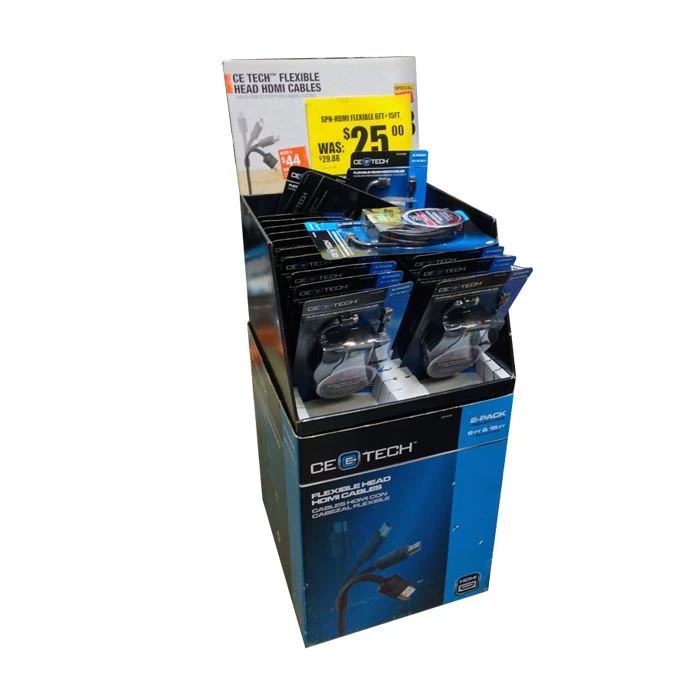
*Commodity price tags are clear
The price must be indicated when the product is displayed, and the price label must be clearly visible. 65% of consumers will refer to the price on the shelf. After referring to the price of the product, if he intends to buy, he will definitely want to learn more about other information about the product. Such as the price, origin, performance, use, etc. of the product. Therefore, when displaying the product, the product should be accompanied by a label indicating the product name, origin, specification, price, etc. (open-sale products are often also affixed with The price of the adhesive label line), if necessary, the product instruction manual is also required to relieve customers' doubts and increase the customer’s trust in the product.
The data shows that if the price and brand of the product are indicated, the promotional effect can be increased by 125%.
The front of the product label and product name (the side with clear product name, pattern, and rich color) is for consumers. For the places where the lower shelf is not easy to see, the displayed products can be placed in an oblique manner.
*Easy to pick and choose
The merchandise display should be easy for consumers to select and take, and be within reach. It is not advisable to display the merchandise too high. Pay special attention to the height of the housewife at about 160cm, and the children’s products are displayed in a lower position (the height of the child is about one meter height).
For some fresh foods, it is necessary to prepare picking tools for consumers to pick and choose. Some fragile products should be displayed at the height of the flat chest to avoid consumers' concerns about damage. Do not put boxes with lids. Displayed on the shelf. In addition, for some products that are highly selective and easy to dirty hands, there should be a simple front packaging and simple picking tools to facilitate consumers to choose. Open display of preserved fruits, snacks, etc. Goods, there should be a small spoon used to hold the goods next to it.

4. The principle of visual display
A. The product display should follow the principle of low front and high back, and arrange the products neatly to form a surface so that consumers can see it from a distance. The merchandise display can see the merchandise at the first time, allowing consumers to see the main merchandise at the first glance. The arrangement of the merchandise should be in accordance with the top small and large bottom, the top lighter and the lower heavy, the thickness from thin to thick, the size from small to large, adjacent The color is arranged together, the color is from light to dark, and the principle of gradual over-color.
B. The merchandise display must have a layered and three-dimensional creative design display. With the help of display props and other materials, carry out the display design of natural and vivid scenes, with bright colors and full matching and presentation, and highlight the promotion according to the actual situation of the venue. In order to meet the needs of consumers, the display of products with continuous breakthroughs and individual creations will give consumers a visual impact and give consumers a layered, three-dimensional, vivid, intuitive, and eye-catching.
5. Gold sight display method:
People usually unconsciously look at products whose height is 0.7-1.7 meters, with a range of 1 meter, and usually within a range of about 30 degrees from the line of sight, which is most noticeable.
A good product display position in a supermarket refers to the "upper section", that is, a place that is level with the consumer's line of sight, and its height is generally 130 to 145 cm. This section usually displays some recommended products and new products.
The second is the "middle section", that is, the place that is flush with the height of the waist, generally 80 to 90 cm. This position is generally used to display some low-profit products or to ensure the completeness of the products, and the products that have to be sold due to the needs of customers, and can also display the products that have entered the decline of the commodity that were originally placed on the upper section and the gold line.
The most unfavorable position is close to the ground, that is, the "lower section". This location usually displays some products that are larger, heavier, fragile, and have a low gross profit, but have a relatively fast turnover. Some products that consumers recognize as brands or products with low consumption flexibility can also be displayed.
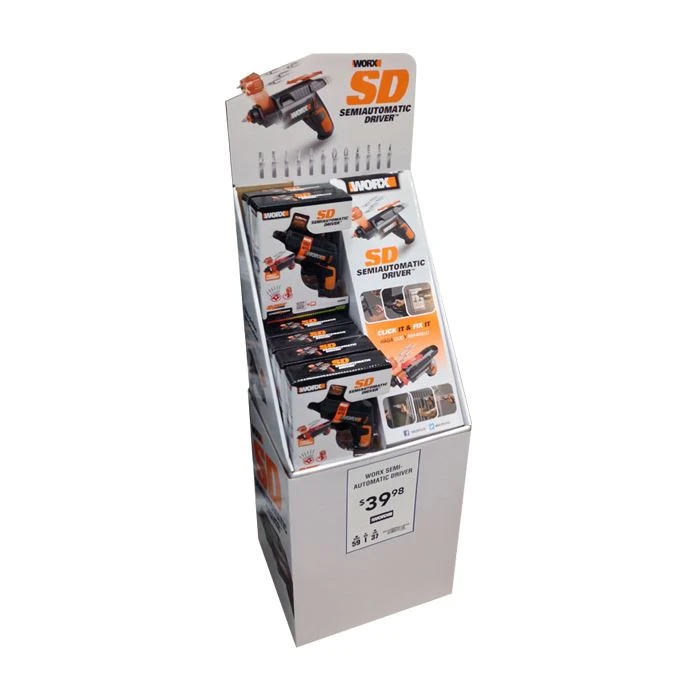
The "golden segment" of the merchandise display shelf is the second layer of the shelf, and the height is generally between 80-130 cm. In this segment, it is the easiest for adult consumers to see or get the merchandise, and the merchandise flow rate in the area is the fastest . The location should highlight products with impulsive buying characteristics, such as high-margin products, seasonal and best-selling products, free-brand products, or products that are vigorously promoted to consumers to attract consumers' attention.
Generally, large and heavy commodities should be displayed on the lower shelf of the shelf, and light and small commodities should be displayed on the upper shelf. The commodities displayed on the shelf should be kept at a distance of 3-5 cm from the upper partition;
In addition, the display end shelf refers to the front end or the last end of the entire row of shelves, that is, the shelf set at the turn of the customer flow line, and is often referred to as the best display point. End shelves are usually used to display some high-margin products, new products, promotional products or unsalable products to be processed.
First-in-first-out principle
After the products are on the shelves, as the products continue to be sold, the supermarket should supplement the products in a timely manner, and display the products according to the production date and the principle of first-in first-out.
The merchandise display should first take out the original merchandise on the shelf, and then put in the supplementary new merchandise, and place the merchandise with the previous batch of production date on the front end of the sales to ensure the normal circulation of the merchandise and maintain the overall relatively good shelf life of the merchandise. To reduce inventory, if you do not pay attention to the first-in-first-out principle, it will often result in a backlog of goods, more goods with near expiry dates, and increased goods losses. (If you have any supermarket design requirements, please search: Wanwei Design)
In addition to keeping the product clean when replenishing, the damaged, defective and expired products in the product must be replaced at any time. If there are unsalable products, we should find ways to deal with them, and we should not let them be covered in dust, which will damage the brand image.
Related Display Principle
Commodity related display is to display together products that are of different categories but complement each other in terms of utility, or to display products that are related to the main product around the main product. Related products should be displayed on both sides of the aisle, or on different groups of shelves in the same aisle, in the same direction, and on the same side, and should not be displayed on both sides of the same group of double-sided shelves.
Associated display is to promote the mutual sales of products, and use the complementarity between products to guide consumers to buy product B or product C displayed next to them after purchasing product A, and guide consumers to purchase a complete set of products, not Single purchase.
Essentially, the related display of products is based on the consumer's consumption habits and the precise grasp of consumer psychology, which increases the overall display activation and diversity of the store, and invisibly guides consumers to shop more products. This is also The root cause of the widespread use of related displays in supermarkets.
The principle of full shelf display
The merchandise display should reflect the principle of volume and shape the richness of the supermarket merchandise display. To a certain extent, the full shelf display of goods will win better sales benefits for the supermarket.
According to a survey report on supermarket chains in the United States, the sales volume of supermarkets with more abundant display and full display of goods can be increased by 14%-130% according to different types of goods compared with supermarkets with full display, which can increase on average 24%.
Full-shelves display can highlight the sense of merchandise volume and make the merchandise display more full and orderly. It can give consumers an intuitive impression of rich merchandise and complete varieties, and encourage consumers to have a full choice of psychological feelings, thereby deepening consumers’ perception of supermarkets. The recognition of the product, while stimulating consumers’ desire to shop, increases shelf storage capacity and reduces inventory.
On the contrary, over-empty products can easily cause consumers to mislead, making consumers think that supermarket products are too single and cannot give consumers more shopping choices, supermarkets are not popular, no one patronizes, no consumer demand, and over time, consumption Naturally, they will not patronize the supermarket anymore.
Full shelf display regulations:
First, each grid of supermarket display shelves must generally display at least three commodity varieties. (Currently, the length of domestic shelves is generally 1.0m to 1.2m) The display of best-selling products can be less than three varieties to ensure the sense of volume;
Second, according to the supermarket business area, the average display volume of commodities in each square meter should reach 11-12 varieties.