










What Is a Dump Bin?
In retail, speed matters. If a shopper can see it, grab it, and drop it into the cart within seconds, it sells.
That's exactly where dump bins come in.
A dump bin display is an open-top unit designed for fast-moving, small packaged goods. Products are stacked loosely inside, encouraging customers to browse quickly and pick without hesitation. The design feels casual, but it's intentional - open access increases impulse interaction.
Most retail dump bins are made from corrugated board because it's lightweight, printable, and cost-efficient for promotional runs. Properly engineered cardboard dump bins using double-wall material can typically hold 15–25 kg, depending on structure and base reinforcement.
You'll often see dump bins retail display units placed:
Near checkout
At aisle ends
In seasonal promotion zones
Along promotional pathways
They're compact, flexible, and easy to reposition - ideal for short-term campaigns and high-turnover items.
What Is a Pallet Display?
If dump bins are about impulse, pallet displays are about impact and volume.
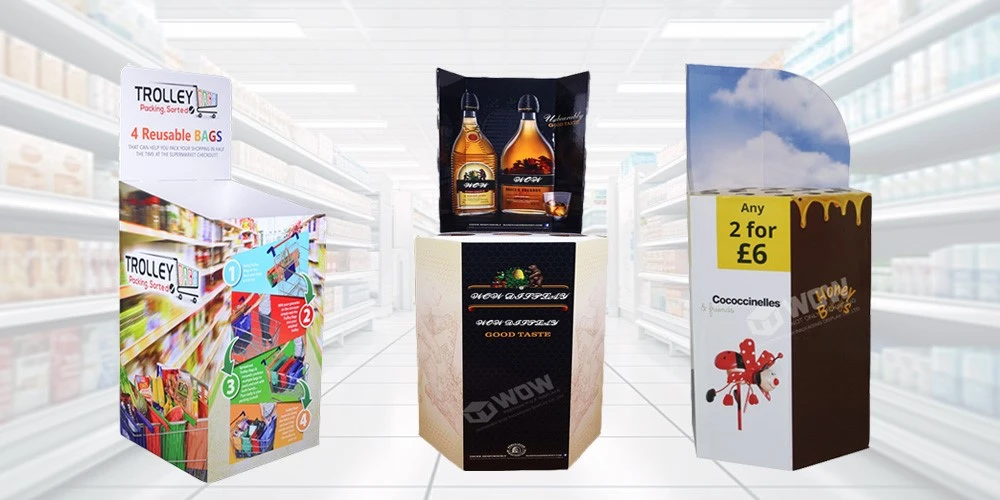
A pallet display is built on a pallet base and shipped pre-loaded. Retailers move it straight from the warehouse to the sales floor. No shelf restocking. No secondary handling.
Pallet displays for retail are common in supermarkets, hypermarkets, and warehouse stores. They handle significantly more weight - often hundreds of kilograms - thanks to reinforced corrugated structures, honeycomb board, or wooden pallet bases.
There are several formats:
Full pallet units
Half pallets
Quarter pallet display solutions for tighter store layouts
A quarter pallet display is particularly effective when space is limited but you still want strong visibility and meaningful stock depth.
Compared with dump bins, pallet systems focus more on bulk merchandising and operational efficiency. They function as both shipping unit and display platform.
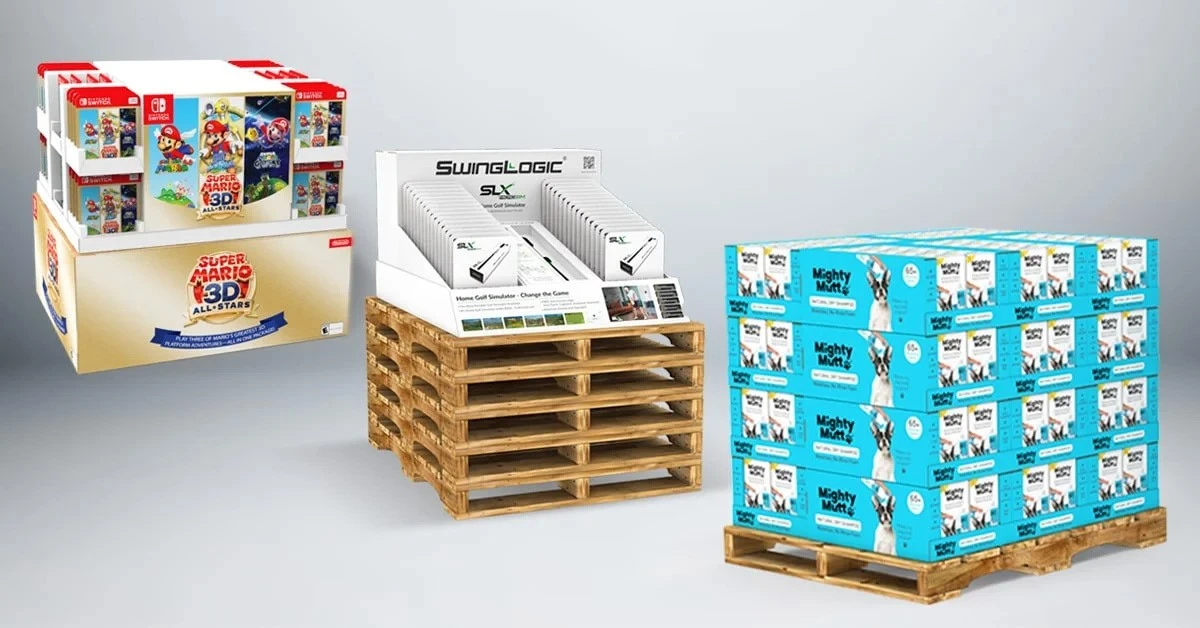
Key Differences Between Dump Bins and Pallet Displays
The difference isn't just size - it's strategy.
Dump bins are compact, flexible, and ideal for lightweight products that rely on impulse behavior. They're easy to assemble, easy to move, and perfect for quick promotions. Pallet displays, on the other hand, are built for scale. They carry heavier loads, reduce in-store labor by arriving pre-stocked, and create a stronger visual block on the retail floor.
If your goal is fast grab-and-go selling in high-traffic zones, dump bins work. If your priority is bulk volume, logistical efficiency, and large promotional presence, pallet displays deliver more control and capacity.
Many retailers use both at the same time - bins for impulse, pallets for power.
How They Help You Sell More
Retail space is expensive. Every square foot must justify itself.
A dump bins retail display increases product visibility outside standard shelving. Customers don't need to search - the product is right there. Open access encourages multiple picks instead of single-unit purchases.
Meanwhile, display pallets reduce handling costs. When a pallet display arrives fully packed, store staff save time that would otherwise be spent unpacking cartons and refilling shelves. Across multiple store locations, that efficiency adds up quickly.
Both formats also support brand storytelling. High-quality printing, structural headers, and custom shapes turn simple corrugated structures into promotional billboards.
In short:
Dump bins drive impulse velocity.
Pallet displays drive volume and efficiency.
Used correctly, they complement each other instead of competing.
What Products Work Best
Dump bins perform best with:
Confectionery
Small cosmetic packs
Travel-size products
Seasonal impulse items
Lightweight accessories
Pallet displays perform best with:
Beverage multipacks
Household goods
Pet food
Bulk snacks
Large packaged items
As a general rule, the heavier and more volume-driven the product, the more suitable pallet displays become. Lightweight, low-cost items lean toward dump bins.
Whether you're planning a seasonal promotion, launching a new product, or updating your in-store layout, consider how these two powerful display methods can help your business grow. Need a custom solution? Contact us to explore our range of cardboard display cases and pallet displays designed specifically for retail - designed to maximize exposure, engagement, and sales.
FAQ
1. Are dump bins only for small products?
Primarily yes. Dump bins are designed for lightweight, fast-moving items that benefit from easy customer access and impulse buying behavior.
2. How much weight can cardboard dump bins hold?
Well-designed cardboard dump bins typically support 15–25 kg. Reinforcement and board grade play a major role in load capacity.
3. When should I choose a quarter pallet display?
A quarter pallet display works well when store space is limited but you still need strong promotional presence and moderate inventory capacity.
4. Do pallet displays reduce store labor?
Yes. Because pallet displays for retail are often shipped pre-loaded, they reduce unpacking and shelf restocking time.
5. Can dump bins and pallet displays be used together?
Absolutely. Many retailers combine dump bins retail display units for impulse zones with pallet displays for bulk promotions to maximize floor efficiency and sales impact.