







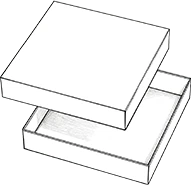
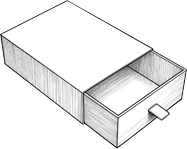



For suppliers working with Walmart, packaging and merchandising are just as important as the product itself. A well-executed Walmart PDQ (Pretty Darn Quick) display tray can determine whether a brand captures shopper attention or gets lost among competitors. Walmart sets strict guidelines for PDQ trays because they serve multiple roles: simplifying logistics, ensuring safety, and improving the in-store customer experience.
This article explores Walmart PDQ display tray standards and the design elements that manufacturers should consider, from shelf fit and structural strength to product accessibility, transportation, branding, and sustainability.
What Are the Key Walmart PDQ Tray Standards?
If you are developing a Walmart PDQ tray, the most important considerations are shelf compatibility, tray dimensions, product weight, structural strength, product accessibility, and transportation performance.
A publicly circulated Walmart RRP & PDQ Display Standard Style Guide specifies several useful reference points for PDQ tray development, including a maximum tray depth of 14 inches and a maximum tray weight of 50 lb. The guide also states that the combined width of PDQ trays placed on a shelf should be 1/2 inch less than the actual shelf width.
For example, a 48-inch shelf can be configured with two 23.75-inch trays, giving a combined width of 47.5 inches.
However, these figures come from a publicly available 2016 Walmart guide, not a current universal 2025 Walmart specification. Retail programs, departments, fixtures, and product categories can have different requirements. Suppliers should therefore confirm the applicable requirements with the relevant Walmart program or buyer before production.
Understanding the Concept of PDQ Display Trays
A PDQ Display is a pre-packed retail-ready solution designed for "quick setup" in stores. The trays arrive at Walmart already loaded with merchandise, so store associates can place them directly onto shelves or counters with minimal labor.
- Functionality: A display PDQ must not only hold products securely but also present them attractively.
- Efficiency: For Walmart, faster stocking saves labor costs across thousands of stores.
- Flexibility: From corrugated PDQ displays for snacks to modular custom PDQ trays for electronics, the versatility of PDQ designs makes them essential to Walmart's supply chain.
Essentially, a PDQ tray is both packaging and marketing rolled into one-a tool for both retailers and brands.
If you are comparing different structural formats, see our guide to [types of PDQ displays].

Why Compliance with Walmart Standards Matters
Walmart is the world's largest retailer, and its merchandising rules directly impact supplier relationships. Ignoring PDQ tray standards can lead to:
Rejected shipments if the trays do not meet durability or size requirements.
Increased costs due to product damage during transport.
Lost sales opportunities if displays fail to capture shopper attention.
By following Walmart's walmart pdq specifications, suppliers not only streamline distribution but also align with the retailer's expectations for consistency, sustainability, and customer satisfaction.
What Walmart Looks for in a PDQ Display
Walmart PDQ projects should be evaluated as complete retail systems rather than as printed cardboard trays.
Structural Integrity
A loaded tray needs to remain stable during handling, transportation, shelf placement, and normal shopping activity.
Structural performance depends on more than board thickness. Product weight, load distribution, tray span, support points, board construction, and front-wall geometry all affect how the display performs.
Shelf Compatibility
A structurally strong tray can still create problems if it does not fit the intended retail fixture.
The tray width and depth should be developed around the actual shelf condition, including available clearance and potential interference with brackets or support components.
Product Accessibility
The product should be easy for shoppers to see and remove.
If the front wall is too high, the tray is too deep, or products are packed too tightly, the structure may technically hold the merchandise but still perform poorly as a retail display.
Transportation Stability
The tray also needs to survive the journey from the supplier to the store.
Vibration, compression, stacking, handling, and product movement can affect both the tray and the merchandise inside it.
Dimensions and Structural Requirements
One of the most critical factors in Walmart PDQ design is size standardization. Trays must fit seamlessly into Walmart's shelving and pallet systems.
Tray dimensions are typically based on modular shelf measurements. If a tray is even slightly off, it can create wasted space or stocking inefficiencies.
Structural strength must be tested. Walmart requires that corrugated PDQ displays withstand both transportation stress and in-store handling.
Weight distribution is another requirement. Trays should support even product placement to avoid collapse or uneven presentation.

Walmart PDQ Tray Dimensions and Sizing
When developing a Walmart PDQ display tray, three dimensions deserve particular attention: width, depth, and the available clearance around the tray.
Shelf Width and Tray Width
According to the publicly available Walmart RRP & PDQ Display Standard Style Guide, the combined width of PDQ trays used on a shelf should be approximately 1/2 inch less than the actual shelf width.
This allowance helps prevent interference between the tray and the physical shelf structure.
For example:
| Shelf Width | Example Tray Configuration |
|---|---|
| 48 in | 2 × 23.75 in = 47.5 in |
| 36 in | 1 × 35.5 in |
| 30 in | 1 × 29.5 in |
| 24 in | 1 × 23.5 in |
These examples should be treated as reference configurations rather than universal dimensions for every Walmart program.
The final tray size should always be checked against the actual fixture and the applicable retail program.
PDQ Tray Depth
The same publicly available Walmart guide specifies a maximum PDQ tray depth of 14 inches.
Depth affects more than shelf fit.
A deeper tray can provide additional product capacity, but it can also make products harder to reach and replenish. A shallower tray may improve accessibility but reduce the amount of product that can be presented.
The correct depth therefore depends on:
- Product footprint
- Shelf depth
- Product access
- Product quantity
- Replenishment requirements
- Structural requirements
The goal is not simply to maximize tray capacity. The goal is to create a tray that works efficiently in the real retail environment.
Why Actual Fixture Measurements Still Matter
Published standards are useful starting points, but they should not replace project-specific measurements.
Retail fixtures can vary by store format, department, program, and merchandising location. A shelf-based PDQ tray may have very different requirements from a display designed for an endcap or another retail environment.
Before production, suppliers should confirm:
- Actual shelf width
- Available shelf depth
- Fixture clearance
- Product dimensions
- Product quantity
- Product weight
- Intended merchandising position
This information allows the engineering team to design the tray around the real retail condition rather than an assumed dimension.
How Much Weight Can a Walmart PDQ Tray Hold?
A publicly available Walmart RRP & PDQ Display Standard Style Guide specifies a maximum PDQ tray weight of 50 lb.
However, total weight alone does not determine whether a tray will perform correctly.
Two trays can carry the same total weight but experience very different structural loads.
For example, 40 lb evenly distributed across a wide tray will behave differently from 40 lb concentrated in a small area.
When engineering a custom PDQ tray, the design team should consider:
- Total product weight
- Weight distribution
- Product density
- Tray span
- Board grade
- Flute structure
- Internal reinforcement
- Shelf support
- Front lip design
- Transportation conditions
Therefore, the 50 lb figure should be treated as a reference from the published guide rather than as a universal guarantee for every Walmart program.
Always confirm the current requirements applicable to your specific project before mass production.
Why Product Weight Is Not the Only Structural Consideration
A common mistake in PDQ tray design is assuming that thicker cardboard automatically means a stronger display.
In reality, structural performance depends on the interaction between material and geometry.
A custom PDQ tray may use:
Reinforced base panels
Internal support structures
Stronger shelf construction
Dividers
Locking tabs
Double-wall areas
Different corrugated board constructions
The objective is to achieve the required load performance without adding unnecessary material or making the tray difficult to ship and handle.
What Should Be Tested Before Producing a Walmart PDQ Tray?
A structural drawing alone cannot show how a loaded PDQ tray will behave in real retail conditions.
Before mass production, several practical tests should be considered.
Load Testing
Load testing evaluates whether the tray can support the intended product weight without excessive bending, deformation, or structural failure.
Whenever possible, testing should use the actual product or an equivalent load with the same weight distribution.
Shelf Fit Testing
A physical fit test can reveal problems that may not be obvious from CAD drawings.
The sample should be checked against the actual shelf or fixture for:
Width
Depth
Clearance
Bracket interference
Product access
Replenishment space
Transportation Testing
Transportation can expose weaknesses that are not visible during static testing.
A loaded PDQ tray may experience vibration, compression, impact, stacking pressure, and repeated handling before it reaches the store.
The objective is not only to prevent structural collapse. Products should also arrive in a condition that allows the display to go onto the retail floor with minimal rework.
Product Access Testing
The loaded tray should also be reviewed from the shopper's perspective.
Can the customer easily remove the front product?
Can the store associate replenish the tray without removing the entire assortment?
Does the product remain visible as inventory decreases?
These questions are just as important as structural strength.
Modular and Customizable Design
While Walmart enforces strict structural guidelines, it also encourages innovation through modularity. Custom PDQ trays that can adapt to different product sizes or seasonal assortments are highly valued.
- Modular inserts: Removable dividers or lattice structures allow one tray design to house multiple SKUs.
- Custom branding flexibility: A single base structure can be repurposed for multiple campaigns by swapping out branded sleeves.
- Efficient replenishment: Modular PDQ stands for retail are easier to refill without disrupting the entire tray.
This approach benefits suppliers by reducing tooling costs and benefits Walmart by maintaining consistent shelf organization.
Material Durability
Material choice is central to Walmart's PDQ standards. Most trays are made from corrugated cardboard, but not all corrugated solutions are equal.
- Strength-to-weight ratio: Walmart requires trays strong enough to endure stacking while remaining lightweight for ease of handling.
- Moisture resistance: Particularly important for frozen or refrigerated items where condensation could weaken the tray.
- Longevity in-store: While PDQs are designed for short-term use, Walmart expects them to remain intact for the entire sales cycle.

When Should a Walmart PDQ Tray Be Customized?
Customization becomes particularly useful when the product or retail environment has requirements that a standard tray cannot handle efficiently.
Multiple SKUs
If several product sizes or variations need to share one tray, dividers and internal compartments can keep the assortment organized.
Different Product Weights
If one SKU is significantly heavier than another, the tray may require localized reinforcement rather than simply increasing the strength of the entire structure.
Seasonal Product Changes
A modular structure can allow the same basic display footprint to support different seasonal products or campaigns.
Replenishment Requirements
Fast-moving products may require greater product capacity and easier access, while slower-moving products may need a different presentation strategy.
The best custom PDQ tray is therefore not simply a tray with custom graphics. It is a structure developed around the product, fixture, shipping method, and store operation.
Explore our [custom PDQ display trays] for retail applications.
Corrugated Board Selection for PDQ Trays
Board selection should begin with the actual product and load requirements rather than simply choosing the thickest available material.
The engineering team should consider:
Product weight
Product distribution
Tray span
Shelf support
Shipping method
Expected handling
Intended sales period
Board Strength
Different corrugated constructions provide different levels of stiffness and compression performance.
Flute Direction
Flute orientation can affect how a corrugated panel performs under load and should be considered during structural engineering.
Internal Reinforcement
For heavier or unevenly distributed products, internal support can help transfer loads more effectively.
Moisture Conditions
If the display is intended for refrigerated or moisture-prone environments, material and surface-treatment considerations may need to be evaluated during development.
Eye-Catching Graphics and Branding
Even the most structurally sound walmart pdq tray won't succeed if it fails to capture customer attention. Walmart emphasizes clear, high-quality graphics that align with both brand identity and in-store aesthetics.
- High-resolution printing: Ensures that logos and product visuals remain sharp and professional.
- Strategic color use: Bright hues and bold contrasts work best in busy retail aisles.
- Consistent branding: The display should look like an extension of the product packaging itself.
What Information Should a Walmart PDQ Display Communicate?
A PDQ tray usually has limited graphic space, so the visual hierarchy needs to remain simple.
Depending on the program, useful information may include:
Product name
Key product benefit
Promotional message
Price or value proposition
Brand identity
Call to action
The graphic design should also work when the tray is partially empty.
A display that only looks effective when completely stocked may lose visual impact as products sell through. Strong design therefore considers both the full and partially depleted merchandising condition.
Product Placement and Accessibility
Walmart requires that PDQ Displays not only look good but also function as accessible merchandising tools.
- Easy product pick-up: Customers should be able to remove items without disrupting the tray.
- Organized SKU separation: Custom PDQ trays with dividers prevent different products from mixing.
- Ergonomic placement: Displays must be designed for visibility and comfort, often aligning with eye-level shopping zones.
Accessibility isn't just about convenience; it directly impacts conversion rates. Research shows that shoppers are significantly more likely to purchase when products are clearly visible and easy to grab.
Designing a PDQ Tray for Easy Shopping and Replenishment
A PDQ tray should be evaluated from two different perspectives:
the shopper and the store associate.
Customer Access
The front opening should make the product easy to see and remove.
Customers should not need to reach deeply into the tray or move several products to access the item they want.
Store Associate Access
Replenishment should be considered at the same time as shopping.
A tray that looks attractive when fully loaded may become difficult to refill once inventory starts to decline.
Product Visibility
Product visibility should remain relatively consistent as stock levels change.
Dividers, risers, front walls, and product-facing angles can all affect visibility.
Front Lip Design
The front lip needs to balance product containment and accessibility.
The published Walmart guide referenced above specifies a minimum 2-inch front lip for basic trays and notes that wider trays or heavier products may require additional height or reinforcement.
The final front-lip design should still be evaluated against the actual product dimensions, weight, stability, and accessibility requirements.
Safety and Sustainability Compliance
Walmart places a strong emphasis on both safety and sustainability. Suppliers must follow strict guidelines to ensure that walmart pdq trays align with corporate responsibility goals.
Safety: Edges must be smooth, trays should not collapse under normal handling, and the design should eliminate risks such as product spillage.
- Sustainability: Walmart encourages the use of recyclable materials, water-based inks, and minimized packaging waste. Corrugated cardboard remains the material of choice because of its eco-friendly profile.
- Certifications: Some Walmart programs require suppliers to meet third-party sustainability standards, reinforcing Walmart's global sustainability commitments.

Walmart PDQ Display Testing and Shipping Considerations
The retail journey does not end when the tray leaves the factory.
For pre-packed displays, shipping performance is part of the display design.
Pallet Stability
If the display is shipped as a palletized merchandising unit, the pallet, tray, product load, and protective materials should be considered as one shipping system.
Shipper and Tray Coordination
The outer shipper protects the display before it reaches the store.
A well-designed system should reduce the risk of:
Crushed tray walls
Deformed openings
Product movement
Graphic damage
Structural distortion
Transportation Protection
Depending on the applicable retail program, protective elements such as stretch wrap, strapping, corner protection, or a protective shroud may be considered.
The exact shipping configuration should be confirmed according to the retailer's current requirements and the specific distribution method.
Is a PDQ Tray the Same as a PDQ Display?
A PDQ tray is one type of PDQ display format, but the terms are not always interchangeable.
PDQ display is a broader term covering retail-ready merchandising structures designed for quick deployment.
A PDQ tray generally refers to a tray-style structure designed to hold and present products on a shelf, counter, or similar retail fixture.
This distinction matters when selecting the right display format.
A shelf-based Walmart project may require a specific tray configuration, while a pallet-based or floor-level project may require a different PDQ structure.
The correct format depends on:
Product type
Product weight
Shelf or fixture
Merchandising location
Shipping method
Replenishment requirements
If you are new to the terminology, read our guide explaining [what a PDQ display is]
Frequently Asked Questions About Walmart PDQ Trays
1.What is the maximum weight for a Walmart PDQ tray?
A publicly available Walmart RRP & PDQ Display Standard Style Guide specifies a maximum PDQ tray weight of 50 lb. Because retailer requirements can change or vary by program, suppliers should confirm the applicable requirements before production.
2.What is the maximum depth of a Walmart PDQ tray?
The published Walmart guide referenced in this article specifies a maximum depth of 14 inches. The actual tray should still be checked against the intended fixture and current project requirements.
3.How wide should a Walmart PDQ tray be?
The published guide states that the combined width of PDQ trays on a shelf should be 1/2 inch less than the actual shelf width. For example, two 23.75-inch trays provide a combined width of 47.5 inches for a 48-inch shelf.
4.Can two PDQ trays be used on one Walmart shelf?
Yes. Multiple trays can be configured on the same shelf when the combined dimensions are designed to work with the available shelf space and applicable retail requirements.
5.Can a PDQ tray be customized for heavier products?
Yes. Custom PDQ trays can be engineered around product weight, load distribution, board construction, support structure, shelf span, and product accessibility.
6.What should be tested before producing a Walmart PDQ tray?
Load performance, shelf fit, transportation stability, product accessibility, and replenishment should all be considered before mass production.
7.Are Walmart PDQ requirements the same for every product?
Not necessarily. Retail programs, departments, fixtures, product categories, and merchandising configurations can vary. Published guidelines should therefore be treated as reference information and confirmed against the current requirements for the specific project.
Conclusion
Designing a Walmart PDQ display tray is about more than simply holding products-it's about meeting rigorous standards that blend efficiency, branding, sustainability, and safety.
From the right corrugated PDQ displays that pass strength tests to custom PDQ trays with modular inserts, suppliers must strike a balance between Walmart's technical requirements and creative marketing needs.
By following Walmart's PDQ guidelines, suppliers reduce supply chain risks, build stronger retailer relationships, and ultimately boost sales at the world's largest retail stage.
The bottom line? A compliant display PDQ isn't just packaging-it's a strategic sales tool. When done right, it ensures that your brand doesn't just enter Walmart's aisles but truly stands out.