





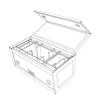



A paper chair sounds weak until someone actually sits on it.
That is usually the first reaction people have when they see Paper Furniture in a showroom, exhibition booth, pop-up store, or children's activity space. A chair made from paper? A table made from cardboard? A bed platform made from paper-based panels? At first, it feels unlikely.
But paper furnitureis not strong because ordinary paper suddenly becomes stronger. It becomes stronger because the paper material is built into a structure that can carry load.
One of the most important materials behind stronger paper furniture is Honeycomb Board. Its internal honeycomb core helps the panel spread pressure, resist compression, and create thickness without adding too much weight. When the board is used with the right support direction, edge treatment, joint design, and testing process, it can become a practical material for cardboard furniture, retail display furniture, exhibition furniture, and temporary commercial spaces.
This article explains how honeycomb paper board improves the strength of Paper Furniture, why the honeycomb core matters, and what buyers should check before using honeycomb furniture panels in real projects.

Why Paper Furniture Needs Structural Support
Paper furniture has a simple challenge: paper bends when it is used as a thin, flat sheet. A flat paperboard panel may look firm on a table, but once it carries weight for a long time, weak areas start to show.
A chair seat may bend. A table surface may sag. A stool may lose shape at the edge. A large display platform may become unstable if the weight is placed in the wrong area.
That does not mean paper cannot be used for furniture. It means paper needs a structural system.
Thin Paper Panels Bend Easily
A thin paper panel has limited bending resistance. When pressure is placed in the center, the panel naturally wants to curve downward. This is especially obvious in furniture parts such as seat panels, tabletops, shelves, and platform surfaces.
For packaging or light display graphics, this may not be a serious issue. For furniture, it matters immediately. Paper furniture must support people, products, or repeated handling, so the panel needs more than surface stiffness.
Honeycomb Board helps because it turns a thin paper material into a thicker panel structure. The internal core creates distance between the two surface layers, which helps the panel resist bending more effectively.
Furniture Needs Controlled Load Direction
Paper furniture strength is not only about material thickness. It also depends on how weight moves through the structure.
A paper chair needs the sitting pressure to move from the seat into the side panels and down to the floor. A paper table needs the tabletop load to transfer into the legs or vertical supports. A paper bed needs the weight to spread across multiple support points instead of one large unsupported area.
If the load direction is not controlled, even a thick honeycomb board panel can perform poorly. This is why Paper Furniture should be designed around real use, not only around shape or appearance.
Honeycomb Board Is Not Just Thicker Paper
Honeycomb Board is a paper-based panel made with two outer surface layers and an internal honeycomb core. The core is usually formed into repeated cell shapes, similar to a beehive.
At first glance, it may look like a thick paper panel. But its strength does not come only from thickness. The honeycomb core changes the way the panel reacts to pressure.
The Honeycomb Core Changes the Panel Structure
The internal honeycomb core works like a network of small support cells. These cells create a space between the top and bottom surface layers. That space helps the panel resist bending and compression better than a flat sheet of paperboard.
In paper furniture, this structure can be used for seat panels, tabletops, side panels, bed platforms, display platforms, and children's furniture. The panel becomes lighter than a solid board, but it still has enough body to form usable furniture parts.
This is why honeycomb paper board is often used in honeycomb board furniture. It gives paper-based furniture a stronger internal structure without making the whole product too heavy.
Why Thickness and Air Space Matter
Furniture needs thickness to feel stable. A very thin panel can look weak, even before someone touches it. Solid wood creates thickness through dense material. Honeycomb Board creates thickness through an internal paper core.
That air space inside the honeycomb structure is useful. It increases the panel depth while keeping weight lower than many solid board materials. For exhibition furniture, pop-up store furniture, retail display furniture, and temporary cardboard furniture, this balance is valuable.
The furniture can look solid and carry moderate loads, while still being easier to move, pack, and assemble.

How Honeycomb Board Improves Paper Furniture Strength
The strength of Paper Furniture does not come from one single feature. Honeycomb Board improves strength through several structural effects at the same time.
It spreads weight across the panel. It improves compression resistance. It adds thickness without excessive weight. These three points are the main reason honeycomb furniture panels can be used in chairs, tables, benches, beds, and display platforms.
Spreading Weight Across the Panel
When someone sits on a paper chair, the pressure should not stay in one small spot. If the force concentrates in one weak area, the panel may bend or crush.
A honeycomb core helps distribute that pressure across many small cells. Instead of allowing the load to press into one point, the structure spreads it across a larger area of the panel.
This is useful for chair seats, stool tops, tabletops, bed platforms, and retail display platforms. For example, a paper chair seat made from a simple flat board would bend quickly under body weight. A seat panel made from Honeycomb Board can spread pressure into the surrounding support panels, if the chair structure is designed properly.
Improving Compression Resistance
Compression resistance is important when weight pushes downward. This happens in seating furniture, display platforms, paper beds, and tables.
The honeycomb core works like many small vertical support cells inside the panel. One thin paper wall may not seem strong by itself, but when thousands of cells are connected together, the structure becomes more resistant to crushing.
Still, compression strength is not the same in every honeycomb board furniture design. It depends on cell size, paper quality, surface paper strength, adhesive bonding, board thickness, and load direction. A panel used vertically may perform differently from the same panel used horizontally.
This is why load capacity should be confirmed through prototype testing, not guessed from the material name alone.
Creating Thickness Without Heavy Weight
Furniture needs visual and structural volume. A paper stool with a thin seat looks weak. A paper table with a thin top may sag. A display platform with a thin board may not feel stable.
Honeycomb Board adds thickness without adding too much weight. This makes it practical for lightweight paper furniture, exhibition seating, pop-up display furniture, children's activity furniture, and temporary commercial interiors.
The result is not the same as solid wood furniture, and it should not be described that way. Its value is different. Honeycomb Board allows cardboard furniture to stay light, printable, and easy to handle while still offering useful structural strength.
Where Strength Matters Most in Paper Furniture
Different furniture types fail in different ways. A paper chair does not have the same stress points as a paper table. A paper bed needs a different support system from a small cardboard stool.
This is why paper furniture design should start from how the product will be used.
Paper Chairs and Stools
Paper chairs and stools are often the most questioned type of cardboard furniture because people directly apply body weight to them.
For a paper chair, the seat panel is only one part of the strength. The side panels, leg structure, floor contact area, and joint design also decide whether the chair feels stable. If the seat is strong but the side support is weak, the chair may still wobble or deform.
Honeycomb Board can help create a stronger seat surface and vertical support panels. But the edges and joints need attention. Sitting pressure often concentrates near the front edge of the seat or around connection points. If those areas are not reinforced or protected, the furniture may fail even when the main panel looks strong.
Paper Tables and Display Platforms
Paper tables and display platforms depend heavily on span control. The wider the tabletop, the more it wants to bend downward.
Honeycomb furniture panels can create a stiffer tabletop, but they still need proper support spacing. A small paper table may work with simple side panels. A larger display platform may need hidden vertical supports, folded structures, or internal reinforcement.
For retail display platforms, the product load is not always evenly placed. A brand may put heavier products in the center or near one corner. That creates point pressure. The structure should be designed around where products actually sit, not only around the outside shape.
Paper Beds and Larger Furniture Structures
Paper beds, long benches, and large platforms require more careful structural planning. These products carry larger loads across a wider surface.
A paper bed does not work because one large paper panel is strong. It works when the load is divided across repeated support zones. Honeycomb Board may be used for the top platform, but the structure underneath decides whether the bed feels stable.
Modular supports, repeated vertical panels, cross-bracing, and load distribution are usually more important than board thickness alone. For this reason, large Paper Furniture should always go through sample testing before mass production.

Design Details That Decide Load Capacity
Using Honeycomb Board does not automatically make paper furniture strong. The final load capacity depends on how the material is used.
Two paper chairs can use the same honeycomb paper board and perform very differently. One may feel stable, while the other may loosen after short use. The difference usually comes from design details.
Board Thickness and Honeycomb Cell Size
Board thickness affects bending resistance. A thicker honeycomb board panel usually feels more rigid than a thinner panel, but thickness alone is not enough.
Honeycomb cell size also matters. Smaller cells may improve surface support and compression performance, while larger cells may reduce weight and material use. The right choice depends on the furniture type and expected load.
For example, a paper chair seat may need stronger compression support than a decorative side panel. A display platform for products may need a different board structure from a child's paper stool.
Edge Treatment and Surface Paper Strength
Edges are often the weak point in paper furniture. A honeycomb panel can be strong in the middle but vulnerable at the cut edge.
If the edge is exposed, crushed, or poorly wrapped, the panel may lose strength during handling or use. For seating furniture and display platforms, edge treatment is especially important because edges often receive pressure when people sit, lift, assemble, or move the furniture.
Surface paper strength also affects performance. The surface layers help transfer load across the panel. If the surface paper is too weak, the furniture may dent, tear, or lose shape even if the honeycomb core is acceptable.
Joint Design and Support Span
In cardboard furniture, the joint is often the real test of strength.
Paper furniture may use slots, folds, interlocking panels, glue, or hidden reinforcement. These connection points must hold the structure together while carrying real force. A weak joint can make the furniture unstable even when the panels themselves are strong.
Support span is another key factor. A long unsupported tabletop or seat panel is more likely to sag. Adding vertical supports or reducing the span can improve strength without changing the board material.
This is where good structural design can reduce material waste and improve stability at the same time.
Testing Paper Furniture Before Production
Paper furniture should not be approved only from a rendering or flat drawing. A design may look clean on screen, but real strength can only be checked through a physical sample.
This is especially important for seating, tables, beds, and display platforms. These products carry weight, face repeated handling, and may be used by people who do not know how delicate the material is.
Load Testing
Load testing checks whether the furniture can carry the expected weight. For a paper chair, the sample should be tested with the expected sitting pressure. For a paper table or display platform, the sample should be tested with real product weight and placement.
A static load test can show whether the furniture holds weight under normal conditions. It can also reveal weak areas in the seat, tabletop, side panels, or support structure.
Joint and Edge Testing
Joint and edge testing is just as important as panel testing.
A chair may not break in the seat panel, but it may loosen at the slot connection. A table may not collapse in the middle, but its edge may crush during handling. A bed platform may hold weight once, but shift after repeated use.
Testing should check whether the joints stay tight, whether the edges resist pressure, and whether the structure remains stable after assembly.
Packing and Handling Review
Many paper furniture projects are designed for flat-pack delivery. That means packing, transport, and assembly are part of the product design.
A good sample should be packed, unpacked, assembled, and handled the way the final user will use it. If the edges damage during packing or the joints become loose after one assembly, the structure needs adjustment.
For exhibition furniture, pop-up store furniture, and temporary retail furniture, this review is very important. These products often move between locations and are assembled quickly by different people.

When Honeycomb Board Furniture Is a Good Choice
Honeycomb Board is a good choice when paper furniture needs to be lightweight, indoor-use, visually solid, and practical for temporary or semi-permanent spaces.
It works best when the application matches the material. It is not a universal replacement for wood or metal furniture.
Exhibitions and Pop-Up Stores
Exhibition booths and pop-up stores often need furniture that looks good, ships efficiently, and can be assembled without heavy tools. Honeycomb board furniture fits this type of project well.
A paper stool, counter, table, or display platform can support a temporary brand space while staying easier to move than solid wood furniture. The paper-based look can also match eco-themed campaigns or creative retail environments.
Retail Display Furniture
Honeycomb Board can also be used for retail display furniture, especially when the furniture is part of a brand presentation rather than permanent store equipment.
Display platforms, paper benches, product tables, and lightweight furniture props can all use honeycomb furniture panels. The key is to design around product weight, customer interaction, and expected use time.
If the furniture must support heavy products for a long period, the structure may need reinforcement or mixed materials.
Children's Activity Areas and Temporary Spaces
Children's paper furniture is another suitable area, especially for indoor activity spaces, events, classroom props, and temporary play zones.
The material is lightweight and can be shaped into friendly forms. But safety still comes first. Edges should be treated properly, the structure should be stable, and the furniture should be tested for the expected use.
Temporary spaces are where cardboard furniture often performs best. The goal is not to replace permanent furniture, but to create practical, lightweight structures for specific use periods.
Final Thoughts
Honeycomb Board does not simply make paper thicker. It changes how paper carries load.
The honeycomb core helps spread pressure, improve compression resistance, and create thick furniture panels without adding too much weight. This is why Paper Furniture can be used for chairs, tables, display platforms, children's furniture, event spaces, and temporary retail environments.
But the board is only one part of the answer. Real strength depends on design, edge treatment, joint stability, support direction, and prototype testing.
Planning a honeycomb board furniture or cardboard furniture project? WOW Packaging can help review furniture type, expected load, usage environment, honeycomb furniture panels, edge treatment, packing method, and sample testing before mass production.
FAQ
1.How does Honeycomb Board make paper furniture stronger?
Honeycomb Board makes paper furniture stronger by spreading pressure, improving compression resistance, and adding panel thickness without too much weight. The internal honeycomb core helps the furniture panel carry load more effectively than a flat paper sheet.
2.Is honeycomb board furniture strong enough to sit on?
It can be designed for seating, but the structure must be tested with the expected user weight before production. A paper chair needs proper seat support, side stability, edge treatment, and joint design.
3.What is honeycomb paper board used for in furniture?
Honeycomb paper board is often used for chair seats, tabletops, side panels, bed platforms, display platforms, children's furniture, exhibition furniture, and temporary paper furniture structures.
4.Is cardboard furniture the same as paper furniture?
The terms are often used together. Cardboard furniture usually refers to furniture made from paperboard, corrugated board, or Honeycomb Board. Paper Furniture is a broader term that may include several paper-based materials.
5.Can honeycomb board furniture replace wood furniture?
It can replace wood furniture in some indoor, temporary, exhibition, showroom, or lightweight retail furniture projects. It should not be treated as a direct replacement for long-term heavy-duty wood furniture.
6.Is honeycomb board furniture waterproof?
Standard honeycomb paper board is not waterproof. If the furniture may face moisture, it needs coating, lamination, edge protection, or mixed-material support.
7.What affects the load capacity of paper furniture?
Load capacity depends on board thickness, honeycomb cell size, surface paper strength, bonding quality, load direction, edge treatment, joint design, support span, and prototype testing.
8.Can Honeycomb Board be used for both paper furniture and displays?
Yes. Honeycomb Board can be used for Paper Furniture, cardboard furniture, display platforms, exhibition structures, and retail display furniture when the structure is properly designed.