











Walk into any supermarket, convenience store, or retail chain and you will notice one thing immediately: certain products stand out more than others.
Those products are rarely there by accident.
In modern retail environments, POP displays (Point of Purchase displays) are one of the most powerful tools used to capture attention, guide shopper behavior, and ultimately increase product sales.
While shelves organize products, retail POP displays influence decisions.
Brands that understand how shoppers move through stores-and how visual merchandising affects purchasing psychology-use POP displays strategically to shape buying behavior.
This article explores how POP displays influence real shopper behavior, why they increase impulse purchases, and how brands design displays that convert attention into sales.
Retail Decisions Are Often Made Inside the Store
Many people assume shoppers decide what they will buy before entering a store.
In reality, research in retail marketing suggests something very different.
A large percentage of purchase decisions are made inside the store itself. This means the environment-store layout, signage, and displays-plays a significant role in influencing what customers ultimately put into their carts.
This is where point of purchase displays become critical.
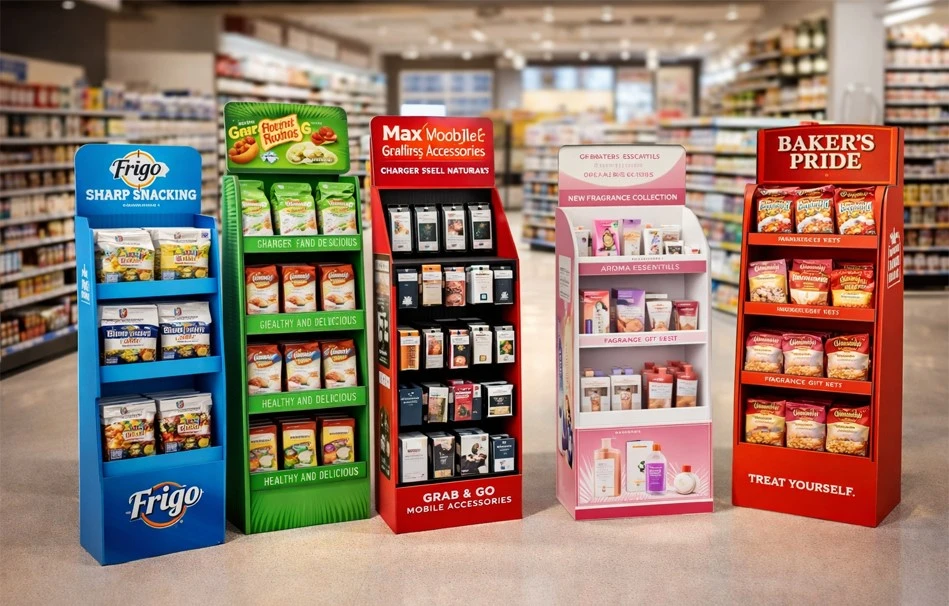
POP displays serve as visual signals that interrupt normal browsing patterns. They guide the shopper's eye, highlight promotional products, and create opportunities for impulse buying.
For many categories-snacks, cosmetics, beverages, toys, and seasonal goods-POP displays often outperform traditional shelf placement.
What Exactly Is a POP Display?
A POP display (Point of Purchase display) is a retail merchandising fixture placed near the location where purchase decisions happen.
These displays are typically positioned in high-traffic zones such as:
- store entrances
- aisle ends
- checkout counters
- promotional islands
- cross-merchandising areas
Unlike permanent store fixtures, most POP displays are designed for temporary marketing campaigns or product launches.
Their main purpose is simple:
to attract attention and influence buying decisions at the exact moment shoppers are ready to purchase.
Why POP Displays Influence Shopper Behavior
POP displays work because they interact with several key aspects of consumer psychology.
Instead of simply presenting products, they actively shape how customers perceive value, urgency, and convenience.
Here are some of the main reasons they are effective.
Visual Attention in a Busy Store Environment
Retail stores contain thousands of products competing for attention.
A well-designed retail POP display stands out through:
- color contrast
- unique structure
- height difference
- branded graphics
Because human attention naturally moves toward visual contrast, shoppers are drawn toward these displays even before consciously deciding to look at them.
This visual interruption is often the first step toward a purchase.
Triggering Impulse Purchases
Impulse buying is one of the strongest drivers of retail revenue.
POP displays are particularly effective because they place products directly within a shopper's decision path.
For example:
a snack display near checkout
a beverage display near the entrance
seasonal items in aisle-end displays
These placements reduce the mental effort required to decide. The product appears convenient, accessible, and immediately relevant.
Reinforcing Brand Messaging
Beyond visibility, POP displays strengthen brand identity.
Packaging alone may not fully communicate the story behind a product.
A display structure can include:
brand colors
product messaging
promotional campaigns
storytelling graphics
This transforms the display into a miniature marketing environment within the store.
Creating Perceived Value
Shoppers often associate product displays with promotions or special offers.
Even when the price is the same as shelf placement, a product positioned on a display can appear more valuable because it feels curated or highlighted.
Retailers use this strategy frequently during:
seasonal campaigns
product launches
limited-time promotions
Where POP Displays Work Best in Retail Stores
Placement is one of the most important factors in determining whether a display succeeds.
Retailers typically position POP displays in locations where shopper traffic naturally concentrates.
Store Entrance Displays
Entrance displays introduce products immediately as customers walk into the store.
These displays are often used for:
seasonal products
promotional campaigns
new product launches
Because customers have not yet committed to specific purchases, entrance displays influence early shopping decisions.
Aisle Endcap Displays
Endcap displays sit at the end of store aisles and receive heavy foot traffic.
They are one of the most valuable retail locations because they:
interrupt aisle browsing patterns
increase product visibility
encourage impulse purchases
Many brands compete heavily for endcap display space.
Checkout Counter Displays
Products placed near checkout benefit from a unique psychological moment: customers have already decided to purchase something.
This environment is ideal for:
small accessories
snacks and beverages
low-cost add-on items
These counter POP displays capitalize on last-minute buying behavior.
Types of POP Displays Used in Retail
Retail environments use different POP display structures depending on the product category and campaign objective.
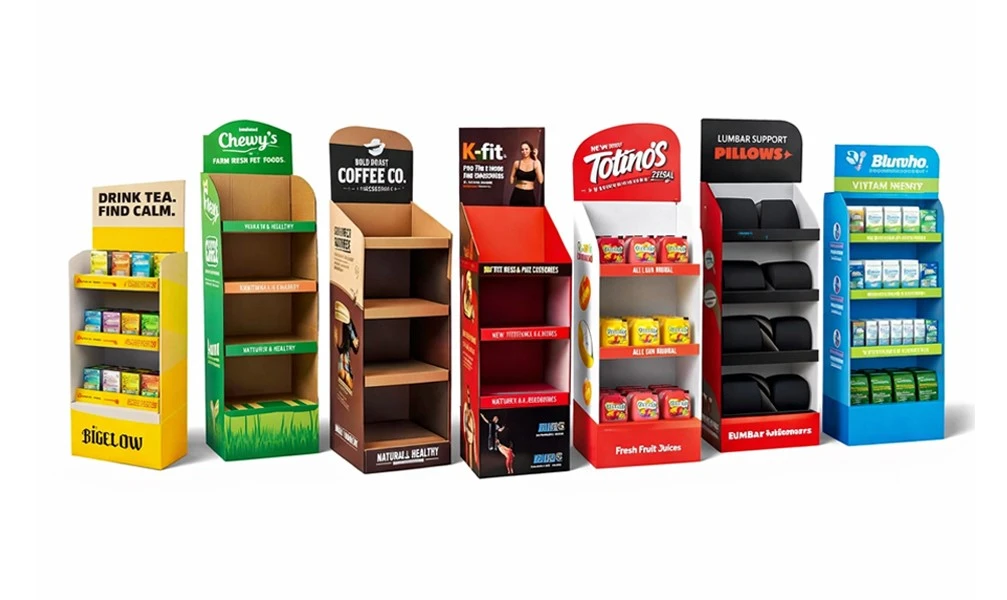
Floor Display Stands
Floor displays are among the most common POP display types.
They are typically made from materials such as:
corrugated cardboard
metal
acrylic
wood
Floor displays provide strong visibility and allow brands to showcase multiple product units in one location.
Countertop Displays
Countertop POP displays are smaller structures placed near checkout areas.
These displays are designed to trigger impulse purchases and are commonly used for:
cosmetics
candy
accessories
small electronics
Because they sit close to the customer, they provide high product visibility.
Pallet Displays
Pallet displays are larger promotional structures designed for bulk products.
They are often used in supermarkets and warehouse stores for categories such as:
beverages
packaged foods
seasonal items
These displays allow retailers to showcase large product quantities while maintaining strong visual impact.
Endcap Displays
Endcap displays are integrated into the ends of aisles and combine shelving with promotional signage.
They are particularly effective because they capture shoppers moving between aisles.
How Brands Design POP Displays That Convert
Creating an effective POP display requires more than simply placing products on a stand.
Successful displays combine visual design, structural engineering, and marketing strategy.
Simplicity and Clarity
Shoppers typically spend only a few seconds scanning a display.
Effective displays communicate their message quickly through:
bold colors
minimal text
clear product visibility
Overly complex designs can confuse shoppers and reduce effectiveness.
Strong Structural Design
A display must remain stable in busy retail environments.
Poorly designed displays can collapse, shift, or appear messy after repeated customer interaction.
High-quality cardboard POP displays, when engineered correctly, provide both durability and cost efficiency.
Strategic Product Placement
Products should be arranged according to visual hierarchy.
The most important items should be positioned:
at eye level
in the center of the display
with clear branding visible
This arrangement ensures customers quickly understand what is being promoted.
Emerging Trends in POP Display Marketing
Retail environments are constantly evolving, and POP display strategies are changing with them.
Several trends are shaping the future of retail displays.
Interactive Displays
Some brands are integrating digital components such as QR codes or interactive screens into their displays.
These features encourage customer engagement and provide additional product information.
Sustainable Materials
Sustainability has become a priority for many brands.
Corrugated cardboard displays are increasingly popular because they are recyclable, lightweight, and cost-efficient.
Flexible Display Systems
Retailers now prefer display systems that can be quickly assembled and replaced between campaigns.
This flexibility allows brands to respond faster to changing market trends.
The Real Impact of POP Displays
In modern retail, product visibility directly affects sales performance.
POP displays influence shopper behavior by:
capturing attention in crowded environments
encouraging impulse purchases
reinforcing brand identity
guiding the shopper journey
For brands competing in busy retail spaces, a well-designed POP display strategy can significantly improve merchandising effectiveness.
Retail success often depends on the moment when a shopper notices a product-and decides to place it in their cart.
POP displays are designed to shape that moment.
FAQ
1.What does POP display mean in retail?
A POP display (Point of Purchase display) is a promotional retail fixture placed near purchase locations to attract attention and encourage customers to buy specific products.
2. How do POP displays increase sales?
POP displays increase product visibility and trigger impulse purchases by positioning products in high-traffic areas such as entrances, aisle ends, and checkout zones.
3.What materials are commonly used for POP displays?
POP displays are commonly made from cardboard, metal, acrylic, or wood depending on durability requirements and promotional campaign duration.
4.Where should POP displays be placed in stores?
Effective placement includes store entrances, aisle endcaps, checkout counters, and promotional islands where customer traffic is highest.
5.Are cardboard POP displays durable?
Yes. When engineered correctly with reinforced structures, cardboard POP displays can safely support retail products while remaining lightweight and cost-effective.