







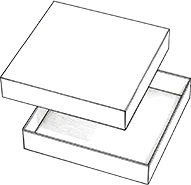

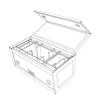



PDQ display trays in Walmart are retail-ready merchandising units designed to move products efficiently from shipping to the selling area. A well-designed PDQ tray needs to protect merchandise during transportation, fit the intended retail space, provide clear product visibility, and make shopping and replenishment easy. For Walmart programs, the tray, product packaging, shipping method, and retail placement should be considered together to create an efficient store-ready solution.
What Is a PDQ Display Tray Used for in Walmart?
A PDQ display tray is a retail-ready merchandising format designed to hold and present products directly in a store environment. Instead of treating product packaging and retail merchandising as completely separate processes, a PDQ tray can combine product containment, transportation, placement, and presentation into one solution.
In Walmart retail environments, PDQ trays can be used to merchandise promotional or packaged products on shelves and in other designated selling areas. Their compact format makes them suitable for situations where brands need an organized product presentation without installing a large permanent display.
The original concept behind a PDQ tray is efficiency. Products can be packed into the tray before shipment, transported to the store, and then placed into the intended retail area with relatively little additional handling.
For brands and suppliers, this means the design needs to work beyond the moment when the display first arrives at the store. The tray should continue to perform during product shopping, replenishment, and everyday retail handling.
For a broader explanation of PDQ displays and their role in retail merchandising, see our PDQ display guide.

How Are PDQ Display Trays Used in Walmart Stores?
The way a PDQ display tray in Walmart is used depends on the product, available retail space, merchandising objective, and how the product needs to be accessed by shoppers.
A tray may be designed for standard shelf placement, promotional merchandising, or another designated selling position. Because each application has different requirements, the tray should be designed around the actual retail environment rather than simply around the product dimensions.
Several factors should be considered before developing the structure:
Where the tray will be placed
How many products it needs to hold
How products should face shoppers
How much product should be visible
How store associates will replenish the tray
How the tray will be packed and shipped
How the display should communicate the brand
The best PDQ tray display is not necessarily the largest one or the one that holds the most products. Its effectiveness comes from balancing product capacity, visibility, accessibility, and efficient retail handling.
Shelf Placement
Shelf-ready PDQ display trays are designed to work within an existing retail environment.
The tray should make efficient use of the available shelf space while allowing shoppers to see and remove individual products easily. If the front edge is too high, products can become difficult to see. If the structure is too open, products may shift or become disorganized during transportation and shopping.
For products with multiple SKUs, internal dividers or separate product lanes can also help maintain a cleaner presentation.
Promotional Placement
PDQ trays can also support promotional merchandising where a product needs stronger visibility within a retail environment.
In these applications, the display may use a printed back panel, front graphic area, product-facing message, or other visual elements to attract attention while maintaining a compact footprint.
The structure should still remain practical. Graphics should support the product rather than interfere with product access.
PDQ Tray Merchandising in Walmart Retail Environments
Effective PDQ tray merchandising is about more than putting products into a cardboard tray.
The structure should help shoppers understand what the product is, see the merchandise clearly, and remove individual units without disturbing the rest of the display.
At the same time, store associates need to be able to replenish products without rebuilding the entire unit.
Several factors influence the merchandising performance of a PDQ tray:
Product visibility
Product orientation
Product-facing presentation
SKU organization
Front-panel design
Replenishment access
Available shelf space
Graphic communication
A well-planned PDQ tray display connects these elements into one retail solution.
Product Visibility
Product visibility is particularly important for compact merchandise.
The tray should keep enough of the product exposed for shoppers to understand what is being offered. A front wall that is unnecessarily high may hide the product, while an excessively open design may reduce containment.
Good PDQ tray design therefore requires a balance between protection and presentation.
Product Accessibility
Shoppers should be able to remove products without pulling apart the display or moving several other units.
This is especially important when the tray contains multiple products in a row. Product lanes, dividers, and carefully designed front openings can help maintain organization while making individual products easier to pick up.
SKU Organization
If multiple products or variants are merchandised together, the tray can incorporate dividers or dedicated product lanes.
This can reduce product mixing and make replenishment easier for store associates.
The exact structure depends on the product assortment and how the merchandise is expected to be stocked.

PDQ Tray Design: What Should Be Considered?
Effective PDQ tray design starts with understanding the product and its retail journey.
Before the graphics or final appearance are developed, the manufacturer should understand the product dimensions, weight, packaging orientation, quantity per tray, shipping method, intended placement, and replenishment process.
These factors influence the tray's overall width, depth, height, front wall, internal dividers, base structure, and support features.
Product Size and Orientation
The product should fit naturally within the tray without excessive movement or unnecessary empty space.
Product orientation is equally important. A tray designed for upright packages will have different structural considerations from one designed for flat, horizontal, or stacked products.
The goal is to create a structure that supports the product while maintaining a clean presentation.
Product Load
The total product load should be considered during development.
A tray carrying lightweight packaged goods may require a very different structure from one carrying heavier products. Weight distribution can also affect stability, especially when several products are placed toward the front of the tray.
For this reason, structural design should be evaluated together with the intended product quantity rather than treating tray capacity as an isolated number.
Front Wall Design
The front wall has two important functions.
First, it helps keep products inside the tray during transportation and everyday retail handling. Second, it needs to allow shoppers to see and access the merchandise.
A properly designed front edge can therefore improve both product containment and shopping convenience.
Internal Dividers
Internal dividers can be useful when a tray contains multiple SKUs or when products need to remain in defined positions.
They can also help create clearer product organization and simplify replenishment.
For products with different sizes, a custom structure may be more effective than a one-size-fits-all tray.
How PDQ Trays Move From Shipping to the Store Shelf
One of the biggest advantages of a PDQ tray is that it can be considered as part of the product's retail-ready journey.
The display may be loaded with merchandise before shipment, transported to the store, opened, positioned in the selling area, shopped by customers, and replenished by store associates.
This means the tray needs to perform through several stages rather than only at the point of sale.
A successful design should consider:
1. Product loading
2. Shipping protection
3. Store opening
4. Retail placement
5. Shopper access
6. Product replenishment
The shipper and display should therefore be considered together during development.
Shipping Protection
The original purpose of the shipping configuration is to help the PDQ display tray and its merchandise arrive at the store in usable condition.
A shipper should provide appropriate protection around the tray and products during transportation. Depending on the product and structure, additional support may be required around the back, sides, or other vulnerable areas.
For example, a higher back panel or extended side panels can provide additional containment and protection for certain product configurations.
The exact shipping solution depends on product weight, packaging, tray geometry, stacking conditions, and transportation requirements.
Easy Store Placement
Once the shipment arrives, the display should transition into its intended retail position with minimal unnecessary handling.
A retail-ready approach can reduce the amount of assembly required at store level and help maintain a more consistent product presentation.
This is one reason why the display, product arrangement, and shipping configuration should be developed as one system.
Easy Replenishment
PDQ tray replenishment is another important part of the design.
Store associates should be able to refill products without damaging the tray or disrupting the entire product arrangement.
If products are difficult to access, the display may become disorganized even if the original structure was well designed.
For this reason, replenishment should be evaluated during the prototype stage rather than after production begins.
What Products Work Well in a PDQ Display Tray?
PDQ display trays are particularly suitable for compact packaged products that shoppers can pick up individually.
Typical applications can include:
Snacks and confectionery
Small packaged food products
Cosmetics and beauty products
Personal care products
Consumer accessories
Promotional merchandise
Seasonal products
Small retail items
However, the product category alone does not determine whether a PDQ tray is suitable.
Product dimensions, weight, packaging style, purchase behavior, quantity per tray, and retail placement should all be considered.
For example, a small lightweight product may work well with multiple lanes, while a heavier product may require a more reinforced base and a different product orientation.
Why Custom PDQ Trays Can Be More Effective
Standard tray formats can work for simple applications, but custom PDQ trays allow the structure to be developed around the actual product and retail environment.
Customization can include:
Tray dimensions
Product lanes
Internal dividers
Front wall height
Back panel
Product orientation
Branding areas
Shipping configuration
Assembly method
Replenishment design
This approach is particularly useful when the product has unusual dimensions or when several SKUs need to be displayed together.
A custom tray can also be developed around the intended shelf position instead of forcing the product into a generic structure.
For brands working on retail programs, this can create a more integrated solution across packaging, transportation, merchandising, and product presentation.
PDQ Tray vs. Traditional Shelf Display
A PDQ tray display and a traditional shelf display can both support product merchandising, but they solve different retail problems.
| PDQ Tray | Traditional Shelf Display |
| Retail-ready merchandising format | Usually relies more heavily on existing fixtures |
| Can combine product packaging and display | Display and packaging are often separate |
| Suitable for compact products | Can support a broader range of fixtures |
| Easy to place in an intended retail position | May require more store-level setup |
| Can support promotional campaigns | Often used for longer-term shelf merchandising |
| Can simplify product replenishment | Replenishment depends on the fixture design |
The right solution depends on the product, available retail space, campaign duration, and merchandising objective.
A PDQ tray can be particularly effective when fast placement, compact merchandising, product accessibility, and retail-ready handling are important.
How to Choose the Right PDQ Display Tray for Walmart
Choosing the right PDQ display tray for Walmart should begin with the actual retail application.
Before approving a design, brands and buyers should consider:
1. Where will the tray be placed?
The intended position affects the tray's dimensions, orientation, visibility, and overall structure.
2. How many products should it hold?
Product quantity affects the tray's footprint, internal organization, and product access.
3. What are the product dimensions and weight?
The product determines the amount of space required and the structural support needed.
4. How will the tray be shipped?
The tray and shipper should work together to protect both the display and merchandise during transportation.
5. How will store associates place the display?
The retail-ready configuration should minimize unnecessary handling and make placement straightforward.
6. How will products be replenished?
A good display should remain practical after the initial product placement.
7. How visible should the product and branding be?
The front structure and graphics should support shopper recognition without making the products difficult to access.
8. Does the structure remain stable during normal retail use?
The display should be designed around its actual product load and retail application.
These questions help connect the display concept with the real retail environment.
For projects that also require a review of Walmart-specific specifications and structural considerations, see our detailed guide to Walmart PDQ display tray standards.
Common PDQ Tray Design Mistakes to Avoid
A PDQ tray may look simple, but several design problems can reduce its effectiveness in a retail environment.
Making the Front Wall Too High
A high front wall may provide additional containment but can also reduce product visibility and make shopping less convenient.
Ignoring Product Movement
If products can move excessively during transportation or shopping, the display may become disorganized.
Designing Only for Shipping
A tray that survives transportation but is difficult to shop from is not a complete retail solution.
Designing Only for Appearance
Graphics and branding are important, but they should not interfere with product access, replenishment, or structural performance.
Forgetting Replenishment
Store associates need to refill the display efficiently. Replenishment should be considered from the beginning of the design process.
Using a Generic Structure for Every Product
Different products have different dimensions, weights, packaging styles, and merchandising requirements. A custom solution may be more appropriate when a standard structure cannot provide the required balance.
FAQ About PDQ Display Trays in Walmart
1.What is a PDQ display tray?
A PDQ display tray is a retail-ready merchandising tray designed to hold and present products efficiently in a store environment. It can combine product containment, transportation, placement, and merchandising in one format.
2.How are PDQ display trays used in Walmart?
PDQ display trays can be used to merchandise packaged products on retail shelves and promotional selling areas. Their design can support product visibility, easy shopper access, store placement, and replenishment.
3.What products are suitable for PDQ trays?
PDQ trays are commonly suitable for compact packaged products such as snacks, confectionery, cosmetics, personal care products, accessories, promotional items, and seasonal merchandise.
4.What should be considered when designing a PDQ tray?
Product dimensions, product weight, quantity, product orientation, shelf space, shipping configuration, product visibility, shopper access, and replenishment should all be considered during design.
5.Can PDQ display trays be customized?
Yes. Custom PDQ trays can be developed around specific product dimensions, quantities, retail locations, branding requirements, shipping methods, and replenishment needs.
6.What is the difference between a PDQ tray and a regular shelf display?
A PDQ tray is typically designed as a retail-ready merchandising unit that can simplify product placement and presentation. A traditional shelf display generally relies more heavily on the existing retail fixture.
7.How can a PDQ tray improve retail merchandising?
A well-designed PDQ tray can organize products, improve product visibility, simplify placement, and make replenishment easier. Its effectiveness depends on how well the structure matches the product and retail environment.
Conclusion
A successful PDQ display tray in Walmart is more than a container for products. It needs to work throughout the retail journey, from shipping and store placement to shopper access and replenishment.
The most effective PDQ tray display balances product protection, visibility, accessibility, structural performance, and merchandising efficiency.
Instead of treating packaging, transportation, and retail presentation as completely separate processes, brands can develop them as one integrated solution.
For projects involving custom dimensions, product-specific structures, branded graphics, multiple SKUs, or retail-ready shipping configurations, an experienced custom PDQ display tray manufacturer can help turn the initial concept into a practical store-ready solution.