








Businesses today rely heavily on in-store visibility, and many brands notice that even a small improvement in product presentation can shift sales by 10–25% over a quarter. This is why corrugated retail displays, cardboard display units, and other custom display structures are no longer optional accessories-they are part of a retail strategy. Below is a breakdown of POS and POP displays, written from the perspective of buyers who want practical results, shorter lead times, and a clearer understanding of how these displays influence customer decisions.
What Is a POS Display?
A POS display sits directly at the cash register-or within arm's reach of it-and is designed for fast decision-making. Instead of filling a large area, it usually takes the form of a counter display stand or small vertical tower.
- Positioned at checkout counters
- Intended for impulse purchases
- Lightweight structures, often with quick assembly
- Works well for low-price, high-turnover items
Why buyers care
Many retailers report that when small items are placed on a well-structured POS unit, add-on purchases can increase by 15% or more because the product is presented exactly when customers are already prepared to pay. A brand that uses custom retail display stands here can reinforce recognition at the final moment of purchase.
What Is a POP Display?
A POP display is broader in scope and sits inside the main shopping area, usually next to the product category. This could be a pop cardboard display, a floor unit, an endcap, or even a small island designed to tell a story about the product.
- Encourages comparison with competing products
- Offers more space for graphics and brand messaging
- Can be temporary or semi-permanent
- Supports a full product line instead of a single SKU
Why it matters for brands
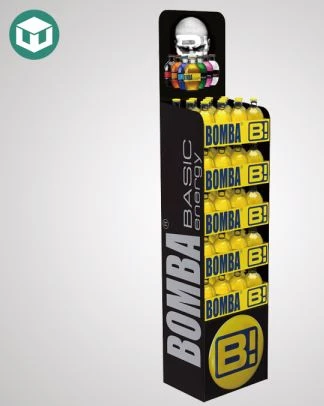
POP displays help products stand out in crowded aisles. For example, beverage brands consistently place corrugated stands near new flavor launches to direct attention away from shelf clutter. A well-designed custom product display stand here often becomes the first touchpoint between the customer and the brand.
What Products Fit POS and POP Displays?
Products Best Suited for POS Displays
These items are typically small, inexpensive, and do not require long consideration:
- Travel-size personal care products
- Snacks, chewing gum, chocolates
- Small electronics accessories like charging cables
- Seasonal promotional items
- Low-cost cosmetics, trial packs
- Gift cards or small packaged stationery
Reasoning
Checkout areas are fast-moving, so the display must help customers make instant decisions. A compact counter display stand highlights items customers didn't plan to buy but are convenient to grab.
How POP Cardboard Display Designers Help Brands Grow
A skilled team evaluates more than just the structure:
- Brand impact: How to maximize graphics within store rules
- Durability: Whether the display should last 4 weeks or 6 months
- Weight capacity: Ensuring no panel collapses under heavy stock
- Shipping efficiency: Reducing carton volume to lower overseas freight
This combination of creativity and manufacturing knowledge helps companies avoid common pitfalls such as poor fit, weak joints, or unstable loading. Brands ultimately gain displays that assemble faster, cost less to ship, and have a noticeably stronger shelf presence.