












Walk through a Costco warehouse, and you'll see pallet displays stacked with bottled water, protein powder, pet food, and bulk-packaged household products. At first glance, many shoppers assume these displays are made from wood or metal because of the weight they carry.
In reality, a significant number of these promotional displays are built using corrugated cardboard and honeycomb board structures.
This often surprises brand owners. One of the most common questions we hear from marketing and procurement teams is simple: can a cardboard display really support heavy products without collapsing, bending, or failing during transportation?
The short answer is yes-but not every cardboard display is designed the same way.
The ability to support heavy products depends far more on engineering, structural design, and material selection than most people realize. Some cardboard displays struggle under moderate loads, while others are capable of handling the demands of beverage promotions, pet food launches, and warehouse retail programs.
Understanding the difference is critical when planning a retail display project.
Heavy Products Create Different Challenges Than Standard Retail Displays
A display designed for snack bars or cosmetics faces a completely different set of requirements than one built for bottled beverages or large pet food bags.
When product weight increases, the display must withstand pressure from multiple directions. Shelves carry more load, the base absorbs greater stress, and transportation becomes far more demanding.
Take pet food as an example.
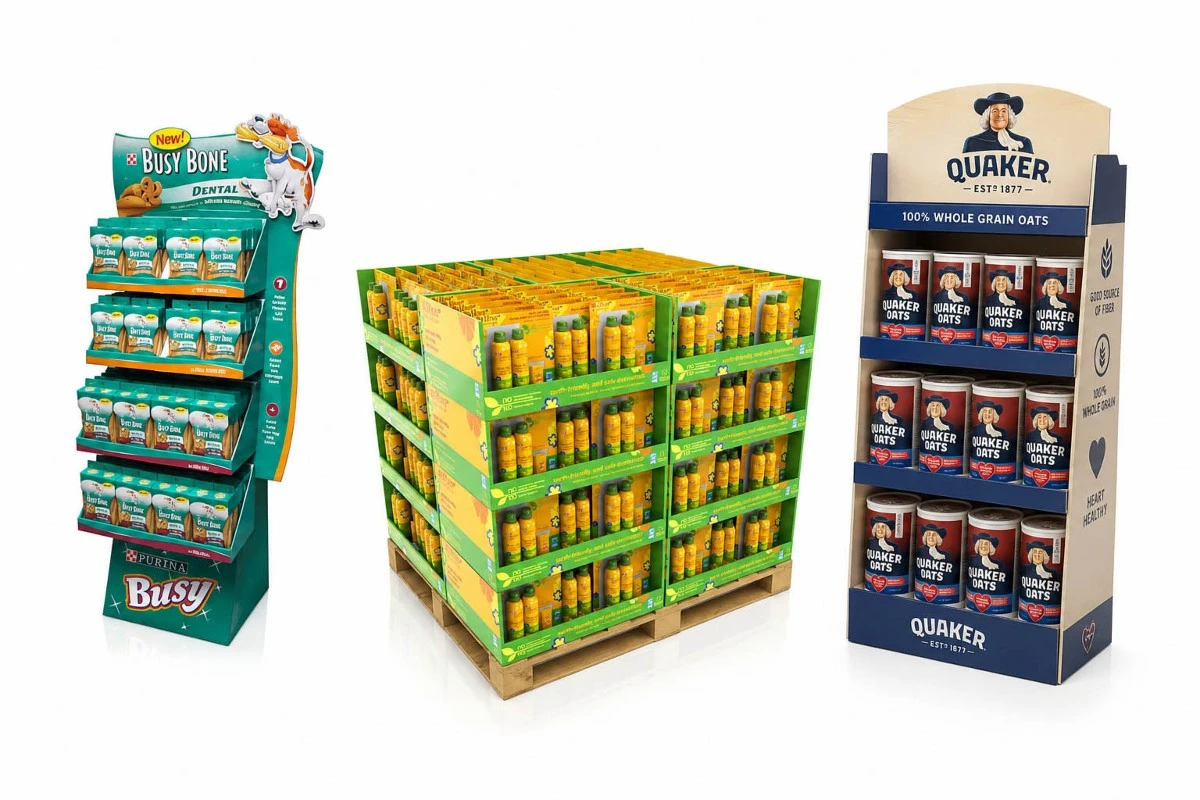
Brands such as Purina and Blue Buffalo regularly promote large bags of dog food through temporary retail displays. A single bag can weigh several kilograms, and a fully stocked display may hold dozens of units at once. Under these conditions, even a small structural weakness can quickly become a problem.
The same challenge exists in the beverage category.
A display loaded with multipacks of Coca-Cola products can place substantial weight on each shelf. If the structure is not properly engineered, shelves may begin to sag, side panels can deform, and the display may lose stability long before the promotion ends.
This is why experienced display manufacturers focus on structural performance first and graphics second. Attractive artwork may capture attention, but structural reliability determines whether the display succeeds in a retail environment.
Weight Is Not The Real Problem-Load Distribution Is
Many buyers assume display performance is determined entirely by the amount of weight being placed on the structure.
In practice, load distribution is often more important than total weight.
Consider two displays carrying the same overall load.
One display holds products evenly across multiple shelves with internal support columns positioned beneath key pressure points. The second concentrates most of the weight in a single area with minimal reinforcement.
Even though the total weight is identical, the performance difference can be dramatic.
This principle is visible throughout retail.
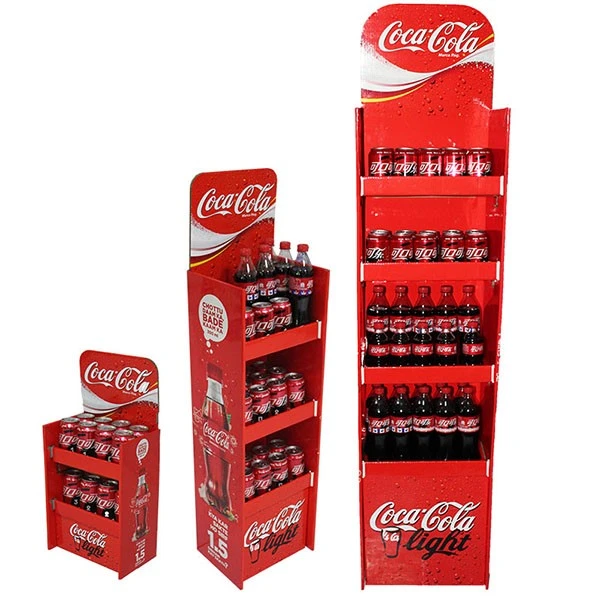
Coca-Cola promotional displays often support multiple beverage cases while maintaining stability for weeks. The reason is not simply stronger material. The weight is carefully distributed through the structure so that pressure is transferred efficiently to the base.
Good structural engineering allows corrugated displays to carry loads that many people would not normally associate with paper-based materials.
The conversation should never be limited to how much a display weighs.
The more important question is how that weight is managed.
Why Honeycomb Board Has Become Popular For Heavy-Duty Displays
As retail products become heavier and promotional programs become larger, many brands are moving beyond traditional corrugated construction and incorporating honeycomb board into critical structural areas.
Honeycomb board uses an internal cellular structure that distributes force across a wider surface area. This design significantly improves compression strength while maintaining many of the advantages that make paper-based displays attractive in the first place.
The benefits become particularly noticeable in warehouse retail environments.
Retailers such as Costco frequently merchandise bulk products that place exceptional demands on display structures. Water packs, protein supplements, pet treats, and household essentials often remain on display for extended periods while supporting substantial product weight.
To handle these requirements, manufacturers often combine corrugated board and honeycomb components within a single display system. Corrugated material provides excellent printability and flexibility, while honeycomb structures reinforce areas exposed to the highest loads.
The result is a display that remains lightweight, cost-effective, and recyclable while delivering significantly improved load-bearing performance.
For brands looking to replace wood or reduce logistics costs, this approach offers a practical alternative.
Why Beverage Brands Continue To Trust Cardboard Displays
The beverage industry provides some of the strongest evidence that cardboard displays can handle heavy products successfully.
Energy drink brands such as Red Bull have relied on corrugated promotional displays for decades. These displays frequently hold dozens of cans and bottles while being positioned in high-traffic retail environments.
The displays must survive manufacturing, transportation, distribution, store setup, customer interaction, and ongoing replenishment.
If cardboard were inherently unsuitable for heavy products, these programs would not continue year after year.
The same pattern can be seen with Coca-Cola, Pepsi, and many regional beverage suppliers.
These brands invest heavily in retail marketing. Every display program is evaluated based on performance, cost, logistics efficiency, and shopper engagement.
Corrugated displays continue to be used because they meet those requirements while providing strong visual impact and lower transportation costs than many alternative materials.
For seasonal promotions and temporary retail campaigns, cardboard often delivers the best balance between strength, flexibility, and cost.
Pet Food Displays Present An Even Tougher Test
If beverage displays prove that cardboard can support heavy products, pet food displays push the challenge even further.
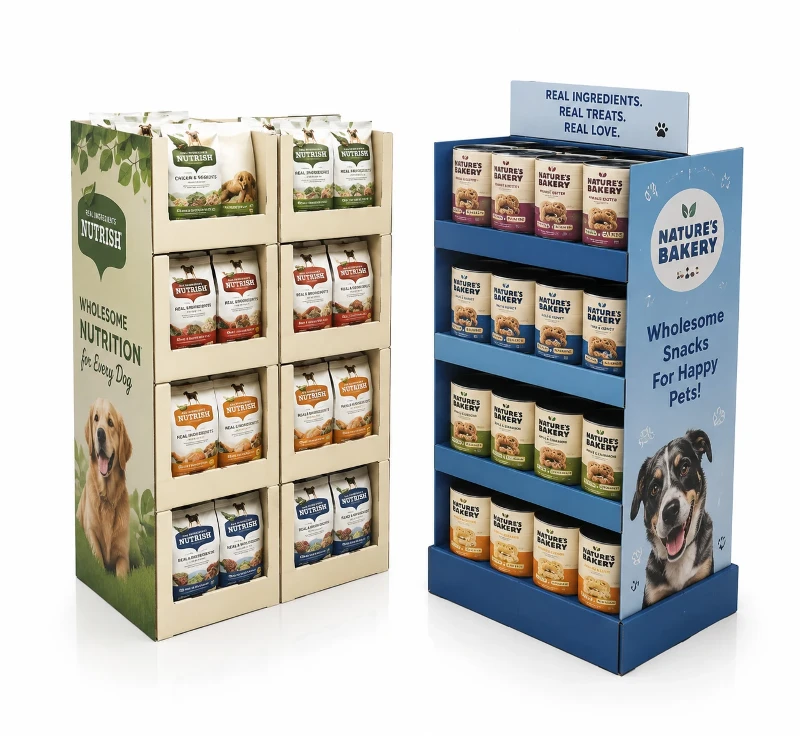
Large dog food bags create unique structural demands because the weight is concentrated into relatively small areas. Unlike beverage cases, which often distribute weight more evenly, pet food products can generate significant pressure points on shelves and display bases.
This is one reason why pet category displays often require reinforced construction.
When designing a display for heavy pet food products, engineers may add internal support columns, double-wall corrugated board, or honeycomb reinforcements to improve performance.
The goal is not simply to increase strength.
The goal is to maintain strength throughout the entire retail lifecycle.
A display that performs well during assembly but weakens after several weeks on the sales floor can still create problems for both retailers and brands.
Long-term stability matters just as much as initial load capacity.
When Cardboard Displays May Not Be The Right Choice
Despite their capabilities, cardboard displays are not the best solution for every project.
There are situations where alternative materials remain the better option.
Permanent installations expected to remain in stores for years may justify metal or wood construction. Extremely high-humidity environments can also create challenges, particularly when products are exposed to moisture over long periods.
Some industrial products and hardware categories may require load capacities beyond what is practical for paper-based structures.
The key is matching the display material to the retail objective.
A temporary promotional campaign has very different requirements than a permanent fixture.
Understanding those differences early in the project helps avoid unnecessary costs and design revisions later.
What Brands Should Evaluate Before Starting A Heavy Product Display Project
Before requesting quotations or design concepts, brands should gather several pieces of information.
Product dimensions matter.
Individual product weight matters.
Total display load matters.
Transportation methods matter.
Retail environment matters.
All of these factors influence the structural solution that will ultimately be recommended.
For example, a display intended for Costco requires a different engineering approach than one designed for a regional supermarket chain. Likewise, a pet food display faces different challenges than a beverage display, even if the overall weight appears similar.
The more information available during the design phase, the more accurately engineers can optimize the structure for performance and cost.
The Future Of Heavy-Duty Retail Displays Is Driven By Engineering
The next time you see a Costco pallet display loaded with bulk products or a Coca-Cola promotion stacked with beverage multipacks, it's worth remembering that the material itself is only part of the story.
Successful heavy-duty cardboard displays are not simply made from paper.
They are engineered systems.
Through intelligent load distribution, reinforced structural design, and the strategic use of honeycomb board, modern cardboard displays are capable of supporting products that many retailers once believed required wood or metal fixtures.
For brands seeking cost-effective, retail-ready solutions for heavy products, the question is no longer whether cardboard can handle the weight.
The real question is whether the display has been engineered correctly for the job.