











Walk through a department store during the holiday season and you'll notice something interesting. Some cardboard displays immediately feel premium. They attract attention, reinforce the brand image, and make products appear more valuable. Others, despite carrying similar products, look temporary and forgettable.
The difference often has very little to do with the material itself.
Many retail buyers still associate a cardboard display stand with low-cost promotions. Yet luxury brands such as Nespresso, Lindt, Godiva, and L'Oréal continue to use custom cardboard displays for seasonal campaigns, new product launches, and retail promotions. The material hasn't changed. The design approach has.
A well-designed cardboard display can elevate product perception, strengthen brand identity, and support premium positioning just as effectively as many metal or acrylic alternatives. The real question is not whether cardboard can look premium. The question is what separates a premium cardboard display from one that simply looks cheap.
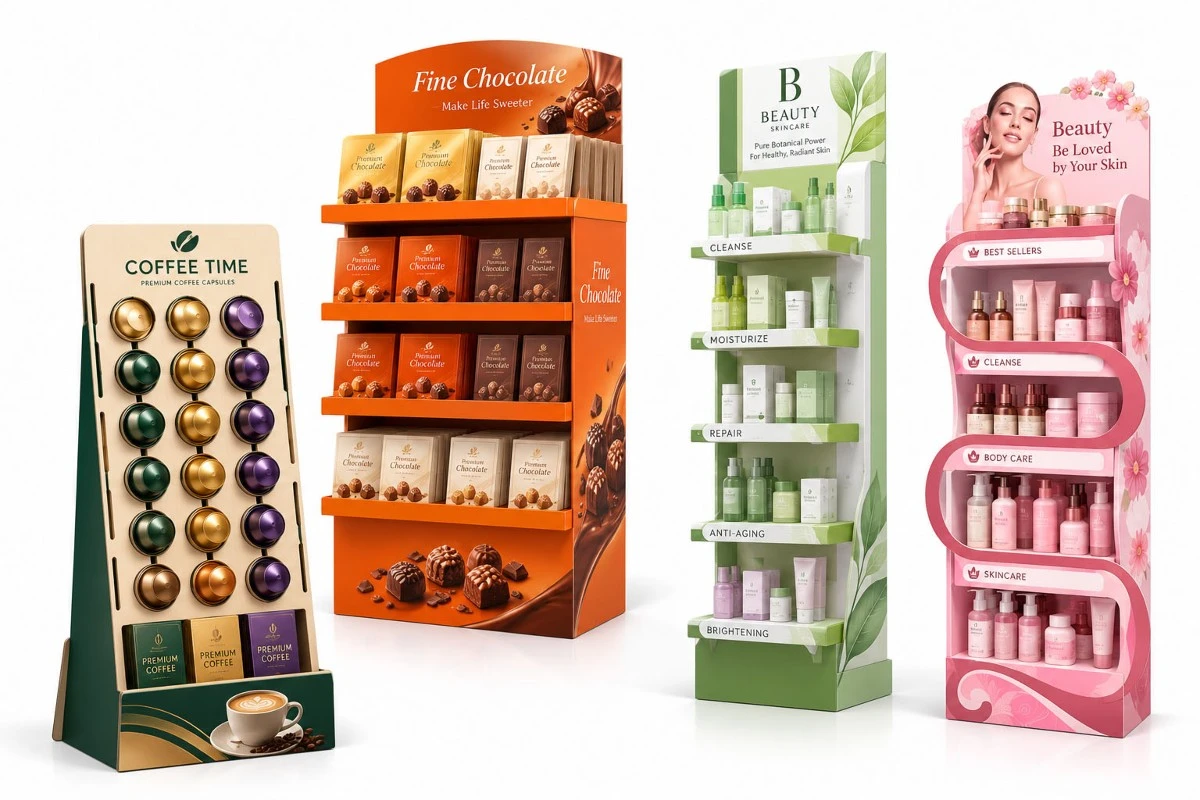
Premium Retail Displays Start With Structure, Not Decoration
One of the biggest misconceptions in retail display design is that premium appearance comes from expensive printing effects. In reality, structure is often the first thing shoppers notice, even if they don't consciously realize it.
Luxury brands tend to avoid overly complicated display structures. Instead, they focus on proportion, balance, and visual hierarchy.
Take Nespresso as an example. Many of their promotional retail displays feature clean lines, organized product placement, and generous spacing between products. The display itself does not compete for attention. It guides shoppers toward the product.
The same principle applies to custom cardboard display stands. A cluttered structure filled with too many shelves, excessive graphics, or awkward angles can quickly make a display feel inexpensive. On the other hand, a well-engineered cardboard display with strong proportions immediately communicates quality.
This is why premium retail display design often begins with structural planning rather than graphic design. Before discussing colors or printing techniques, designers first determine how shoppers will interact with the display and how products will be presented.
A luxury retail display doesn't need more components. It needs better structure.
Why Product Presentation Matters More Than Expensive Materials
Many brands assume that upgrading from cardboard to acrylic or metal automatically creates a premium retail display.
That assumption is often wrong.
Consumers rarely evaluate the display material itself. What they notice is how the product is presented.
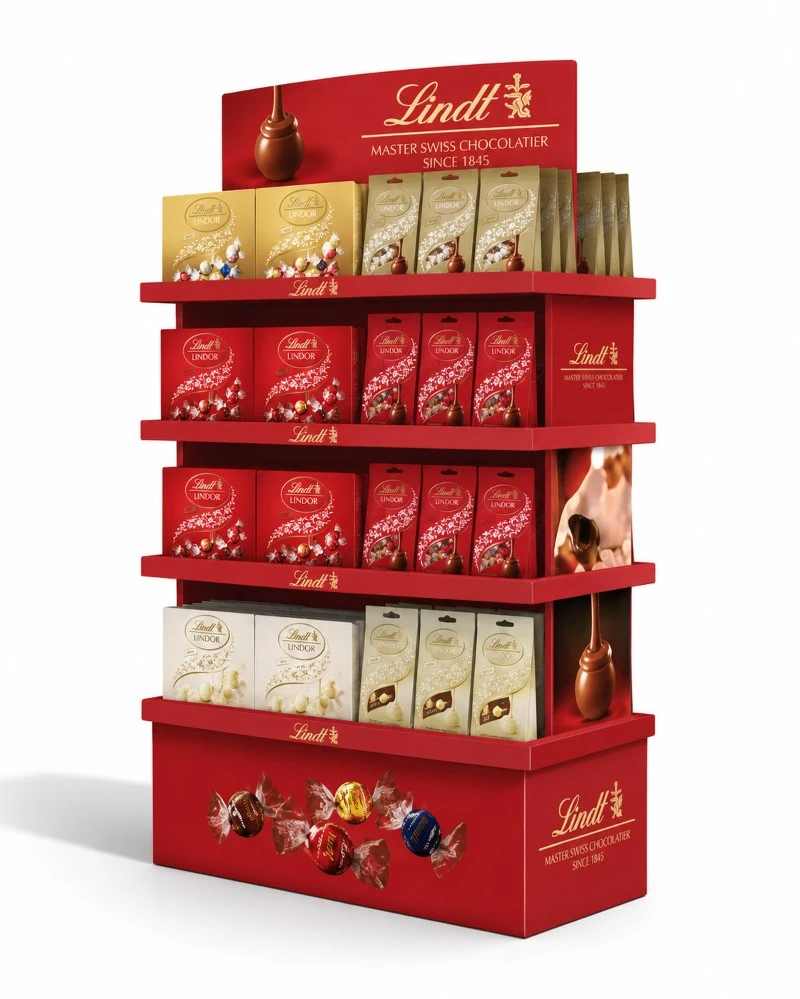
Lindt provides a good example. During Christmas and Easter promotions, many Lindt display units use corrugated cardboard construction. However, shoppers focus on the premium chocolate presentation rather than the substrate supporting it.
Several factors contribute to this effect.
Products are neatly organized. Visual clutter is minimized. Brand colors remain consistent. The display encourages shoppers to focus on the products rather than the structure.
In visual merchandising, perception often outweighs material value.
A custom cardboard display that presents products elegantly can appear more premium than a poorly designed metal fixture.
This is particularly important for cosmetics, confectionery, coffee, wellness products, and gift packaging. In these categories, brand presentation directly influences purchase decisions.
For many premium brands, the display is not there to show off the display itself. It exists to elevate the product.
Consistent Branding Creates Premium Perception
One reason luxury retail brands maintain strong visual identities is consistency.
When shoppers see a Nespresso display, they immediately recognize the brand. The same applies to Godiva, Sephora, and L'Oréal.
The display colors, typography, imagery, and messaging all align with the broader brand experience.
This is where many custom display projects fail.
A brand may invest heavily in packaging design but treat the display stand as an afterthought. The result is a disconnect between the product and the retail presentation.
Premium cardboard display design requires the same level of brand discipline used in packaging and advertising.
Brand colors should be accurately reproduced.
Typography should remain consistent.
Graphics should support the product rather than overwhelm it.
Many luxury brands also use restrained graphic layouts. Instead of filling every available space with marketing messages, they strategically use negative space to create a cleaner appearance.
This approach not only improves aesthetics but also increases product visibility.
In premium retail environments, less is often more.
The Small Design Details That Separate Premium Displays From Cheap Ones
Sometimes a display looks inexpensive for reasons that have nothing to do with budget.
Small execution mistakes can significantly reduce perceived quality.
One common issue is poor structural stability. If shelves begin to sag or side panels bow outward, shoppers immediately associate the display with lower quality.
Another issue is overcrowding.
Many brands attempt to maximize product capacity by adding more shelves or squeezing products together. While this may increase inventory, it often reduces visual appeal.
Printing quality also plays a major role.
Low-resolution graphics, inconsistent colors, or blurry product images can undermine an otherwise strong design.
Luxury retail brands pay close attention to print quality because they understand that shoppers often judge product quality through visual cues.
Finishing techniques can further enhance a premium cardboard display.
Common options include:
- Spot UV coatings
- Soft-touch finishes
- Matte lamination
- Foil stamping
- Embossing and debossing
However, these features work best when they support a strong design foundation. Adding premium finishes to a poorly designed display rarely solves the underlying problem.
The best custom cardboard displays combine thoughtful structure with high-quality execution.
Why Luxury Brands Often Prefer Simplicity
Many suppliers believe that creating a premium display means adding more features.
Luxury brands frequently take the opposite approach.
Visit a Sephora store and you'll notice that many displays are surprisingly simple. Product organization is clear. Branding is consistent. Visual distractions are limited.
This simplicity serves a purpose.
Consumers shopping for premium products often seek confidence and clarity. An overly busy display can create confusion and weaken brand perception.
The same principle applies to cardboard POP displays and cardboard POS displays.
When every surface is covered with promotional messages, shoppers struggle to identify what matters most.
Premium retail display solutions prioritize communication efficiency. They highlight key information while allowing products to remain the focal point.
This approach is particularly effective for:
- Beauty products
- Luxury confectionery
- Specialty coffee
- Premium beverages
- Wellness products
- Gift packaging
In these categories, visual restraint often creates stronger results than visual complexity.
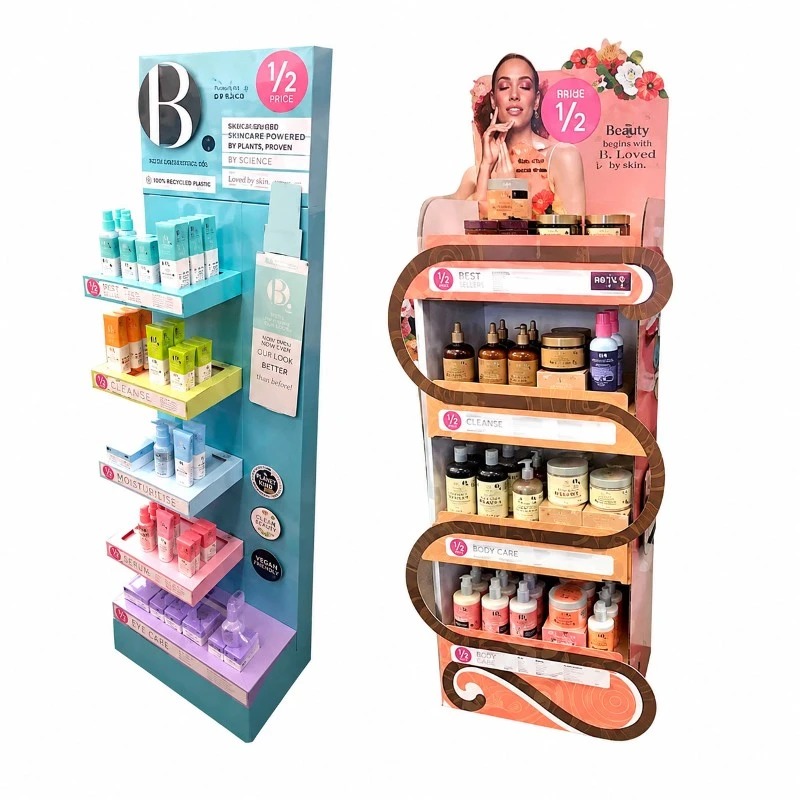
What Premium Brands Look For When Ordering Custom Cardboard Displays
When premium brands evaluate a custom display supplier, they rarely focus only on price.
Instead, they look at how well the display supports their brand image throughout the retail environment.
Several factors typically influence their decisions.
Structural reliability is essential. A display that looks impressive in a presentation but fails in stores creates problems for both retailers and brands.
Brand consistency is equally important. The display should feel like a natural extension of the packaging, advertising, and in-store experience.
Production quality also matters. Premium brands expect accurate color matching, clean finishing, and consistent manufacturing standards across every unit.
Finally, scalability becomes critical.
A display that works for a small pilot program must also perform during national retail rollouts.
This is why successful custom cardboard display projects involve close collaboration between brand teams, structural designers, and manufacturing partners.
Premium presentation is rarely achieved through decoration alone. It is the result of careful planning from concept through production.
A Premium Display Is About Perception, Not Material
Some of the most effective premium retail displays in the market today are made from corrugated cardboard.
What makes them successful is not the material itself. It is how the material is used.
Luxury brands understand that shoppers respond to visual presentation, organization, consistency, and product storytelling. A well-designed cardboard display stand can communicate all of those elements when executed correctly.
The next time you see a Nespresso coffee promotion, a Lindt holiday display, or a premium cosmetics launch, pay attention to the structure, spacing, and branding rather than the material.
You'll often discover that what feels premium is not the cardboard.
It's the design decisions behind it.