







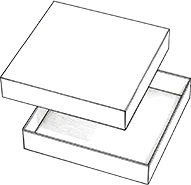
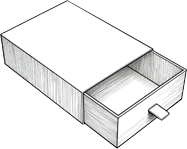



In the critical first moments on the retail shelf, your product has mere seconds to make an impression. When over 70% of purchasing decisions are made in-store, your product packaging boxes are far more than a container-they are your most powerful silent salesperson.
Too many brands settle for generic, off-the-shelf solutions. However, in an era driven by experience, this approach cedes valuable ground. Studies show that over 52% of consumers are more likely to repurchase a brand they love due to its packaging. Effective retail packaging is a strategic investment, not an expense. This guide outlines the 11 essential steps to transform your packaging from a simple cost into your greatest competitive asset.

Step 1: Define Your Packaging Strategy & Needs
Begin by answering six foundational questions:
1. What type of solution do I need? This depends on your product and channel. Do you need durable Shipping Boxes, eye-catching custom retail boxes for the shelf, or a full custom cardboard boxes display system?
2. How can I leverage innovation? Stay ahead by integrating new technologies, such as QR codes for storytelling or sustainable materials, often guided by a skilled partner in retail displays manufacturing.
3. What is my product category? Understand industry norms to ensure your custom packaging feels familiar yet distinctly superior.
4. What are the optimal dimensions? Measure your product and any inserts precisely. Pro Tip: Minimizing your custom boxes size enhances protection, reduces shipping costs, and shrinks your carbon footprint.
5. What is my order volume? Determine quantities for your custom packaging boxes with logo. While higher volumes improve unit economics, consider storage and cash flow.
6. How will it serve as a brand extension? Every element, from color to copy, must align with your brand identity. This is the core of effective Custom Retail Packaging.
Step 2: Establish a Holistic Budget
Budget for both visible and hidden costs. Visible costs include design and materials for your custom boxes for small business. Hidden costs encompass damage, storage, and assembly. Partnering with an integrated manufacturer can provide turnkey solutions that optimize total cost.
Step 3: Design the Exterior for Shelf Impact
Your package must communicate instantly. For brick-and-mortar, assume zero prior brand knowledge. Essential exterior elements include a dominant logo, a compelling product image, key benefits, and social proof. For e-commerce, focus on a clean, branded exterior that stands out in the delivery chain.
Step 4: Engineer the Unboxing Experience
The interior is your chance to delight and build loyalty. Use this space for thank-you notes, brand storytelling, or interactive elements that encourage social sharing. With thousands searching for "unboxing" content monthly, a memorable experience for your bespoke cardboard boxes is a potent marketing tool.
Step 5: Select the Right Printing Technology
Choose a method that balances quality, flexibility, and cost:
Lithography: Ideal for large runs of a single, high-quality design for custom printed cardboard boxes.
High-Speed Digital Printing: Offers unparalleled flexibility for multi-SKU runs, versioning, and regional campaigns without plate costs.
Flexography: A cost-effective option for direct printing on corrugated material, best for simpler graphics.

Step 6: Choose a Protective & Aesthetic Coating
Coatings enhance durability and feel:
Aqueous Coating: A fast-drying, eco-friendly option with a subtle sheen.
Gloss or Matte Lamination: Provides a premium feel, vibrant colors, and superior scuff/water resistance.
Spot UV: Adds a high-gloss, raised texture to specific design elements for dramatic contrast.
Step 7: Incorporate Special Finishing Touches
Elevate perception with tactile finishes:
Foil Stamping: Adds metallic shine for a luxury feel.
Embossing/Debossing: Creates raised or recessed textures for a sophisticated touch.
Die-Cut Windows: Allow product interaction, crucial for effective retail displays manufacturing.
Step 8: Engineering the Structure – The Critical Role of the Dieline
Before production, your 2D artwork needs a 3D blueprint: the dieline. This technical drawing maps every cut, fold, and glue tab for your custom cardboard boxes. A professional dieline accounts for material thickness, ensuring perfect assembly, and establishes print bleed zones to keep logos off fold lines. Collaborate early with your manufacturer's structural engineers to ensure your design for custom retail boxes is both beautiful and manufacturable.
Step 9: Artwork Finalization and Prepress – Guarding Against Costly Errors
This stage is a rigorous technical check. Your files are validated for correct CMYK/Pantone color formatting, all fonts are embedded, and graphics are aligned with the dieline's trim marks. Always request and review a digital proof. This PDF is your final chance to catch errors before the physical production of your custom packaging boxes with logo begins.
Step 10: Prototyping and Functional Testing – The Non-Negotiable Checkpoint
Never skip a physical prototype. It tests structural soundness-can the custom boxes be assembled easily? Does the product fit securely?-and confirms print quality. A quality partner in retail displays manufacturing will produce this prototype using production-grade equipment. For complex designs, consider an A/B test of two functional variations to choose the best performer before full-scale retail packaging production.
Step 11: Production, Logistics, and Inventory Strategy
Upon prototype approval, full production starts. Key actions include:
1. Monitor Progress: Request a production schedule and, for large orders, in-process photos.
2. Plan Logistics: Decide if your Shipping Boxes ship flat (to save cost) or assembled. Coordinate direct shipping to multiple distribution centers if needed.
3. Integrate Inventory: Establish a reorder plan based on sales forecasts to maintain optimal stock of your product packaging boxes.
Critical Final Step: Upon delivery, conduct a Quality Control Audit. Check quantity, inspect for damage, and verify that the final custom boxes for small business or large-scale run matches the approved prototype in every detail.

Your Partner in Strategic Packaging & Displays
Navigating these 11 steps alone is complex. Success requires a partner with integrated expertise-from brand strategy and structural engineering to precision printing and supply chain management.
We specialize in end-to-end retail displays manufacturing and custom packaging solutions. We help brands create impactful, sales-driving custom retail boxes and displays that tell a story, protect products, and deliver an unforgettable brand experience at every touchpoint.
Ready to transform your packaging into your most effective growth tool? Contact our team today for a consultation, and let's build a solution that elevates your brand and accelerates your sales.