












In retail, the final seconds before a customer checks out are often the most influential. A Point of Sale (POS) display is the marketing tool designed to capture those last-minute decisions. Positioned near cash counters, store entrances, or promotional zones, a cardboard display POS helps brands highlight small items, boost add-on purchases, and reinforce visual identity.
Because the demand for quick, low-cost merchandising has grown, corrugated retail displays are now one of the most widely used solutions in supermarkets, pharmacies, and specialty stores.
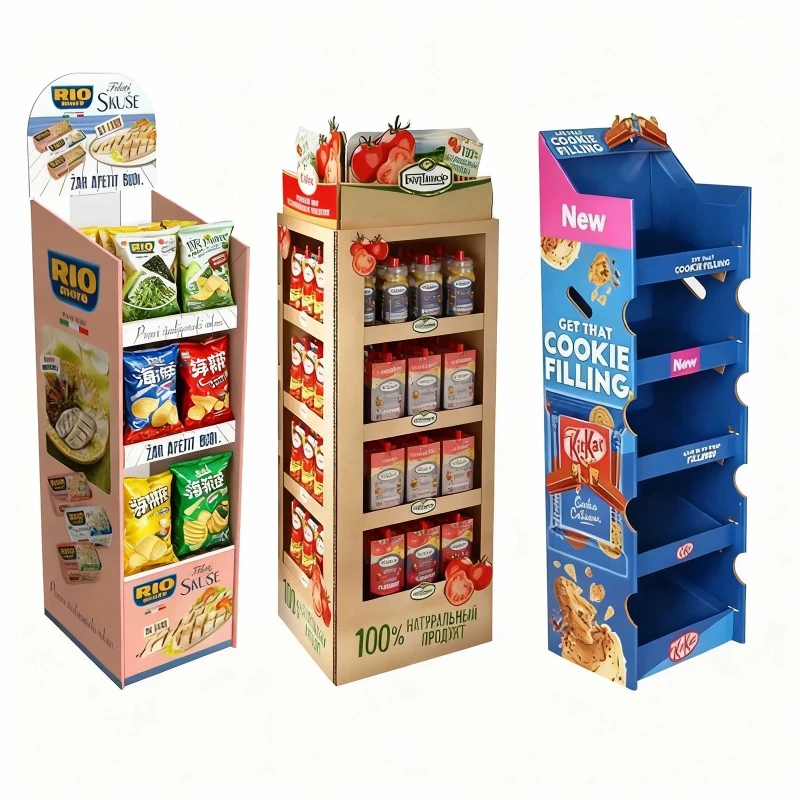
What Makes a POS Display Different?
POS displays differ from ordinary shelving because they serve both merchandising and promotional purposes. Instead of long-term storage, they focus on visibility-encouraging impulse purchases through strategic placement and eye-catching graphics.
Most brands favor cardboard product display stands because they can be fully customized in size, shape, and design. Compared with metal or acrylic fixtures, cardboard offers faster turnaround, lower shipping costs, and easier disposal. Retailers also appreciate their flexibility; stores can rearrange POS units according to seasonal campaigns or limited-time offers.
A well-designed POS structure guides the shopper's eye, highlights product benefits, and increases conversion rates in high-traffic areas.
Types of POS Displays Used in Retail
Different categories of cardboard display stands serve different merchandising goals:
Floor Standing Units
These tall displays work well for snacks, personal care items, and promotional bundles. They offer large branding space and good visibility from a distance.
Placed directly on cash counters, these small stands excel for compact items such as cosmetics, travel accessories, and impulse products. A sturdy cardboard shelf stand keeps items upright even during repeated customer handling.
Sidekick or Power Wings
Mounted on existing store fixtures, these displays maximize unused vertical space. They help brands gain visibility without occupying floor area.
Dump Bins and Promotional Bins
Designed for bulk products, these bins attract shoppers through casual browsing. They are common during clearance events or seasonal sales.
All options can be produced as custom retail display stands, ensuring that every detail-from loading capacity to placement height-matches product requirements.
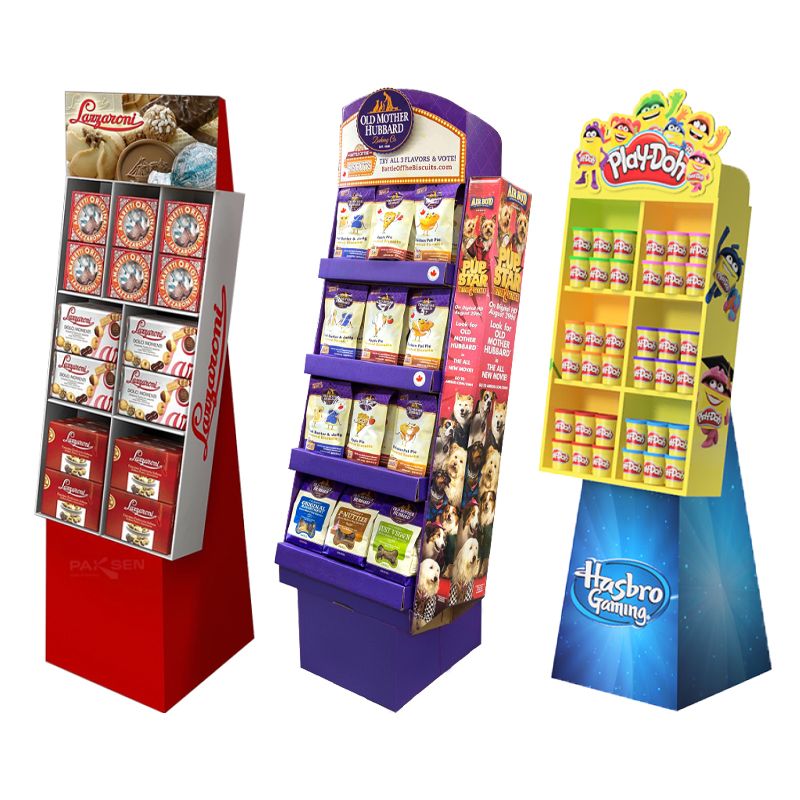
Why POS Displays Work So Well
POS displays offer measurable value because they position products at the most decision-intensive points of the shopping journey. Industry data consistently shows that unplanned purchases increase when items are placed near checkout lanes.
For brands, the biggest advantages include:
- High visibility: Large printed surfaces support strong branding and messaging.
- Fast installation: Most displays ship flat and assemble in minutes.
- Lower cost per campaign: Printing and structure customization are budget-friendly.
- Better shopper engagement: Creative shapes and vibrant graphics draw shoppers in instantly.
Retailers see benefits as well. Cardboard POS units help them refresh the floor layout without large investments, and discarded units are recyclable, reducing waste-handling costs.
Quality Factors Buyers Should Pay Attention To
Because the POS display market is competitive, quality varies widely. Buyers often face issues like weak structure, fading print, or poor coating. To evaluate whether the display is suitable:
Material Strength
Check stiffness and durability of the corrugated board. A reliable cardboard display POS should resist bending and maintain shape even under weight.
Printing Accuracy
Inspect the clarity of graphics, color consistency, and lamination. Fading or peeling indicates shortcuts in ink, coating, or curing.
Load Capacity
Different products require different structural supports. A well-designed cardboard shelf stand should hold the intended weight for at least 24 hours without sagging.
Assembly Time
Quick assembly is essential for large retail chains. A professionally engineered display can be set up in a few minutes without tools.
Supplier Reliability
Always partner with an experienced manufacturer capable of delivering consistent quality. Large suppliers of corrugated retail displays typically offer prototypes, structural testing, and transparent material specifications.
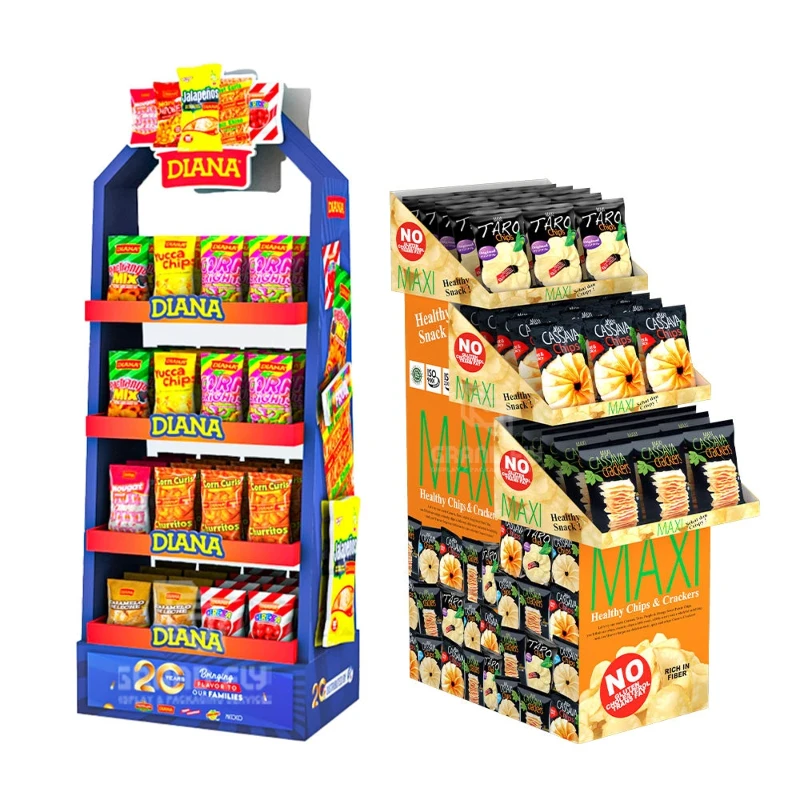
Choosing the Right POS Display for Your Product
Not every display suits every retail environment. The key is matching product size, weight, and target audience with the right design.
- Small cosmetics or accessories: Countertop displays or mini towers
- Snacks and packaged goods: Floor-standing cardboard product display stands
- Seasonal items: Dump bins for high browsing interaction
- Cross-merchandising campaigns: Sidekick displays attached to existing shelves
Consider store layout, shopper flow, and branding requirements before confirming the final structure. A custom-engineered design always performs better than a one-size-fits-all model.
FAQ:
1. What exactly is a POS display?
A POS display is a promotional fixture placed near checkout areas or high-traffic zones to boost impulse purchases. Most brands use cardboard product display stands or other corrugated units due to their flexibility and low cost.
2. Why are cardboard POS displays so common?
They are affordable, lightweight, fully customizable, and recyclable. For seasonal campaigns, cardboard display stands offer a cost-effective way to refresh retail visibility.
3. Are POS displays strong enough for heavier items?
Yes-when designed properly. High-quality corrugated retail displays can hold significant weight using reinforced internal supports and the correct flute material.
4. How long does it take to assemble a POS display?
Most custom retail display stands are designed for fast installation and take only a few minutes to assemble without tools.
5. Can POS displays be customized for my brand?
Absolutely. You can customize structure, printing, load capacity, and size. Brands often request custom shapes for stronger visual impact, turning a simple cardboard display POS into a unique promotional asset.