










In the quest for sustainable and efficient materials, honeycomb paper has emerged as a remarkable innovation. Inspired by the natural structure of honeycombs, this material offers a blend of strength, lightness, and environmental friendliness that makes it a game-changer across various industries. Let's delve into the world of honeycomb paper, exploring its unique characteristics, applications, and the reasons why it's becoming a preferred choice for many.
What is Honeycomb Paper?
Honeycomb paper is a novel type of composite material that mimics the hexagonal structure of a honeycomb. It is created by bonding layers of corrugated paper together to form a honeycomb-like core, which is then sandwiched between two sheets of paper. This ingenious design combines the best of both worlds-lightweight and high strength-making it an ideal material for a wide range of applications.
Key Features of Honeycomb Paper
Lightweight and Cost-Effective
One of the most significant advantages of honeycomb paper is its exceptional strength-to-weight ratio. Compared to other types of boards, honeycomb paper offers the highest strength-to-mass ratio. This means that it can support heavy loads while being incredibly light, reducing material usage and costs. The cost-effectiveness of honeycomb paper is a major factor in its widespread adoption.
High Strength and Stability
The honeycomb structure is nearly isotropic, meaning it has similar properties in all directions. This structural stability ensures that honeycomb paper is highly resistant to deformation and has excellent compressive and bending strength. These characteristics make it an ideal material for packaging and construction, where durability and stability are crucial.
Shock Absorption and Buffering
Honeycomb paper is made from flexible paper core and face paper, giving it remarkable resilience and elasticity. The unique honeycomb core structure provides outstanding buffering capabilities. In fact, it has a higher energy absorption per unit volume than many other cushioning materials.
Sound and Thermal Insulation
The internal structure of honeycomb paper consists of closed cells filled with air. This design provides excellent sound insulation and thermal insulation properties. Whether used in construction or packaging, honeycomb paper can effectively reduce noise and maintain temperature stability.
Environmentally Friendly
Honeycomb paper is made entirely from recyclable paper materials. It can be 100% recycled after use, making it a truly sustainable option. Even waste and scraps from the production of corrugated boxes can be repurposed to create honeycomb paper. Unlike plastic materials, honeycomb paper is biodegradable and will not harm the environment, making it a perfect choice for eco-conscious consumers and industries.
Applications of Honeycomb Paper
Agriculture
Honeycomb paper with a single layer and larger cell size can be used as seedling trays in agriculture. These trays can be used for indoor seedling cultivation, addressing issues such as insufficient light, heat, and water resources. They also protect seedlings from pests and diseases. Moreover, these trays are biodegradable, unlike plastic bags, which can cause environmental pollution.
Construction
The high strength, light weight, thermal insulation, and sound insulation properties of honeycomb paper make it an excellent material for construction and decoration. It can be used to make walls, partitions, and doors. Its light weight reduces the load on buildings, making it particularly suitable for high-rise buildings with a frame-light panel structure. Additionally, its insulation properties contribute to energy-efficient buildings.
Packaging and Transportation
Honeycomb paper is widely used in packaging and transportation due to its ability to protect products while reducing transportation costs. Here are some specific applications:
Cushioning and Padding
Honeycomb paper can be used as cushioning material and isolation boards in packaging, similar to corrugated paper. Its honeycomb core structure provides better cushioning performance than corrugated paper. It can also be used as corner pads and edge protectors, especially in grouped packaging. By cutting the paperboard to the required size and connecting different pads with a layer of paper, it can be easily fitted to protect the corners and edges of products.
Pallets
Thanks to its excellent planar compressive strength, honeycomb paper can be used to make the top and bottom boards of pallets, as well as the beams or blocks of pallets. Several layers of thick honeycomb paper can be combined and processed according to the standard size of beams or blocks, resulting in a pallet made entirely of honeycomb paper.
Boxes
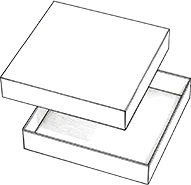
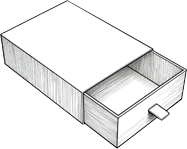
Like corrugated boxes, honeycomb paper can be made into boxes. However, due to its thickness and the significant impact on strength when bent, the strength of honeycomb paper boxes may be affected. Additionally, the processing of honeycomb paper boxes is not as convenient and fast as that of corrugated paper, and it cannot be automated, which limits its production efficiency. Despite these limitations, honeycomb paper boxes can still be used for small electrical and mechanical products, either alone or in combination with corrugated paper.
Advantages of Honeycomb Paper
Minimal Material Consumption and High Specific Strength and Stiffness
Bees construct the strongest and most voluminous nests with the least amount of material. Scientific research has shown that the geometric structure of honeycombs, which resembles the structure of an arch bridge, increases the compressive strength by 100 times. Honeycomb paper, with its honeycomb structure, achieves the maximum volume and strength with the least material consumption.
Excellent Shock Absorption and Vibration Isolation
The core structure of honeycomb paper provides excellent shock absorption and vibration isolation, comparable to EPS. This makes it suitable for protecting delicate items during transportation and storage.
Good Thermal and Sound Insulation
The closed cells of the honeycomb core, filled with air, provide excellent thermal and sound insulation. This feature makes honeycomb paper suitable for applications where temperature and noise control are important.
Adjustable Strength and Stiffness
The strength and stiffness of honeycomb paper can be easily adjusted by changing the thickness and weight of the core paper or by altering the cell size and core height. This flexibility allows it to be customized for different applications.
Special Functional Treatments
Honeycomb paper, being a paper-based material, can be easily treated to achieve special properties such as waterproofing, fire resistance, mildew resistance, and enhanced strength. These treatments expand its application range and make it more versatile.
No Fumigation Required for Export
During the production process, honeycomb paper undergoes infrared or microwave drying, which effectively disinfects and sterilizes it. This means that it does not require fumigation or quarantine when used for export packaging, making it a convenient and environmentally friendly alternative to wood.
Honeycomb paper is produced without pollution and can be recycled and easily disposed of. It can replace EPS as a cushioning material, reducing the environmental impact of packaging.
Honeycomb paper is a versatile and sustainable material that offers a wide range of benefits. Its ability to provide strength, protection, and insulation while being lightweight and environmentally friendly makes it a material of the future. Whether you are looking for a sustainable packaging option or a durable construction material, honeycomb paper is worth considering.