









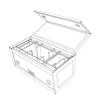



Why Retail Displays Remain Essential for CPG Brands
In the consumer packaged goods (CPG) industry, competition doesn't happen slowly. It happens in seconds. CPG products - such as food, beverages, personal care items and household essentials - are often purchased with minimal consideration. Shoppers scan shelves quickly, notice only a few options and make decisions almost instinctively.
This is where retail displays continue to play a critical role.
Even as digital marketing and e-commerce grow, physical retail remains a major purchase channel. For many CPG brands, success still depends on how products appear and perform in-store, especially at high-traffic locations such as aisles, endcaps and checkout areas.
The Real Challenge of Selling CPG Products In-Store
Retail environments are more crowded than ever. Stores carry more brands, more SKUs and more promotional material, while shelf space remains limited. This creates three common challenges for CPG brands:
- Products blend into the shelf and become visually invisible
- Shoppers don't spend enough time to read packaging details
- Generic shelf placement fails to differentiate the product
In these situations, packaging alone is often not enough. Cardboard store displays and corrugated point of purchase displays provide an additional layer of visibility and organization that helps products stand out at the moment of decision.
What Role Retail Displays Play in CPG Marketing
Modern CPG marketing is no longer limited to advertising, pricing and promotions. It also includes how products are physically presented in retail environments.
Well-designed custom retail displays help brands:
- Draw attention to specific products or promotions
- Communicate key product benefits quickly
- Organize merchandise for easy selection
- Improve overall brand recognition in-store
Because shoppers are often pressed for time, displays function as silent sales tools. They guide attention, simplify choices and encourage impulse purchases without requiring interaction from store staff.
How DTC and Omnichannel Strategies Connect to Displays
DTC (Direct-to-Consumer) refers to brands selling directly through their own websites or online platforms. While DTC offers control over data, pricing and branding, it does not eliminate the importance of retail.
Most CPG brands now operate in an omnichannel environment, where customers move between online and offline touchpoints before purchasing. A shopper might first see a product through online advertising, then encounter it later in a physical store.
In this scenario, custom pop displays help bridge the gap. They reinforce familiar branding, visual language and messaging that shoppers already recognize, creating a consistent experience across channels.
Why Custom Displays Are More Effective Than Standard Options
Standard, off-the-shelf displays are designed to accommodate many products, but they rarely fit any product perfectly. As a result, they often compromise on stability, presentation or capacity.
Custom display products, on the other hand, are designed around specific needs, including:
- Product size, weight and quantity
- Intended store placement (countertop, aisle, floor, endcap)
- Shipping and pallet requirements
- Ease of assembly and restocking
A properly engineered custom retail display cardboard solution ensures that products are supported securely, displayed neatly and remain presentable throughout the promotion period.
The Advantages of Corrugated Cardboard Displays
For many CPG brands, corrugated cardboard displays are the preferred choice due to their balance of performance and cost.
Key advantages include:
- Lightweight construction for easy shipping and setup
- Structural strength suitable for fast-moving consumer goods
- Flexibility in design, shape and branding
- Recyclable materials that support sustainability goals
When designed correctly, corrugated point of purchase displays can remain durable and visually effective even with frequent customer interaction and restocking.
Why the Choice of Manufacturer Matters
Design concepts and graphics are only part of the equation. Execution plays an equally important role in display performance.
An experienced custom retail display manufacturer understands:
- Retailer compliance standards
- Structural requirements for different store environments
- Shipping constraints and damage prevention
- Production efficiency and lead times
Working with the right manufacturer helps ensure that displays arrive on time, install easily and perform as intended on the retail floor.
Long-Term Value of Effective Retail Displays
Beyond short-term promotions, well-designed displays contribute to long-term brand perception. Consistent, professional presentation builds familiarity and trust with shoppers over time.
For CPG brands competing in saturated categories, retail displays offer one of the most controllable and cost-effective ways to influence purchase behavior at the point of sale.
Final Thoughts
Despite ongoing changes in digital commerce and consumer behavior, physical retail remains a critical decision point for CPG purchases. Products that are clearly visible, well-organized and professionally displayed gain a meaningful advantage.
By investing in custom retail displays, including high-quality cardboard store displays and corrugated cardboard displays, brands can strengthen in-store performance while supporting broader omnichannel strategies.
Partnering with an experienced custom retail display manufacturer ensures that every display not only looks good in design, but performs reliably in real retail environments.