











Retail display systems have never been static. As retail environments became faster, more fragmented, and more cost-sensitive, display formats evolved alongside them. Among all modern point-of-sale solutions, cardboard pop-up displays represent one of the clearest examples of how structural design, logistics pressure, and commercial execution requirements intersect.
What began as a simple folding concept has developed into a mature display category used across FMCG, cosmetics, electronics, and seasonal promotions. Understanding this evolution helps brands and retailers make better decisions when selecting display formats for different retail scenarios.
This article traces the development of cardboard pop-up displays, explains why they emerged, how their structure improved over time, and what business value they deliver today.
Early Retail Display Challenges That Led to Pop-Up Concepts
Before pop-up displays existed, most retail display racks followed traditional construction logic. Displays were built from multiple flat panels or rigid frames, shipped in bulky cartons, and assembled manually at the store level.
These systems created several recurring problems:
- Long setup time requiring trained staff
- High labor cost during nationwide rollouts
- Inconsistent final appearance across stores
- Large packaging volume increasing freight cost
- High risk of assembly error
As retail networks expanded, these issues scaled quickly. A display design that worked in a single store became inefficient when deployed across hundreds or thousands of locations.
Brands needed display systems that could reduce human intervention, simplify logistics, and maintain visual consistency.
This demand set the foundation for the first generation of pop-up display structures.
First-Generation Cardboard Pop-Up Displays: Folding for Speed
The earliest cardboard pop-up displays focused on one core improvement: setup speed.
Instead of shipping multiple components, displays were designed to fold flat and expand into shape. Basic hinge points and fold lines allowed a single unit to open manually without tools.
These early designs achieved several milestones:
- Flat-pack transport reduced shipping volume
- Setup time dropped from minutes to seconds
- No tools or instructions were required
- Entry-level retail staff could handle deployment
However, these first-generation structures had limitations. Load-bearing capacity remained low. Structural stability depended heavily on precise folding. Display lifespan was limited to short-term promotions.
Despite these constraints, the concept proved commercially viable. For the first time, brands could deploy cardboard point of sale display units rapidly across multiple stores without relying on skilled labor.
Structural Reinforcement and Load-Bearing Improvements
As adoption increased, the next phase of development focused on strength and reliability.
Manufacturers introduced internal support panels, reinforced corners, and locking mechanisms that allowed the display to hold more weight without collapsing. Instead of relying solely on fold tension, structural logic became part of the design.
Key improvements during this phase included:
- Internal locking systems that fixed the display once opened
- Reinforced corrugated board grades with higher compression strength
- Load distribution across vertical panels rather than single joints
- Improved base stability for floor placement
These changes expanded use cases beyond lightweight items. Cardboard pop up display stands could now support boxed products, bottled items, and multi-tier configurations.
At this stage, pop-up displays moved from being purely promotional tools to functional retail fixtures.
Integration Into Retail Execution and POS Standards
As structures matured, cardboard pop-up displays became aligned with retailer operational standards.
Retailers prioritize displays that are easy to receive, easy to place, and easy to remove. Pop-up systems fit these requirements naturally.
From a point of sale execution perspective, pop-up displays offer:
- Predictable dimensions for planogram compliance
- Fast floor placement without disrupting store traffic
- Clean removal after campaign completion
- Reduced backroom handling
For retailers, this translated into operational efficiency. For brands, it meant smoother approvals and broader acceptance across retail chains.
As a result, cardboard pop-up displays became standard options within retail-ready packaging programs and promotional planning.
Logistics Efficiency and Supply Chain Impact
One of the most significant business advantages of pop-up displays lies in logistics.
Flat-packed displays dramatically reduce packaging volume. More units fit on a pallet. Transportation cost per display decreases. Warehouse storage becomes more efficient.
From the perspective of a cardboard display supplier, this efficiency simplifies large-scale production and global distribution. Fewer packaging components reduce damage risk. Assembly consistency improves.
When deployed across multi-market campaigns, these savings accumulate quickly and directly impact campaign ROI.
Visual Consistency and Brand Control
Beyond logistics and labor, pop-up displays deliver value in visual consistency.
Because the structure unfolds into a predefined form, the final appearance remains uniform across locations. This consistency protects brand presentation at the shelf.
Key benefits include:
- Standardized display geometry
- Controlled graphic alignment
- Reduced installation variation
- Predictable shopper experience
For brands operating across different regions, this consistency reduces the gap between design intent and in-store reality.
Material Innovation and Sustainability Alignment
As sustainability became a priority, cardboard pop-up displays gained further relevance.
Modern displays use recyclable corrugated materials with optimized board thickness and strength-to-weight ratios. This reduces material waste without sacrificing performance.
Compared to plastic or metal fixtures, cardboard systems offer:
- Lower material footprint
- Easier recycling after use
- Reduced return logistics
- Lower overall environmental impact
This alignment with sustainability goals increased adoption among retailers with environmental compliance requirements.
Expansion of Use Cases Across Retail Formats
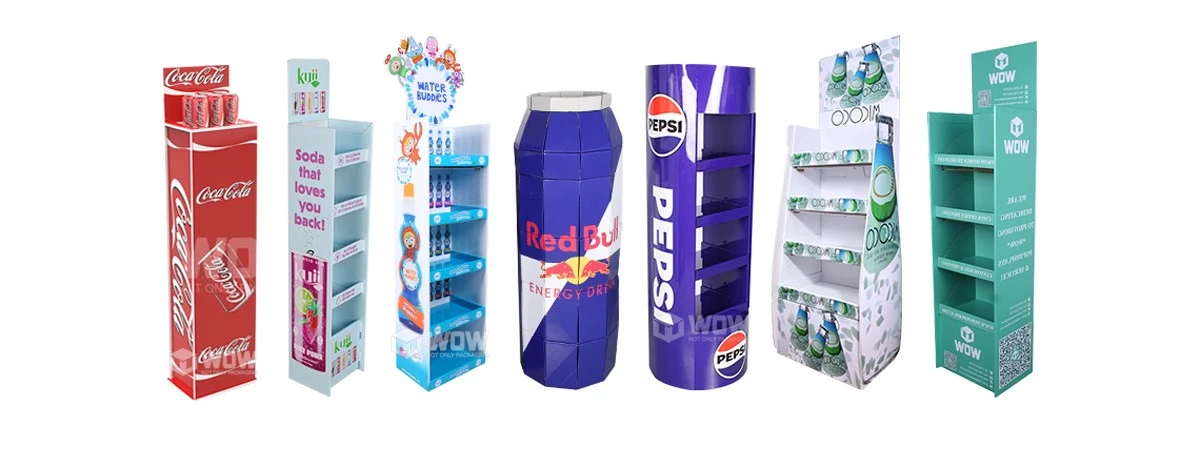
Today, cardboard pop-up displays are used across a wide range of retail environments.
- Countertop displays for impulse items
- Floor-standing units for seasonal campaigns
- End-cap displays for new product launches
- Temporary installations for promotions and events
The adaptability of the pop-up structure allows brands to reuse design logic across formats while adjusting size and layout.
Business Value in Modern Retail Strategy
The commercial value of cardboard pop-up displays is not limited to cost reduction.
They support faster campaign launches, reduce operational friction, and improve in-store execution quality. Marketing teams gain flexibility. Retail teams reduce workload. Supply chains operate more efficiently.
In many cases, pop-up displays become repeatable assets rather than one-time solutions.
The Current Role of Cardboard Pop-Up Displays
What started as a simple folding idea has evolved into a core retail display category.
Cardboard pop-up displays now sit between temporary promotional tools and semi-permanent fixtures. Their balance of speed, structure, and cost efficiency makes them suitable for modern retail cycles.
For brands navigating frequent product updates and short promotional windows, pop-up displays offer a reliable execution framework.
Conclusion
The evolution of cardboard pop-up displays reflects broader changes in retail itself. As speed, efficiency, and consistency became critical, display structures adapted accordingly.
From early folding concepts to reinforced, retail-ready systems, pop-up displays have proven their value across logistics, operations, branding, and sustainability.
Understanding this evolution helps brands choose display formats not only based on appearance, but on long-term execution performance.
In today's retail environment, cardboard pop-up displays are no longer a convenience option. They are a strategic tool built to meet real-world commercial demands.