









Luxury packaging is often associated with elaborate finishes, heavy boxes and complex structures. But the quality of a custom paper box is usually determined much earlier, when the material and structure are selected.
For brands developing candles, cosmetics, fragrance, gifts, specialty food or other premium products, the better question is not simply how to make a box look luxurious. It is how to choose the right combination of paperboard, structure, printing and finish for the product.
A well-designed custom paper box should protect the product, support the brand identity and create an appropriate opening experience without adding unnecessary materials or production processes.
This guide explains how different materials and structures work together in luxury packaging boxes, with practical considerations for custom rigid boxes, printed paper boxes and small-batch handmade packaging.

What Makes a Custom Paper Box Suitable for Luxury Packaging?
A premium appearance does not come from one material or one finishing process. It comes from how several elements work together.
The first is the structural board. A rigid box requires enough board thickness and stiffness to maintain its shape during handling. The second is the outer paper, which determines much of the visible texture and color. Printing and finishing then add brand graphics, contrast and tactile details.
For this reason, custom luxury packaging should be developed as a complete system rather than as a collection of individual options.
A simple box with well-matched materials can look more refined than a heavily decorated box with too many competing effects.
For most projects, the key decisions are:
What level of structural rigidity does the product require?
Which paper surface matches the brand positioning?
Is digital printing or offset printing more appropriate?
Which finishing processes actually improve the design?
Does the box need a custom insert or die-cut structure?
These decisions should be made before production rather than added after the box design has already been finalized.
Choosing the Right Material for Custom Paper Boxes
The material selected for a paper box affects its rigidity, appearance, printing performance and overall production cost.
For custom paper boxes, the material combination usually consists of a structural paperboard or greyboard core and an outer wrapping paper. Folding cartons use a different construction because the paperboard itself forms the finished box.
Greyboard for Custom Rigid Boxes
Greyboard is widely used as the structural core of rigid packaging because it provides the stiffness needed to create a solid box structure.
In a typical rigid box, greyboard is cut into panels and assembled into the required shape. A printed or textured paper is then wrapped around the board to create the finished exterior.
This makes greyboard particularly suitable for custom rigid boxes where the box itself needs to feel substantial in the customer's hands.
The thickness of the greyboard should not be selected simply because a thicker board sounds more premium. It needs to correspond with the box dimensions, product weight and structural design.
A small jewelry box and a larger gift box, for example, may require very different board specifications.
Kraft Paper for a Natural Packaging Look
Kraft paper boxes are a different direction. Instead of emphasizing a highly polished luxury appearance, kraft paper creates a more natural and understated visual language.
It works particularly well for brands that want packaging to communicate simplicity, craftsmanship or a natural product identity.
Kraft paper can also be combined with restrained printing rather than multiple decorative finishes. A simple dark graphic on a natural kraft surface can create a distinctive result without making the packaging visually complicated.
Textured and Specialty Papers
Textured paper is useful when the surface itself needs to contribute to the packaging experience.
A subtle linen, fabric or other tactile texture can create visual depth before any additional finishing is applied. This can be especially effective for fragrance, candles, cosmetics and premium gift packaging.
The important point is that the texture should support the brand rather than compete with the printed artwork.
For luxury packaging boxes, a carefully selected specialty paper can sometimes eliminate the need for several additional decorative processes.
Which Box Structure Should You Choose?
Material alone does not determine whether packaging feels premium. The opening mechanism and internal organization also influence how the customer interacts with the product.
For custom paper boxes, the structure should be selected according to the product, protection requirements and intended opening experience.
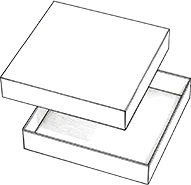
Lid and Base Rigid Boxes
The lid and base structure is one of the most straightforward options for luxury rigid boxes.
The separate lid and base create a solid opening experience and allow the exterior to remain relatively clean. This structure is commonly suitable for candles, cosmetics, fragrance, gifts and other premium consumer products.
Its main advantage is consistency. The structure does not need an elaborate mechanism to create a premium impression. Material selection, proportions, surface texture and printing can do most of the visual work.
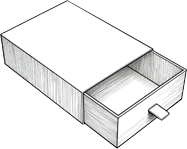
Drawer Style and Book Style Boxes
Drawer-style boxes introduce a different interaction. Instead of lifting a lid, the customer pulls the inner tray from the outer sleeve.
This structure provides more room for layered presentation and can be useful when the product needs to be revealed gradually.
Book-style rigid boxes use a hinged construction that opens similarly to a book. They can create a strong presentation effect while keeping the product securely positioned inside.
For both structures, the internal space needs to be considered at the design stage. A visually attractive exterior is not enough if the product moves excessively inside the box.
Folding Cartons for Lightweight Products
Not every premium product needs a rigid box.
Folding cartons use paperboard that is printed, die-cut and folded into the finished structure. They are lighter and generally require less material than rigid boxes, making them suitable for many cosmetics, food, personal care and consumer products.
The decision between a folding carton and a rigid box should therefore be based on the product and packaging objective rather than the assumption that rigid packaging is always more premium.
If the product is lightweight and does not require a substantial presentation structure, a well-designed paperboard carton may be the more practical solution.

Digital Printing vs Offset Printing for Custom Printed Boxes
Printing is another major decision for custom printed boxes.
Two common production methods are digital printing and offset printing. Neither method is universally better. The more suitable option depends mainly on quantity, artwork requirements and production plans.
When Digital Printing Makes More Sense
Digital printing is useful when a project involves shorter production runs, multiple versions or frequent artwork changes.
Because it does not require the same traditional setup process as offset printing, digital printing can be practical for product launches, seasonal packaging, market testing or projects with several designs.
For example, a candle brand launching four seasonal fragrances may need four different packaging designs in relatively limited quantities. Digital printing can offer more flexibility in this situation.
It is also useful when a brand wants to test a packaging concept before committing to a larger production run.
When Offset Printing Is the Better Choice
Offset printing becomes more attractive when production quantities are larger or consistent color reproduction is particularly important.
For established brands with repeat packaging programs, offset printing can provide stable results across larger production runs.
It is especially relevant when the artwork contains detailed graphics, brand colors or large printed areas that need to remain consistent from one production batch to another.
The practical decision is therefore simple:
Digital printing favors flexibility. Offset printing favors larger-scale production and repeatability.
The choice should be made together with the packaging manufacturer because the final printing method also depends on the selected paper, surface treatment and production volume.
Which Finishes Add Real Value to Luxury Packaging Boxes?
A common mistake in premium packaging is assuming that adding more finishes automatically makes the box look better.
It does not.
A box with foil stamping, embossing, UV coating and multiple textures can easily become visually overloaded. The better approach is to identify the part of the design that needs emphasis and select a finish that supports it.
Soft Touch for a Smoother Surface
Soft touch packaging creates a smooth, velvety tactile effect while reducing the visual harshness of a conventional glossy surface.
It is often suitable for minimalist packaging where the material itself needs to communicate quality.
Soft touch works particularly well with restrained typography, muted colors and simple graphic layouts.
However, it should be considered together with the paper surface and printing method. The same finish can produce very different results depending on the underlying material.
Foil Stamping for Small Brand Details
Foil stamping can be used to highlight logos, product names, borders or selected graphic elements.
Gold and silver are common choices, but the purpose of foil is not necessarily to make the entire package metallic. In many cases, a small foil element creates stronger contrast than covering a large area.
For luxury packaging boxes, restraint is often more effective.
Embossing and Debossing for Tactile Detail
Embossing raises selected areas of the paper surface, while debossing creates a recessed effect.
These processes are particularly useful when a brand wants the packaging to be experienced through touch as well as sight.
They can be applied to logos, symbols, patterns or typography.
The design should be reviewed carefully before production because very fine details may not translate equally well across different papers and board constructions.
Spot UV for Matte and Gloss Contrast
Spot UV adds a localized glossy effect to selected areas.
When combined with a matte surface, it can create a clear contrast without changing the overall color palette.
For example, a brand name printed on a matte black box can receive selective gloss treatment, allowing the detail to appear more strongly when the box moves under light.
This is often more effective than applying gloss across the entire package.
When Does Die Cutting Make Sense for Custom Paper Boxes?
Custom die cut boxes are useful when a standard rectangular structure does not fully meet the product or presentation requirements.
Die cutting allows paperboard or wrapping components to be produced with precise custom shapes.
Custom Shapes and Product Windows
A die-cut opening can create a product window that allows customers to see part of the product without opening the package.
This can be useful for candles, cosmetics, food products and gift packaging where the appearance of the product contributes to the purchase decision.
Die cutting can also be used to create unusual exterior shapes when the packaging itself needs to become part of the brand identity.
Die-Cut Inserts and Internal Structures
Die cutting is not limited to the exterior of the box.
Paperboard inserts can be shaped to hold products in a defined position, separate multiple items or create a layered presentation.
For brands that want an all-paper packaging solution, a die-cut paperboard insert can be considered instead of adding unrelated insert materials.
The insert should be designed together with the box. Dimensions, product tolerances and assembly requirements all affect the final result.
How to Balance Luxury Appearance and Packaging Cost
A premium packaging project does not need to use every available finishing process.
The better question is where the packaging budget creates the greatest improvement.
Consider two approaches.
Option A:
Greyboard + textured paper + simple printing
Option B:
Standard paper + foil stamping + embossing + spot UV + additional decorative elements
Option B contains more processes, but that does not automatically mean it will look more premium.
If the brand identity is based on minimalism, Option A may be more appropriate. If the product relies heavily on metallic details or tactile branding, selected foil or embossing may justify the additional production cost.
This is why custom luxury packaging should be developed around the brand positioning rather than a fixed list of finishes.
Three Practical Combinations for Custom Paper Boxes
Different product categories often require different packaging approaches.
Minimal Premium Packaging
Greyboard + textured paper + matte or soft touch finish
This combination works well when the brand wants a clean and tactile appearance.
It can be suitable for candles, skincare, fragrance and other products where understated presentation is part of the brand identity.
Classic Luxury Packaging
Greyboard + specialty paper + foil stamping + selective embossing
This combination places more emphasis on tactile and visual details.
It can work well for jewelry, premium gifts, fragrance and other products where the packaging is expected to contribute strongly to the perceived value.
Printed Brand Packaging
Paperboard + offset printing + selective finishing
This direction is more suitable when the artwork itself is a major part of the packaging design.
It can work for cosmetics, food, personal care and consumer products with strong graphic identities.
For smaller production runs or packaging with multiple artwork versions, digital printing can be considered instead.
These specifications are examples rather than a universal formula.
The appropriate board thickness, paper type and structure should be determined by the product dimensions, product weight, quantity, shipping requirements and target packaging experience.
A packaging manufacturer should also review whether the selected combination is practical for production. A design may look good on a screen but still require structural adjustment before it can be produced consistently.
How to Choose the Right Combination for Your Product
The easiest way to avoid unnecessary packaging decisions is to work through the project in sequence.
1. Start With the Product
Define the product dimensions, weight and protection requirements first.
A box should fit the product rather than forcing the product into a predetermined packaging structure.
2. Select the Structural Board
Decide whether the project requires rigid greyboard construction or a lighter paperboard solution.
This decision affects both the box structure and the overall packaging feel.
3. Select the Box Structure
Consider a lid and base box, drawer box, book-style box or folding carton according to the product and opening experience.
4. Choose the Printing Method
Compare digital printing and offset printing based on quantity, artwork versions and repeat production requirements.
5. Select Only the Necessary Finishes
Choose from soft touch, foil stamping, embossing, debossing, spot UV and other finishes according to the design objective.
The goal is not to use more processes. It is to make the important elements more noticeable.
6. Review the Complete Packaging System
Finally, review the box, insert, printed artwork and opening experience together.
A successful custom paper box should work as one system from the outside surface to the internal product presentation.
What Should You Discuss With a Packaging Manufacturer?
A clear project brief makes it easier to develop an accurate packaging solution.
Before requesting a quotation or prototype, prepare the following information:
- Product dimensions and weight
- Required quantity
- Preferred box structure
- Product protection requirements
- Preferred paper or board appearance
- Artwork or brand guidelines
- Printing requirements
- Surface finishing requirements
- Insert requirements
- Shipping destination
- Target packaging budget
If the final structure is not yet decided, that should also be communicated.
A manufacturer with packaging engineering capability can compare different custom packaging boxes rather than simply producing the first structure shown in an artwork file.
This is particularly important for handmade or small-batch premium packaging, where the visual design and production method need to remain closely connected.
Frequently Asked Questions
1.What material is commonly used for custom rigid boxes?
Greyboard is commonly used as the structural core of rigid boxes. The board provides rigidity, while printed, kraft, textured or specialty paper can be wrapped around the exterior to create the desired appearance.
2.Is digital printing or offset printing better for custom paper boxes?
Neither method is universally better. Digital printing is generally more flexible for shorter runs and multiple designs, while offset printing is often more suitable for larger quantities and repeat production where consistent color reproduction is important.
3.What finishes can be used on luxury packaging boxes?
Common options include soft touch, foil stamping, embossing, debossing and spot UV. The appropriate finish depends on the paper surface, artwork and desired tactile or visual effect.
4.Are custom paper boxes suitable for premium products?
Yes. Custom paper boxes can be developed with rigid greyboard structures, specialty papers, detailed printing and selected finishing processes to create premium packaging for products such as candles, cosmetics, fragrance, gifts and specialty consumer goods.
Final Thoughts
A luxury paper box is rarely defined by one material or one finishing technique.
Its quality comes from the relationship between the parts: the paper has to suit the structure, the structure has to suit the product, the printing has to work with the surface, and the finishing has to support rather than compete with the design.
That is also why good custom paper boxes are usually developed through several rounds of structural and visual decisions rather than simply selected from a catalogue.
For brands looking for a premium packaging solution, the strongest result often comes from treating the box as a complete product-from material and construction through printing, finishing, sampling and production control.