




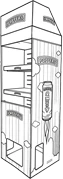





However, a floor display is not automatically the right solution for every product. Product size, weight, number of SKUs, retail location, stock quantity, and shopper access all influence whether a cardboard floor display stand will work effectively.
The key question is not simply whether a product can be placed on a floor display. It is whether a custom cardboard floor display can improve the way that product is presented and purchased in the intended retail environment.
When Is a Cardboard Floor Display the Right Choice?
A cardboard floor display is usually worth considering when a product needs its own merchandising space. Instead of competing with surrounding products on a standard shelf, the display creates a dedicated area for the brand, product range, or promotional campaign.
This makes a cardboard retail floor display particularly useful for new product launches, seasonal promotions, limited-time campaigns, and products that need stronger visibility inside supermarkets, chain stores, pharmacies, convenience stores, or specialty retailers.
The available floor space also matters. A floor-standing cardboard display needs enough room to remain accessible without interfering with customer traffic. When the location provides sufficient space and the product benefits from additional visibility, a floor display can be more effective than adding another product directly onto an existing shelf.
What Products Work Well With Cardboard Floor Displays?
Products that are lightweight to moderately weighted and need organized product presentation can work well with a cardboard floor display rack. Snacks, beverages, cosmetics, personal care products, toys, household goods, stationery, accessories, and promotional merchandise are common applications.
The number of SKUs is another important factor. A cardboard floor display stand can provide multiple shelves or compartments, allowing different products to be grouped within one branded unit. This is useful when a campaign includes several related products that need to be presented together.
Product dimensions should be considered before selecting the display structure. A display designed for small boxed products will have very different shelf dimensions from a corrugated floor display designed for bottles, larger packages, or irregularly shaped products.
Cardboard Floor Display vs Counter Display
A cardboard counter display is designed for smaller products and limited merchandising areas. It is usually placed on checkout counters, service desks, existing shelves, or other elevated surfaces where shoppers can interact with the products at close range.
A cardboard floor display, on the other hand, creates a larger independent merchandising position. It provides more vertical and horizontal space for products and branding, making it more suitable when the campaign needs stronger visibility or a larger product assortment.
The decision should therefore be based on the retail position rather than simply the product itself. If the product needs a compact secondary display, a counter unit may be more appropriate. If it needs a dedicated product zone with several shelves or greater visual presence, a cardboard floor display is usually a better fit.
Cardboard Floor Display vs Standard Shelf Placement
Standard retail shelving provides efficient use of store space, but the product has to compete with many other brands and products. A freestanding cardboard display creates a separate visual area where the brand can control product arrangement, graphics, and promotional messaging.
This is especially useful when a brand is launching a new product or running a temporary campaign. Instead of waiting for shoppers to find the product on an existing shelf, a cardboard floor display for retail can bring the product into a more visible position within the store.
A floor display is not intended to replace every shelf. It works best when the additional merchandising position has a clear purpose, such as increasing visibility, presenting several related SKUs, supporting a promotion, or creating a temporary branded product zone.
When Should You Choose a Corrugated Floor Display?
A corrugated floor display is a practical option when the display needs to combine product presentation with lightweight construction and efficient logistics. Corrugated board can be engineered into shelves, dividers, headers, side panels, and other structural components while providing large printable surfaces for branding.
The structure still needs to match the product requirements. Shelf loading, product weight, display dimensions, and stock quantity should be considered before selecting the corrugated construction. A display for lightweight packaged goods may require a very different structure from one carrying heavier products.
For brands planning multiple retail locations, a custom corrugated cardboard floor display can also be developed around the required footprint and product arrangement, allowing the same basic merchandising concept to be adapted to different retail environments.
When a Cardboard Floor Display May Not Be the Best Option
A cardboard floor display is not always the right choice. Products that are extremely heavy, require permanent fixtures, or need long-term high-load storage may require a different retail display solution or additional structural reinforcement.
Floor space can also be a limitation. In a small store, a large cardboard floor display rack may interfere with customer movement or reduce the efficiency of the existing merchandising layout. In these situations, a cardboard counter display, sidekick display, or smaller secondary display may be more appropriate.
The objective should therefore be to match the display format with the actual retail conditions. Choosing a floor display simply because it provides more space does not necessarily make it the better merchandising solution.
What Should You Consider Before Ordering a Custom Cardboard Floor Display?
Before developing a custom cardboard floor display, the product specifications should be clearly defined. Product dimensions, weight, number of SKUs, quantity per shelf, packaging style, and expected stock levels all influence the structure.
The retail environment is equally important. The supplier should know the target store type, available footprint, display height restrictions, viewing direction, expected campaign duration, and whether the display will be used in supermarkets, chain stores, pharmacies, convenience stores, or specialty retail locations.
These details allow the structure to be designed around the actual application. A custom cardboard floor display stand should not simply look attractive in a rendering; it should provide appropriate product access, shelf capacity, visual balance, and practical use on the retail floor.
How to Choose the Right Cardboard Floor Display
Choosing the right cardboard floor display starts with the purpose of the display. If the goal is to create a dedicated product zone, introduce a new product, present multiple SKUs, or support a temporary retail campaign, a floor-standing cardboard display can be a suitable option.
The next step is to match the display format with the product and retail environment. A cardboard floor display rack may be suitable for products that need multiple shelves, while a tray-style floor display can work better for larger quantities or products that need easy grab-and-go access.
For a custom cardboard floor display, structural design should be developed together with the product dimensions, graphics, retail footprint, and merchandising requirements. This approach helps ensure that the final display is not only visually effective but also practical for the products and stores where it will be used.
FAQ
What is a cardboard floor display?
A cardboard floor display is a freestanding retail display made primarily from corrugated cardboard or paperboard. It is designed to hold and present products directly on the retail floor and can be customized for different products, dimensions, graphics, and merchandising requirements.
What products can be displayed on a cardboard floor display?
A cardboard floor display stand can be designed for many packaged consumer products, including snacks, beverages, cosmetics, toys, stationery, household products, accessories, and promotional merchandise. The appropriate structure depends on product size, weight, quantity, and packaging.
Are cardboard floor displays suitable for supermarkets?
Yes. Cardboard floor displays for supermarkets are commonly used for product launches, seasonal campaigns, promotional programs, and secondary merchandising. The design should be developed around the available floor space, shopper traffic, product requirements, and retailer specifications.
What is the difference between a cardboard floor display and a counter display?
A cardboard floor display stands directly on the retail floor and generally provides more product and branding space. A cardboard counter display is smaller and is designed to sit on an existing counter, shelf, or other elevated surface.
Can a cardboard floor display hold heavy products?
It depends on the product weight and structural design. A custom cardboard floor display can incorporate reinforced shelves and structural elements for higher loads, but the product weight and required quantity should be provided before the display is engineered.
How do I order a custom cardboard floor display?
To develop a custom cardboard floor display, provide the product dimensions, weight, number of SKUs, expected quantity, retail environment, target display size, artwork requirements, and campaign duration. These specifications allow the structure to be developed around the actual retail application.