








In toy retail, product visibility alone is not enough.
Children are naturally curious and easily attracted by bright colors, playful environments, and interactive experiences. Parents, on the other hand, prefer stores that are organized, easy to browse, and visually engaging.
Because of this unique shopping behavior, toy stores must do more than simply place products on shelves. They need creative retail displays that capture attention and create a fun in-store experience.
This is why many retailers invest in toy display stands and custom retail displays. A well-designed display not only organizes products but also encourages customers to explore the store and interact with toys.
When done correctly, creative toy merchandising can significantly increase product visibility and boost impulse purchases.
Why Toy Displays Matter More Than Standard Shelves
Toys are one of the most visually driven retail categories.
Children often notice toys within seconds, and their first impression can strongly influence purchase decisions. If toys are buried among other products or placed on ordinary shelves, they may not attract attention.
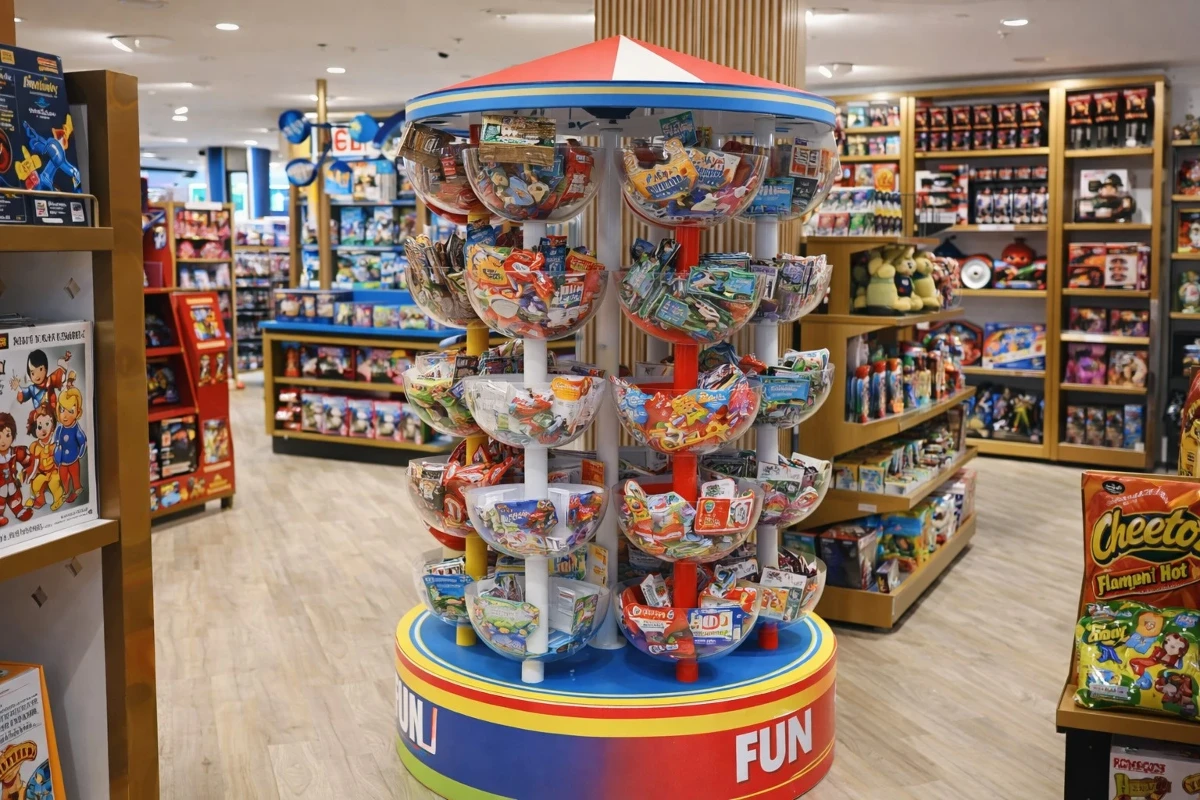
Creative toy retail displays solve this problem by creating focal points inside the store.
Effective toy displays help retailers:
highlight featured toys
organize multiple product categories
encourage interaction and play
guide shoppers through the store
promote seasonal products
Retailers who invest in strong visual merchandising often see higher engagement from young shoppers and better browsing experiences for parents.
Key Elements of an Engaging Toy Store Display
Designing an effective toy display requires more than placing toys on shelves. Successful toy stores focus on creating immersive retail environments.
Several visual merchandising elements play an important role.
Lighting to Highlight Featured Toys
Lighting is one of the simplest ways to draw attention to a product.
Spotlights, LED shelves, or illuminated display cases can highlight specific toys such as collectible figures, model kits, or limited-edition products. Placing these products under focused lighting creates a premium presentation that attracts curiosity.
Retailers often use lighting for:
collectible toys
premium toy sets
featured product launches
This approach makes toys stand out even in busy retail spaces.
Varying Display Heights
Another effective technique is using displays of different heights.
Displays placed at different levels create visual interest and help guide the shopper's eye across the store. At the same time, placing popular toys at children's eye level makes them easier to notice.
For example:
lower shelves for children's toys
mid-level displays for popular products
higher shelves for themed displays or decorations
This layered arrangement makes the store feel more dynamic and engaging.
Making Toys Easy to Touch and Explore
Unlike many other retail products, toys are meant to be handled.
Children often want to pick up toys, press buttons, or try simple features. Allowing safe interaction with demo products creates a memorable shopping experience.
Many stores place sample toys on small tables or demonstration areas while keeping packaged products on nearby display racks.
This balance allows children to explore toys while protecting the sellable inventory.
Creative Toy Display Ideas That Attract Customers
To stand out from competitors, toy retailers often use creative merchandising strategies. Here are several display ideas that help draw attention and increase sales.
Showcase Limited-Edition Toys
Collectors and fans are often drawn to special editions.
Placing limited-edition toys inside acrylic display cases or on illuminated pedestals can create a premium presentation. This technique works particularly well for licensed toys or collectible figures.
Limited-edition displays also create a sense of exclusivity, encouraging customers to purchase before the items sell out.
Create Color-Themed Displays
Children are highly responsive to bright colors.
Organizing toys by color can create a vibrant and playful display that instantly catches attention. For example, books, puzzles, or small toys can be arranged in rainbow-colored sections.
Color-coordinated displays also help customers quickly locate products within large toy collections.
Feature Interactive Toys
Some toys are best experienced rather than simply viewed.
For example:
musical toys
fidget toys
building kits
small instruments
Retailers often place demo versions of these toys on tables so children can interact with them. This hands-on experience often leads to higher engagement and stronger purchase intent.
Use Themed Toy Displays
Themed displays help create immersive environments.
Retailers often build displays based on themes such as:
jungle animals
space adventures
race cars
fantasy castles
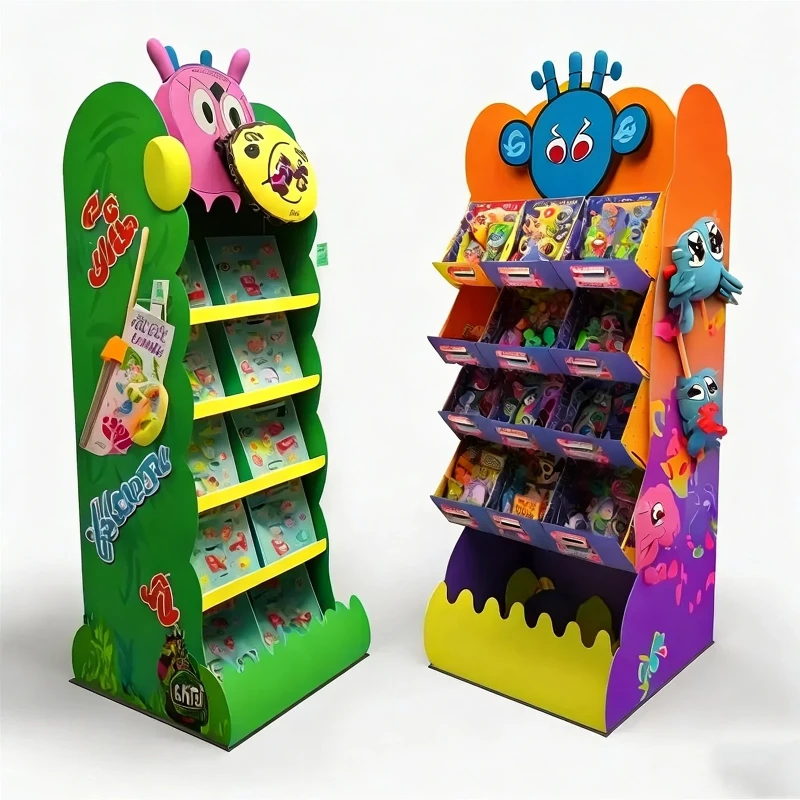
Adding simple background graphics, wall illustrations, or decorative elements can transform a regular shelf into a themed play environment.
These themed displays help customers imagine how the toys can be used.
Cross-Merchandise Related Products
Another effective retail strategy is cross-merchandising.
Grouping related toys together encourages shoppers to purchase multiple items.
For example:
plush toys next to children's books
dolls displayed with accessories
action figures placed with playsets
Cross-merchandising helps increase average purchase value while improving product discovery.
Types of Toy Display Stands Used in Retail
While creative merchandising ideas are important, the right display structures also play a critical role.
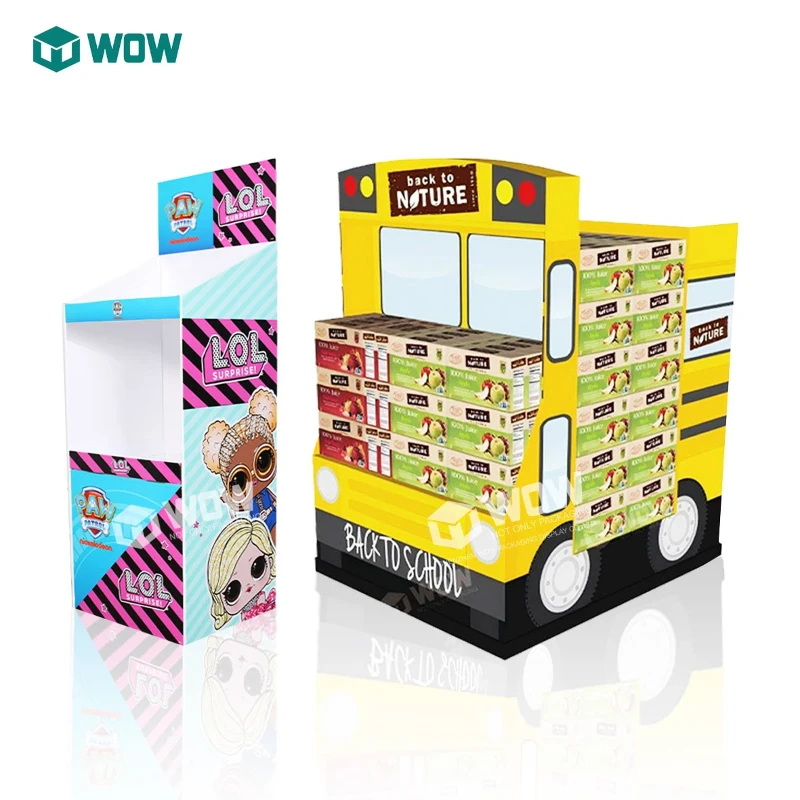
Retailers commonly use several types of toy display stands.
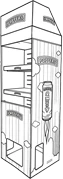
Floor Display Stands
Floor displays are freestanding structures placed in high-traffic areas.
They are ideal for:
new toy launches
seasonal promotions
branded toy collections
These displays provide strong visibility and allow multiple products to be presented in one location.
Countertop Toy Displays
Countertop displays are smaller units placed near checkout areas.
They are commonly used for:
collectible toys
small toy accessories
impulse-purchase items
Because children often notice products near checkout counters, these displays can significantly increase impulse purchases.
Pallet Displays for Promotional Toys
For large retail stores and supermarkets, pallet displays allow brands to showcase multiple toy units in one location.
These displays maximize floor space while presenting large product quantities. They are often used for:
toy bundles
seasonal toy promotions
large boxed toys
Pallet displays are particularly effective in high-traffic retail environments.
Why Custom Toy Display Stands Are Effective
Many toy brands choose custom retail displays rather than generic shelves.
Custom displays allow brands to design structures that reflect their identity and attract attention.
Benefits of custom toy display stands include:
unique shapes and graphics
strong brand visibility
better product organization
flexible promotional layouts
Corrugated cardboard displays are especially popular because they combine lightweight structure with strong visual branding.
These displays can be customized with colorful graphics that match toy packaging and brand identity.
Designing Displays That Encourage Toy Sales
Successful toy displays follow several important design principles.
First, they must be visually exciting enough to attract children's attention.
Second, they must remain organized so parents can easily browse the products.
Finally, displays must be durable and easy to restock, especially in high-traffic stores.
Retailers who balance these factors create stores that feel both fun and functional.
Conclusion
In toy retail, creative merchandising plays a critical role in attracting customers and increasing sales.
Simple shelving is rarely enough to capture attention in busy retail environments. Instead, successful stores rely on creative toy displays that combine visual excitement, interactive experiences, and organized product presentation.
From themed displays and color-based layouts to interactive demo areas and custom toy display stands, the right merchandising strategy can transform an ordinary toy section into an engaging shopping experience.
For retailers and toy brands alike, investing in creative retail displays is one of the most effective ways to increase product visibility and drive sales.
FAQ
1.What are toy retail display stands?
Toy retail display stands are merchandising fixtures used in stores to organize and showcase toys in a visually appealing way.
2.Why are toy displays important for sales?
Creative toy displays attract children's attention, improve product visibility, and encourage impulse purchases.
3.What materials are used for toy display stands?
Common materials include cardboard, metal, wood, and acrylic. Cardboard displays are widely used for promotional campaigns.
4.Where should toy displays be placed in stores?
Toy displays work best in high-traffic areas such as store entrances, aisle intersections, and checkout zones.
5.Can toy displays be customized for brands?
Yes. Many retailers use custom display stands designed with branded graphics, shelves, and promotional elements.