












Walk through any supermarket beverage aisle and the pattern becomes obvious very quickly. Most products look similar from a distance. Bottles repeat the same vertical shapes. Labels compete within crowded shelf systems. Promotional tags overlap each other.
For beverage and wine brands, visibility is no longer only about packaging. In many retail environments, the display structure itself becomes the difference between being noticed and being ignored.
This is one reason why more brands are investing in dedicated Beverage Display systems instead of relying only on standard shelving. The goal is not simply to "hold products." A good retail display changes how shoppers move, stop, compare, and purchase.
Different display types solve different retail problems. Some improve visibility in high-traffic supermarket aisles. Some increase impulse purchases near checkout. Others help premium wine brands create a more organized and elevated presentation.
Below are five display stand types that continue to perform well across beverage retail environments.
Why Beverage Brands Depend on Dedicated Retail Displays
Beverage categories move fast. Retailers prioritize products that are easy to replenish, easy to organize, and easy to sell.
At the same time, beverage brands are dealing with several challenges:
- crowded shelf competition
- similar bottle formats
- limited promotional space
- high product weight
- short customer decision time
- A standard shelf rarely solves these problems on its own.
This is where retail display structures become part of the merchandising strategy. A dedicated Soft Drink Display or Energy Drink Display interrupts the normal shelf pattern and creates a separate visual zone. Instead of blending into the aisle, the product becomes easier to identify from a distance.
Wine categories work differently. Wine shoppers usually spend more time browsing and comparing labels. In this case, a structured Wine Display system improves organization, browsing flow, and perceived product quality.
The display type matters because shopper behavior changes depending on the retail environment and the product category.
Not Every Beverage Display Solves the Same Retail Problem
One of the biggest mistakes brands make is assuming every display should do the same job.
Different display formats support different sales goals.
|
Retail Challenge |
Display Type Often Used |
|
|
Low visibility in crowded aisles |
Freestanding floor display |
|
|
Premium wine presentation |
Structured wine rack |
|
|
Fast-moving supermarket promotion |
Pallet display |
|
|
Impulse beverage purchases |
Counter display |
|
|
Limited floor space |
Sidekick display |
A display should be selected based on how the product is sold, not just how the display looks in a rendering.
For example, a supermarket campaign for canned energy drinks usually focuses on exposure and volume movement. A boutique wine store focuses more on organization and browsing experience. The merchandising logic is completely different.
Freestanding Floor Displays: Built for Visibility in Supermarkets
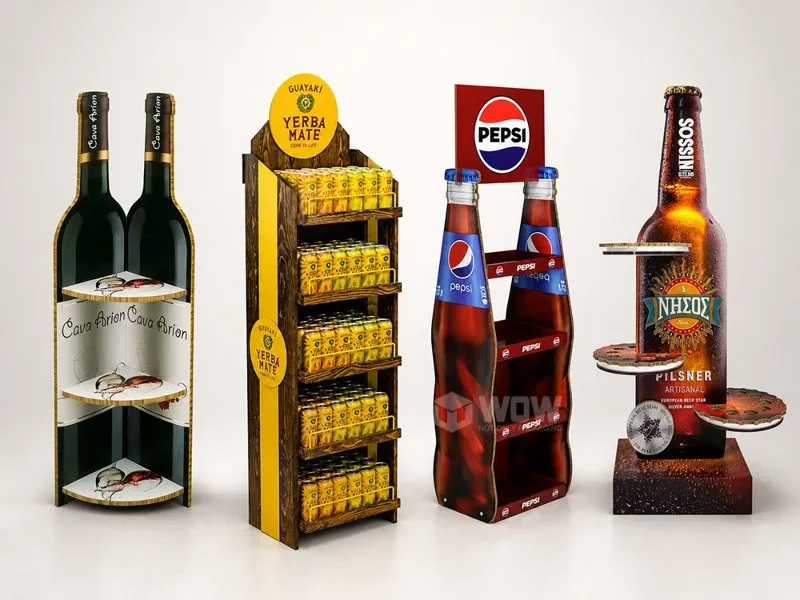
The most widely used structure for beverage promotions is still the freestanding floor display.
This type works because it creates separation from standard shelving. In supermarkets, shoppers often scan the aisle from several meters away. A floor display interrupts repetitive shelf patterns and gives the product its own space inside the store.
For Soft Drink Display campaigns, this structure is often used near aisle intersections, store entrances, or promotional zones. The objective is simple: increase visibility before the shopper even reaches the beverage aisle.
The same approach is common in Energy Drink Display programs. Energy drink brands compete heavily for visual attention, especially in convenience-oriented retail environments. Floor displays help create immediate product recognition through color blocking and vertical presentation.
What makes these displays effective is not just the branding area. It is the combination of:
- eye-level placement
- front-facing product visibility
- easy replenishment
- high product capacity
A poorly designed floor display can create the opposite effect. Weak shelves bend under load. Products become disorganized after replenishment. The display starts looking temporary instead of promotional.
For beverage products, structure matters as much as graphics.
Wine Display Racks and Premium Retail Presentation
Wine retail works differently from soft drinks or impulse beverage products.
Wine customers usually browse longer. They compare labels, regions, bottle shapes, and price points. The display system needs to support that slower decision-making process.
This is why structured Wine Display racks remain common in liquor stores and premium retail environments.
The purpose of these displays is not simply storage. They help create:
- cleaner bottle organization
- clearer product segmentation
- better label visibility
- stronger premium perception
Angled bottle presentation is often used because it improves readability while reducing visual clutter.
In many wine stores, standard shelving creates long horizontal lines that make products blend together. A dedicated wine display breaks those lines and creates smaller browsing sections. This changes how customers interact with the category.
Premium wine brands rely heavily on this effect because product perception influences purchase confidence.
Counter Displays and Impulse Beverage Purchases
Not every beverage purchase is planned.
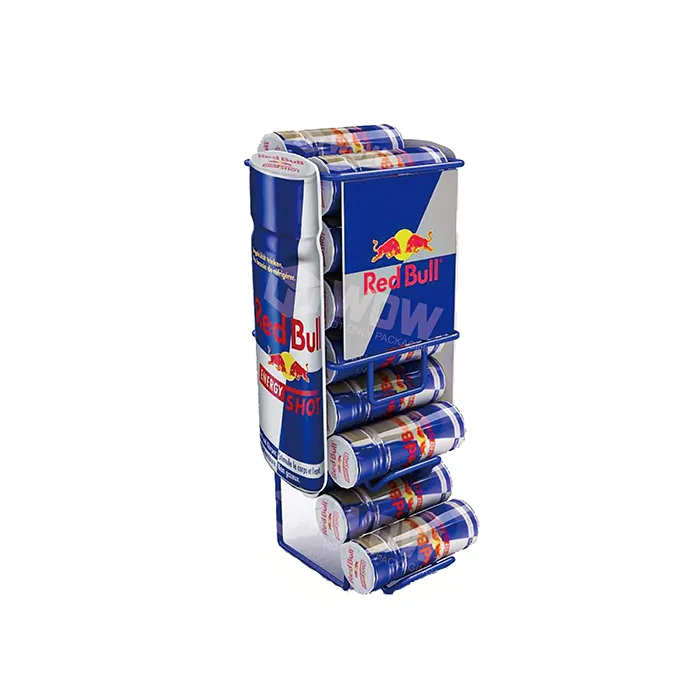
Counter displayswork because they target moments where customers are already waiting or slowing down. This is especially effective for:
- mini bottles
- energy shots
- small beverage cans
- promotional drink packs
At checkout zones, customers do not want complexity. They respond better to compact displays with limited product choices and clear visibility.
A cluttered counter display usually performs poorly. The most effective countertop systems are simple, easy to restock, and visually direct.
For Energy Drink Display campaigns, countertop units are often used to support trial purchases or limited editions. In smaller retail stores, these displays can outperform larger floor units because they sit directly within the shopper's immediate reach.
The success of a counter display often depends less on graphics and more on accessibility.
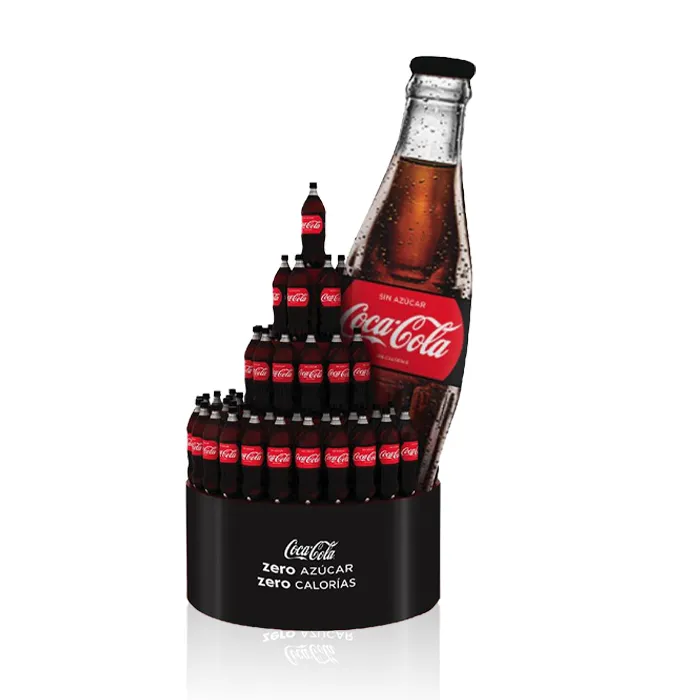
Pallet Displays and High-Volume Beverage Campaigns
Pallet displays are built for movement.
This format is common in supermarkets, warehouse retail, and seasonal campaigns where the objective is high-volume sell-through.
Unlike structured wine racks or countertop displays, pallet displays focus on:
- product quantity
- replenishment speed
- large-scale exposure
Beer promotions frequently use this structure because the products are heavy and move in bulk. A pallet display reduces the amount of restocking work required by store staff while maintaining a large retail footprint.
For Beverage Display programs involving multipacks or seasonal soft drinks, pallet displays help brands dominate promotional zones quickly.
The challenge is structural stability. Beverage products create significant vertical load pressure. Weak corrugated structures fail fast under real retail conditions, especially after multiple replenishment cycles.
The best pallet displays balance volume with stability and shopper access.
Why Some Beverage Displays Fail in Retail Stores
A display can look impressive during presentation meetings and still fail once it reaches stores.
Several problems appear repeatedly in beverage retail programs.
Too Many SKUs in One Display:When every product is included, nothing stands out. Customers struggle to process the display quickly.
Weak Structural Design:Heavy beverage products expose structural problems immediately. Leaning shelves and collapsing tiers damage both visibility and brand perception.
Poor Placement:A strong display placed in a low-traffic area will underperform no matter how attractive it looks.
Difficult Replenishment:If store staff cannot refill the display quickly, the display becomes disorganized within days.
Overdesigned Graphics:In beverage retail, readability matters more than excessive artwork. Customers should identify the product within seconds.
These problems are common because many displays are designed for presentation, not for real store execution.
Choosing the Right Display Based on Retail Environment
Different retail environments require different merchandising logic.
|
Retail Environment |
Display Type Often Used |
|
Supermarket |
Freestanding floor display |
|
Liquor Store |
Structured wine rack |
|
Convenience Store |
Counter display |
|
Warehouse Retail |
Pallet display |
|
Promotional Zone |
Endcap or floor display |
A supermarket campaign for soft drinks focuses on visibility and replenishment speed.
A liquor store focuses more on organization and browsing behavior.
A convenience store focuses on quick decisions and compact footprint.
This is why standard display programs often struggle across multiple retail channels. The same structure rarely performs equally well everywhere.
Why Beverage Brands Are Moving Toward Custom Display Programs
More beverage brands are moving away from generic retail fixtures and toward custom display programs.
The reason is practical.
Bottle dimensions vary. Product weights vary. Retail environments vary. Store traffic varies. One standard structure cannot optimize all of those conditions.
Custom display development allows brands to control:
- shelf spacing
- load-bearing structure
- product organization
- branding visibility
- replenishment logic
- transportation efficiency
For beverage campaigns involving multiple retail locations, this becomes even more important. Consistency across stores affects both brand presentation and operational execution.
A well-designed custom display does not just improve visibility. It reduces rollout problems before the campaign even begins.
Final Thoughts
The best display type for beverage and wine brands depends on the retail objective.
Floor displays improve visibility.
Wine racks improve browsing and premium perception.
Counter displays support impulse purchases.
Pallet displays move high product volume efficiently.
The display itself is not the strategy. It supports the strategy.
In crowded beverage retail environments, brands that understand shopper movement, visibility, replenishment, and product interaction usually outperform brands that focus only on packaging or graphics.
A strong display system changes how products are seen inside the store. In many cases, that changes how quickly they sell.
FAQ
1.What is the best display type for soft drink promotions?
Freestanding floor displays are commonly used because they create high visibility in supermarket traffic areas.
2.Why do wine brands use dedicated wine display racks?
Wine shoppers spend more time browsing and comparing labels. Structured displays improve organization and product presentation.
3.Are cardboard beverage displays strong enough for heavy products?
Yes, when designed properly. Reinforced cardboard structures can support heavy beverage products and multipacks.
4.What works best for energy drink promotions?
Energy drink campaigns often perform well with floor displays or countertop displays placed near checkout or convenience zones.